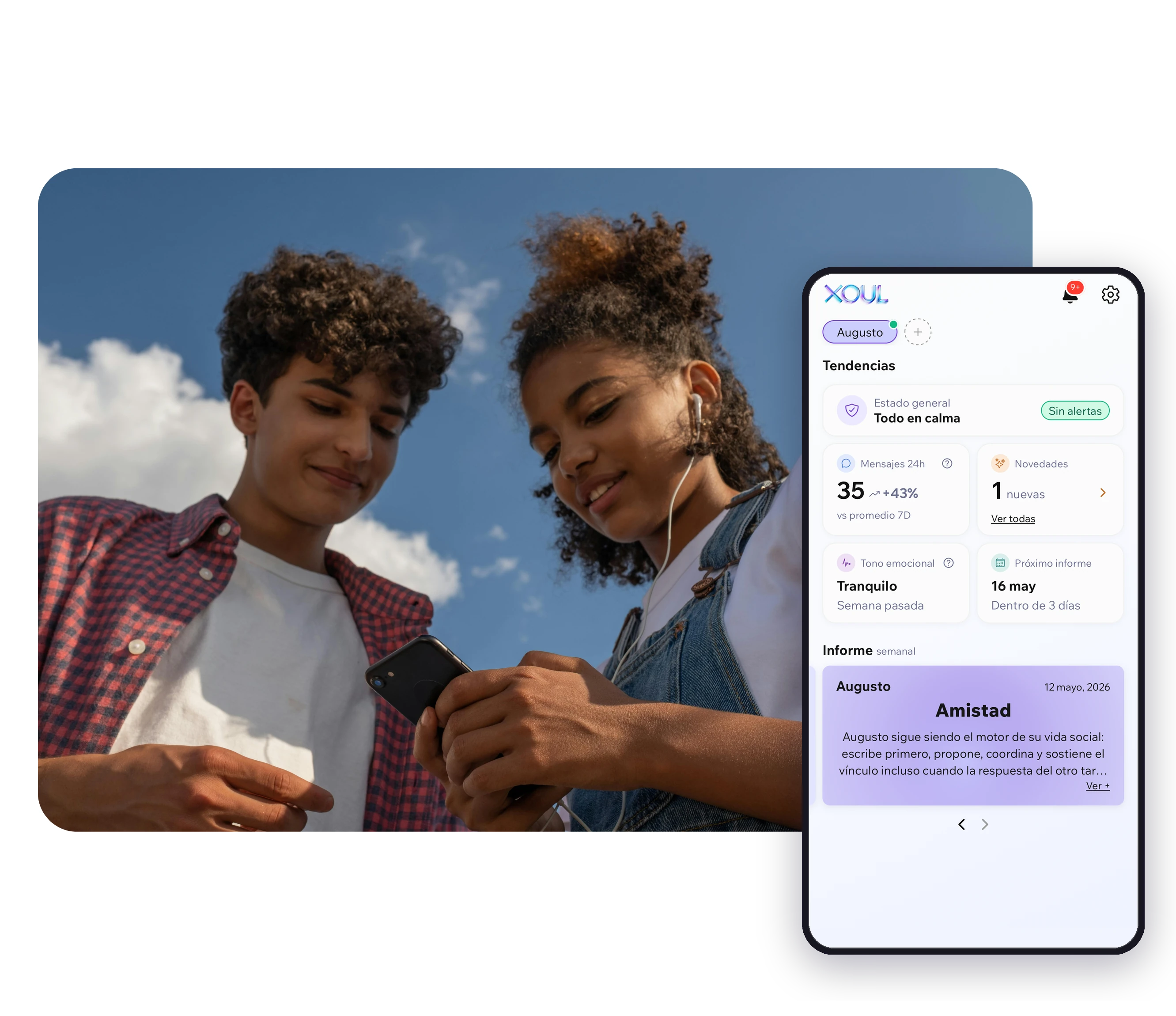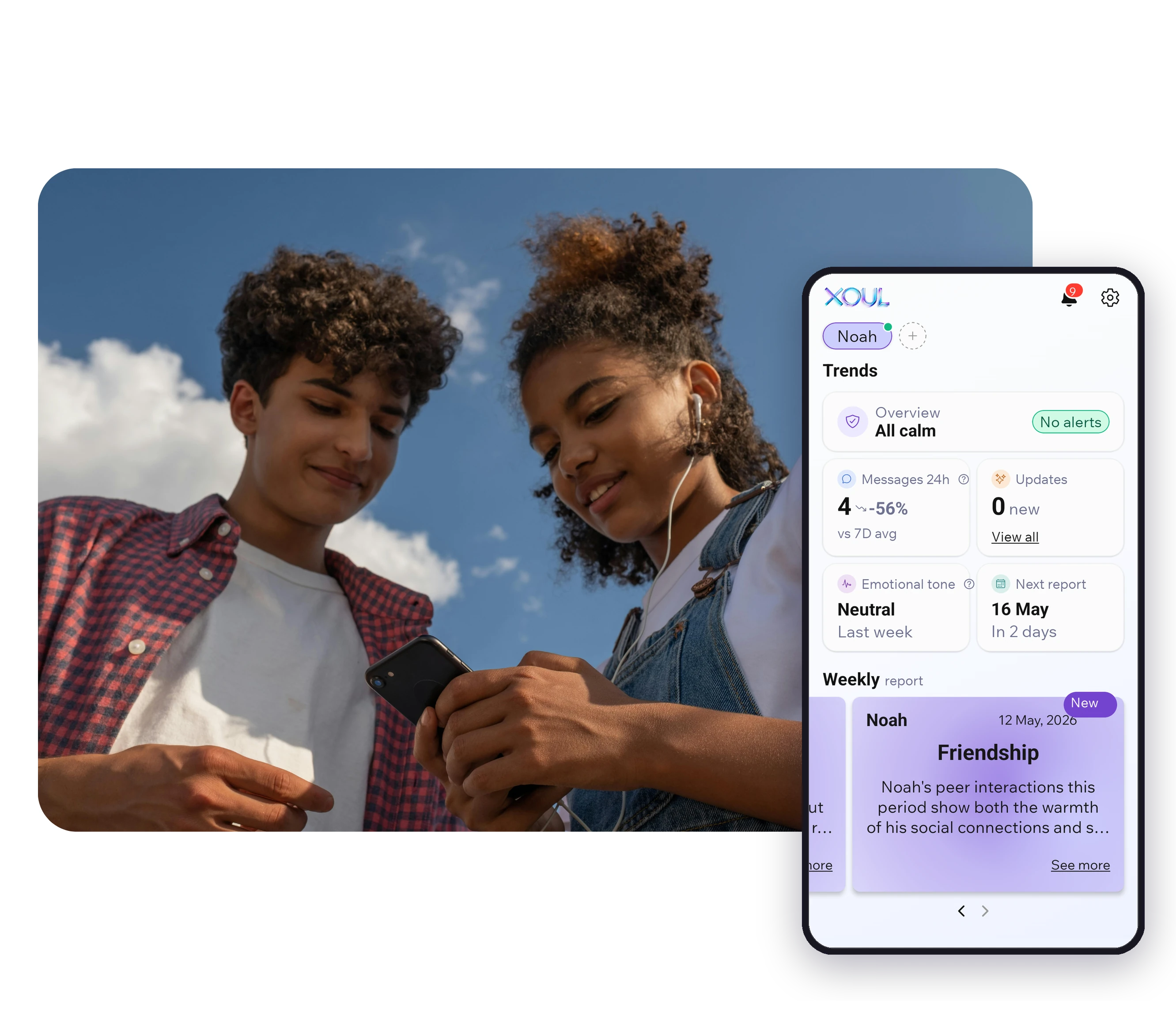

"They asked for my password, but it's because they love me." "If I don't reply quickly, they get annoyed." "We share our locations all day so they don't worry." For many teens, first relationships arrive around the same time as their first phone, and some forms of control get mistaken for care.
25 November is the International Day for the Elimination of Violence against Women and the start of the 16 Days of Activism. It's a good moment to talk at home about something that starts long before adulthood: what a healthy relationship looks like. This guide is for parents and carers who want to support their child without snooping or judging, whether their child is the one being controlled or the one doing the controlling.
In short:
In England and Wales, more than 1 in 4 young people aged 13 to 17 (28%) had been in a relationship in the past year, according to the Youth Endowment Fund. And today those relationships live as much in the group chat as at school.
Abuse in a relationship can happen to anyone, whatever their gender or sexuality, and control can come from either partner. But the surveys show that girls and young women are affected more by the most serious forms: in the US, girls were three times as likely as boys to report sexual dating violence (9.3% vs 2.9%). That's why 25 November is about teenagers too.
A healthy relationship leaves room: each person has their own phone, friends and time, and can say no without being afraid. Control slowly takes that room away, and it almost always turns up disguised as proof of love.

The key question isn't "do they do this?" but "how does it feel?". If your child is more focused on not upsetting their partner than on having a good time, or is anxious about not replying fast enough, something isn't right, even if nobody has raised their voice.
Crushes and relationships are part of growing up. In September 2026, in families using Xoul, about 1 in 30 of the signals picked up in conversations were about crushes, relationships or romantic feelings. They start to appear at 10 to 12, mostly as crushes and chats between friends, and become more common from 13.
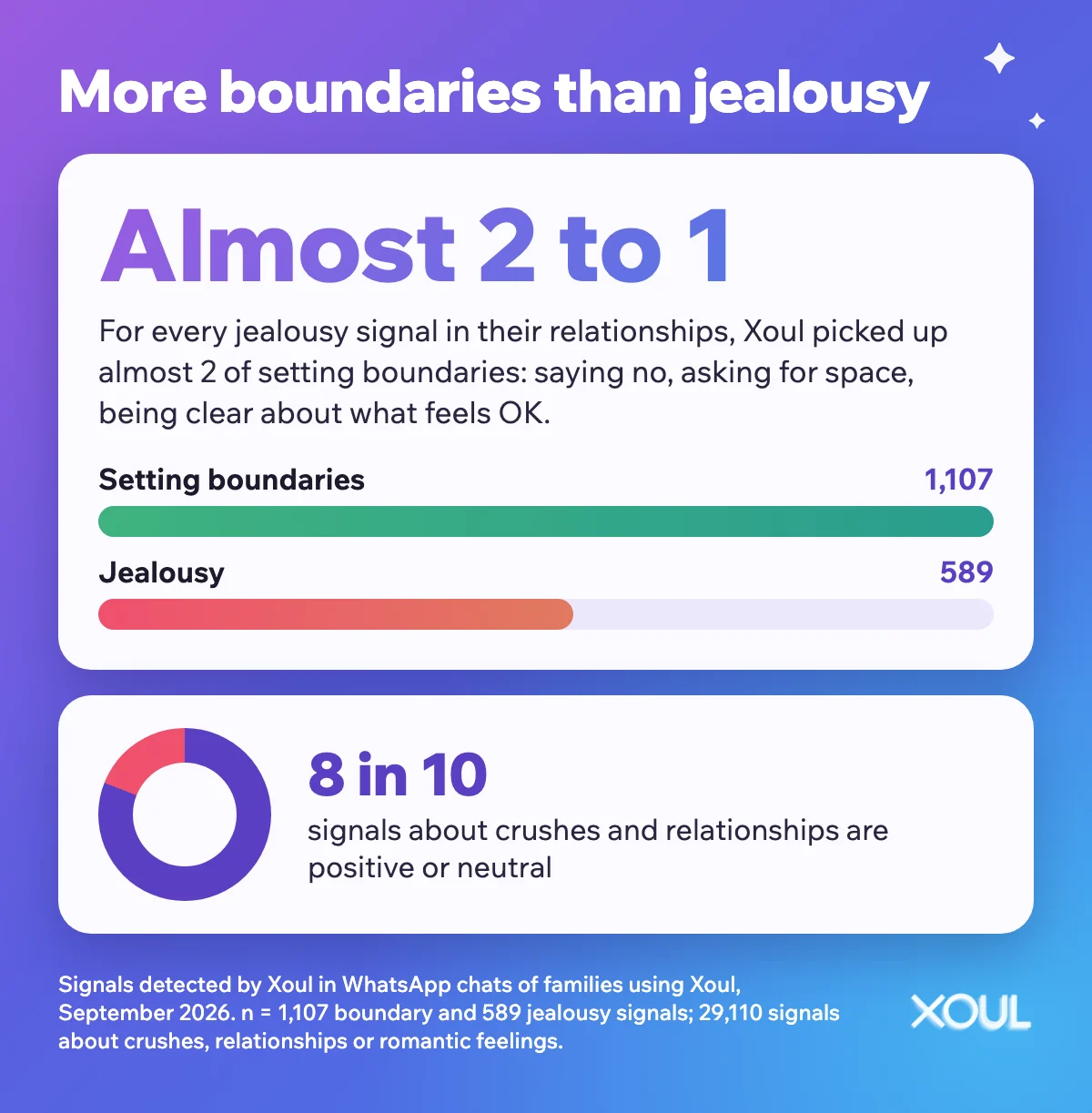
The good news: for every signal of jealousy, Xoul picked up almost 2 about setting boundaries, like saying no, asking for space or being clear about what feels OK. And 8 in 10 signals about crushes and relationships are positive or neutral. A negative tone is more common here than across all topics: first relationships also bring arguments, break-ups and doubts.
And only about 1 in 8 signals of emotional dependence mention a partner: the rest are about friends or family.
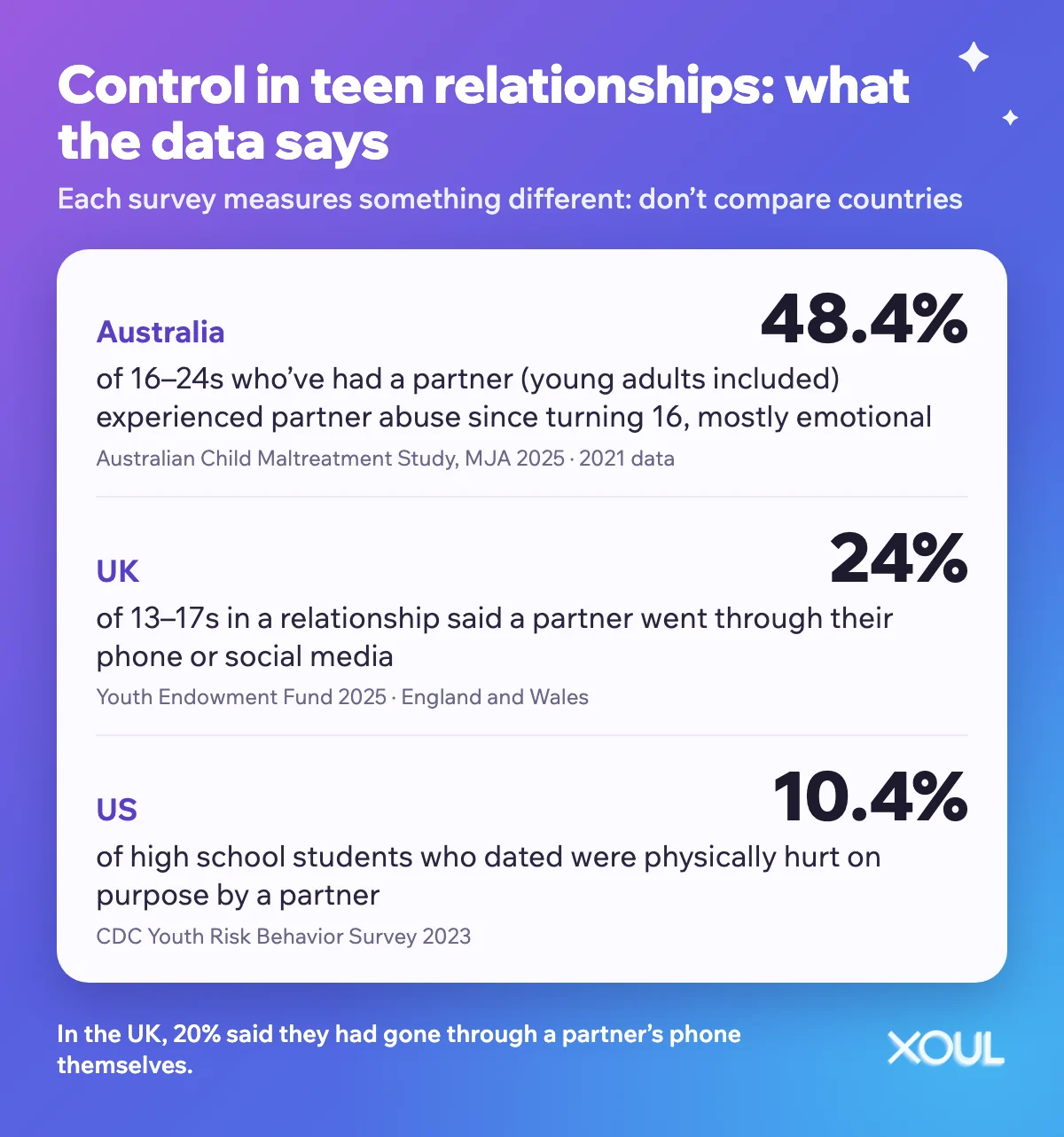
Each survey asks different questions, at different ages and in different years, so read each figure in its own context rather than comparing countries:
Digital control rarely arrives all at once. It usually starts with something that seems small and builds up:
If a break-up is followed by rumours, mocking or being left out of the group, it may also be cyberbullying.
Hardly anyone says "my partner controls me". What you usually notice are changes:
No single sign is a diagnosis. If several don't go away, it's worth gently raising it with them.

This is what an Update looks like in the app. Sample account with made-up data.
If you use Xoul, changes like these (for example, a tenser tone when they talk about their relationship) may show up in their report or in Updates, where an "Attention" label marks anything that needs care. Xoul doesn't show you their messages: it shows you how they're doing.
Over the following weeks, Xoul's reports can help you keep track of their mood without asking every day.
It happens too, and punishment or labels won't fix it. In England and Wales, 1 in 5 teens in a relationship said they had gone through a partner's phone. Often it comes from insecurity, or from believing that's how love works.
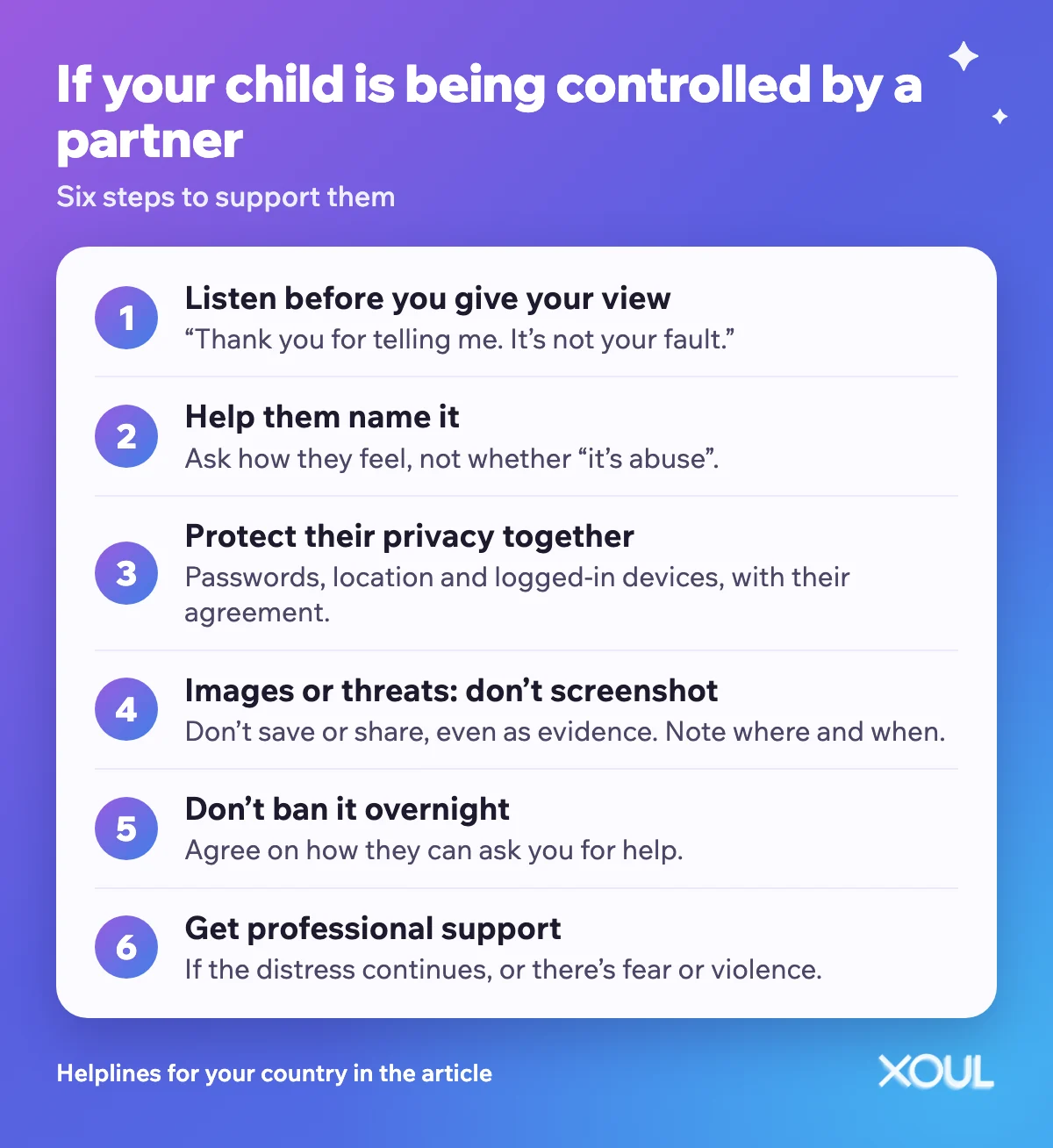
Talk calmly about what happened and how the other person might have felt. Help them name what they feel ("I'm scared they'll leave me"). If it keeps happening, or there are threats or physical violence, get professional help: taking responsibility is something they can learn too.

Short, frequent chats with open questions work better than one big talk:
They also learn from what they see at home: how the adults treat each other, and whether everyone's phone and space are respected.

If you use Xoul, each report's conversation idea is a good way to start.
General information, not legal advice:
When the person causing harm is under 18, each country has a youth justice system that works differently from the adult one.

This is what a report looks like: what was noticed and an idea for a conversation. Sample account with made-up data.
Xoul connects to your child's WhatsApp with a QR code, always with their consent. An AI supervised by a clinical team tells you how they're doing in regular reports: their mood, their friendships, what's worrying them and an idea for a conversation. If something in their relationships needs attention, like jealousy that's upsetting them or pressure from a partner, it may show up in their report or in Updates. In Trends you can see how things change over time.
What you never see are their messages, which are deleted after the system analyses them. Xoul doesn't analyse images either. It isn't checking their phone: it's knowing how they are so you can support them better.
It varies a lot. In England and Wales, 28% of 13- to 17-year-olds had been in a relationship in the past year. In families using Xoul, crushes and romantic feelings already show up at 10 to 12, mostly as chats between friends.
Not necessarily. It depends on whether it's a free, two-way choice or a demand. If they feel they can't turn it off without getting into trouble, it's control.
There's no need, and it can break their trust just when you need it most. With Xoul you see how they're doing without reading their messages, and always with their consent.
Xoul doesn't send instant alerts. Anything that needs attention may show up in their report or in Updates. It doesn't replace talking, but it helps you know when a conversation is worth having.
Teaching them that love doesn't mean control starts with not controlling at home. What protects a teenager most is a trusted adult who listens without judging and doesn't make them choose between partner and family.
The first Xoul report is free, arrives in 10 minutes and you don't need a card. Download Xoul to get started.
XOUL gives you private reports with risks, emotions and important moments, always from a respectful approach.