A message nobody answers. A new class group chat they're not in. A sticker made from their photo that everyone laughs at. To an adult, it looks small. To a 13-year-old, it can be the biggest thing all week.
Cyberbullying isn't just playground bullying on a phone. It follows them home, keeps going after school and usually has an audience. But not every falling-out is bullying. This guide helps parents and carers tell the two apart, see the data for Australia, the UK and the US, and support their child without panicking or looking away.
In short:
Cyberbullying is repeated, deliberate harm through messages, group chats, social media or online games. Three things together set it apart from an argument: it keeps happening, it's meant to humiliate, exclude or hurt, and there's an imbalance of power, so the person on the receiving end can't make it stop on their own.
Some common forms:

Everyday conflict can hurt too. But it happens between equals, both sides have their say and it blows over. Telling the two apart matters. Treat every falling-out as bullying and your child may stop telling you things. Treat bullying as just another falling-out and they may feel alone.
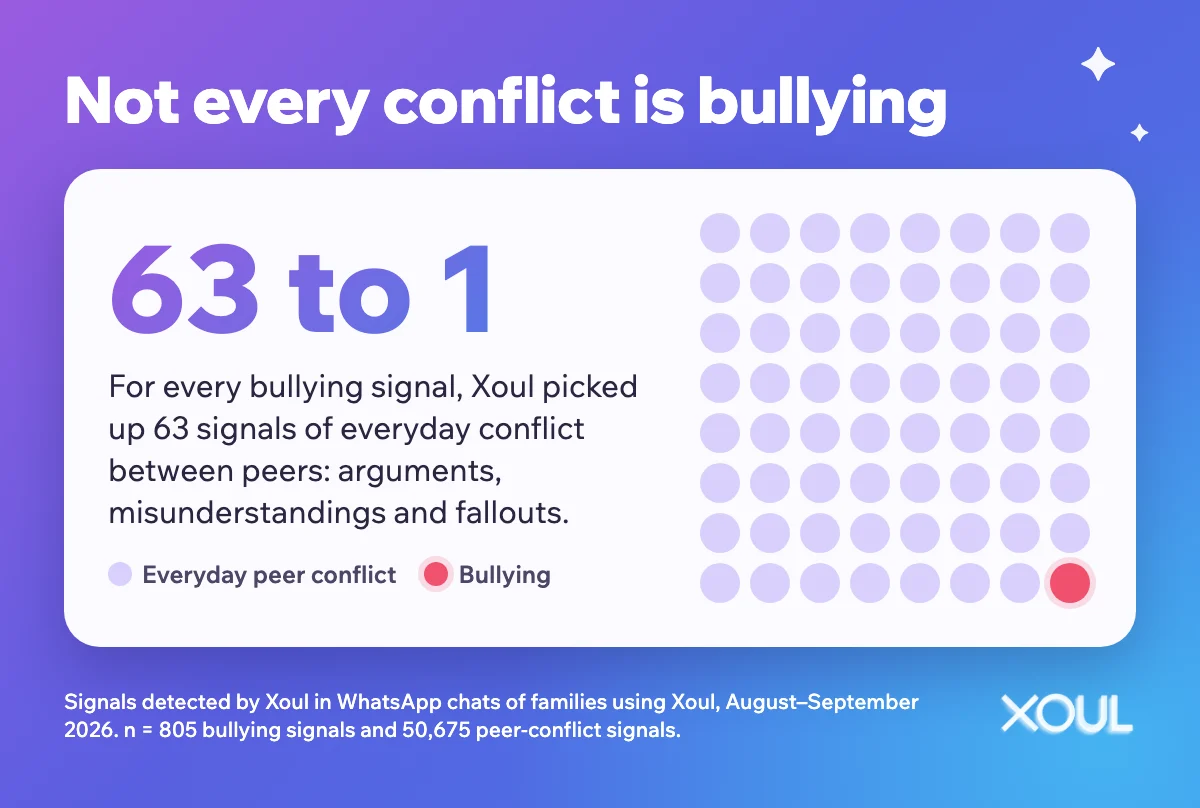
In August and September 2026, in families using Xoul, for every bullying signal we picked up 63 signals of everyday conflict between peers. A single screenshot can't show that. The pattern over several weeks can.
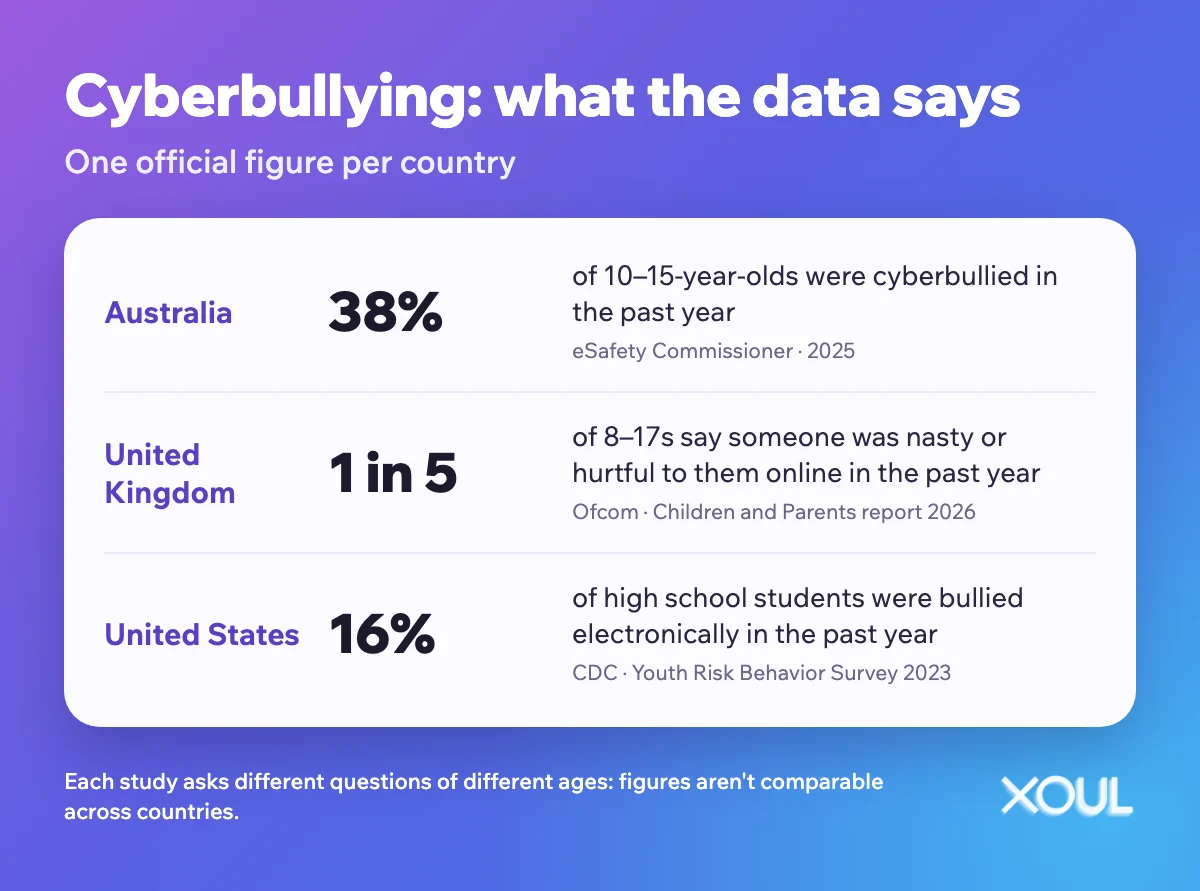
Each survey asks different questions of different ages, so the figures can't be compared across countries:
Do kids tell their parents? Often, but it doesn't always register. eSafety's Mind the Gap study (2022, ages 8 to 17) found that 69% of Australian children treated in a hurtful way online told their parents. Yet only about half (51%) of parents whose children had been through it said they knew about it. In a different survey in England and Wales, 56% of 10- to 15-year-olds who experienced online bullying behaviours told a parent and 26% told no one, according to the Office for National Statistics (2020).
The only like-for-like comparison is the OECD's PISA 2025, which asks 15-year-olds everywhere the same questions. In Australia and the UK, 23% reported being bullied in some form (not only online) a few times a month or more in 2025 (OECD average: 20%), up from 2022 in both. In the UK, 3% said upsetting information about them had been posted online without their consent at least a few times a month (OECD average: 3%). For the United States, PISA 2025 has no figure on bullying: the OECD's US note doesn't include questionnaire results this round.
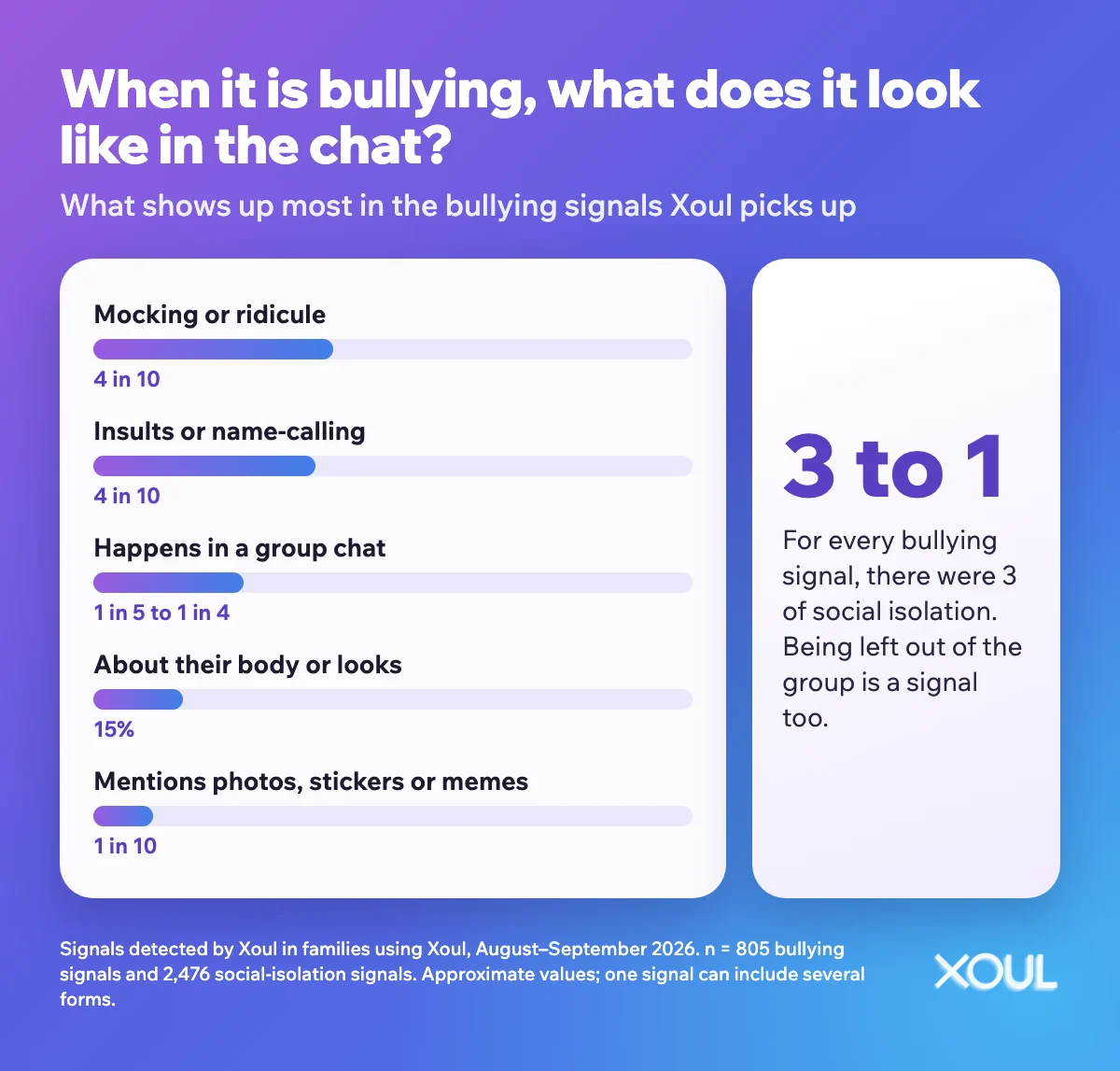
In families using Xoul, bullying signals tend to follow a pattern. The most common are mocking and insults (each in around 4 in 10 bullying signals). Between 1 in 5 and 1 in 4 happens in a group chat, with an audience that watches or joins in. About 15% is about someone's body or looks, and around 1 in 10 mentions photos, stickers or memes.
Something else is more common, and quieter: for every bullying signal, there are three of social isolation. Being left out of a group, getting no reply, finding out about a get-together through other people's stories. It isn't always bullying, but it's worth noticing.
Kids rarely say "I'm being bullied". What shows up first is change:
No single sign means it's bullying. If several last more than a few days, it's time for a chat. There's more in how to detect cyberbullying.

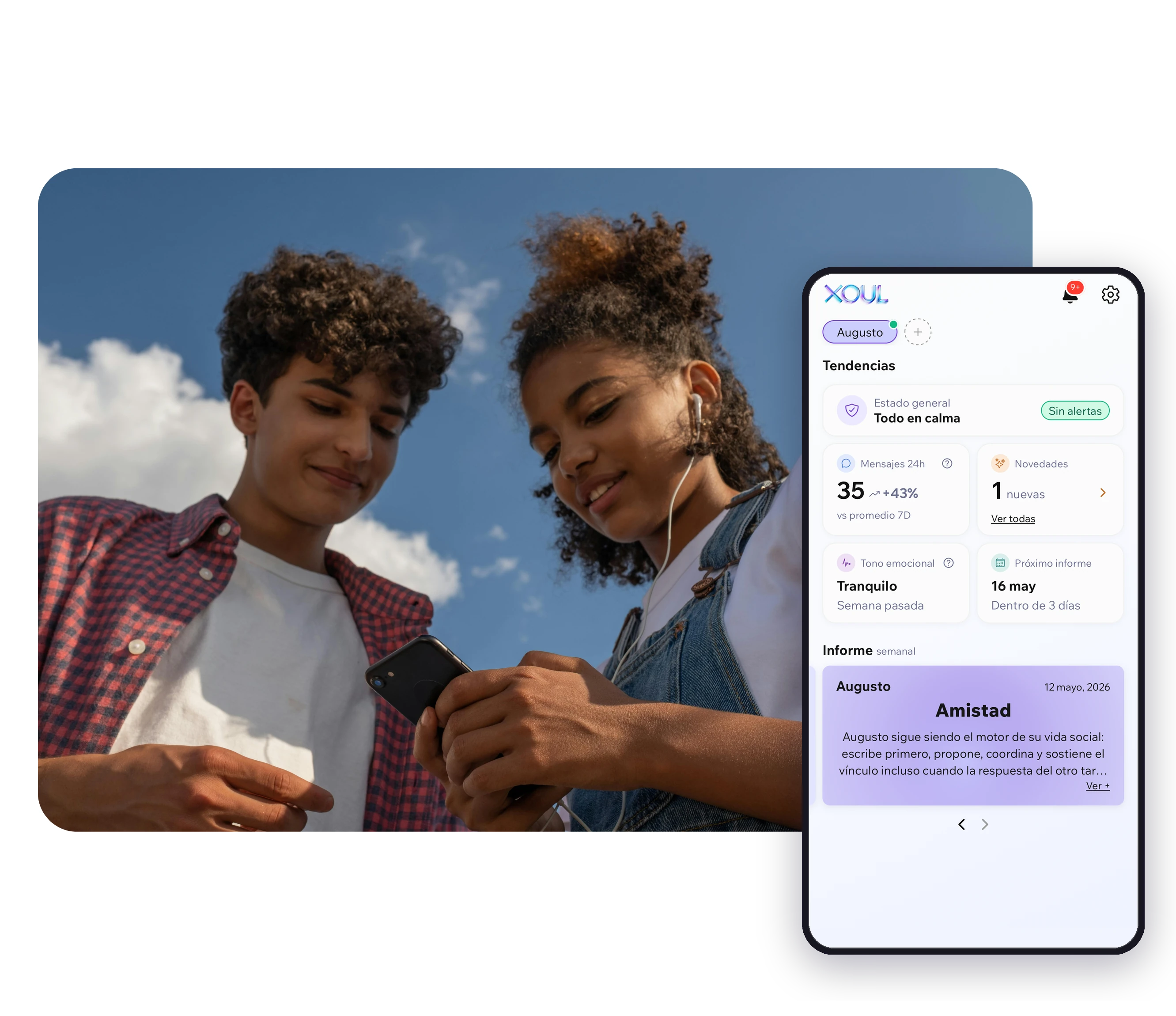
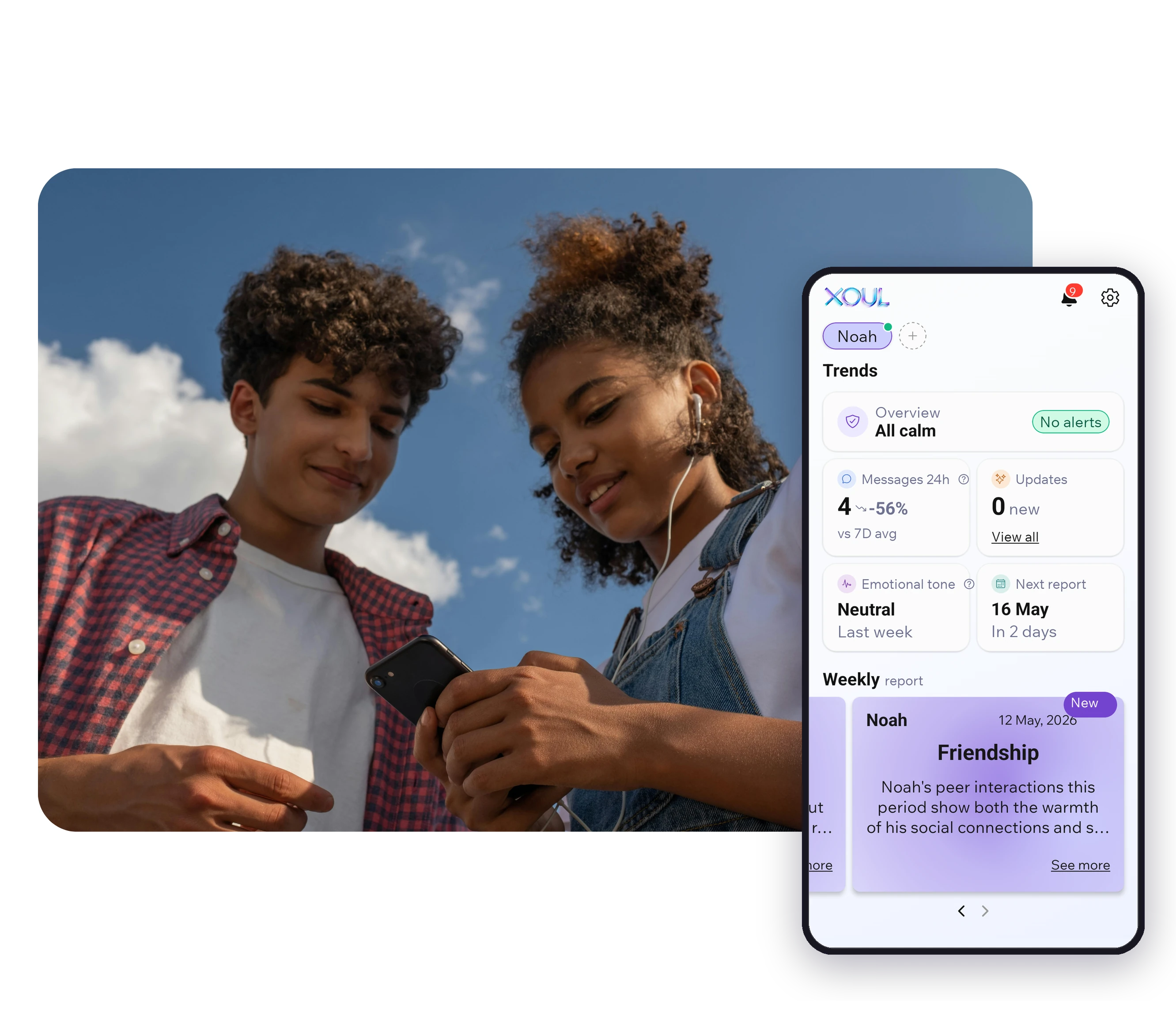
This is how an Update looks in the app. An example account with made-up data.
With Xoul, changes like these can show up in your child's report or in Updates, where the ones that need care are labelled "Attention". Xoul doesn't show you their messages: it shows you how they are.
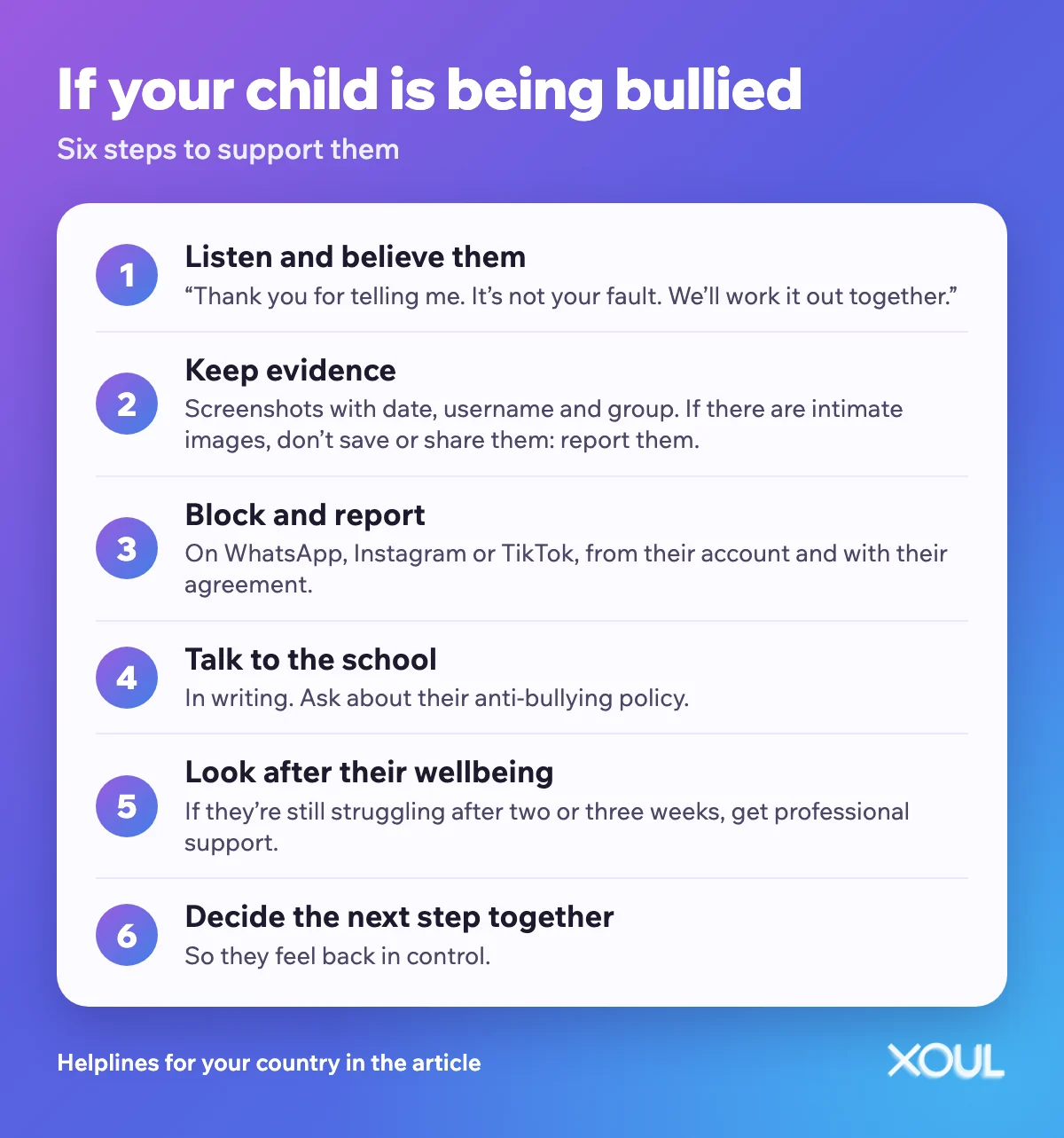
In the weeks after, your Xoul reports can help you see how their mood and friendships are going, without asking every day.
What to avoid: taking their phone away (it feels like punishment for the one being hurt), messaging the other families directly (it can make things worse), posting about it online, and saying "kids will be kids".
In families using Xoul, many bullying signals show the child joining in rather than being the target: forwarding, laughing along, going with the group. Sometimes they don't see the harm. Sometimes they're afraid of becoming the next target.
You don't need to label your child a "bully" to take it seriously. Talk calmly about what happened, how the other person might have felt and how to put it right. Ask how they're doing, too. In eSafety's Mind the Gap study, 92% of children who had treated someone in a hurtful way online had been treated that way themselves. If it keeps happening, ask the school or a professional for help.

The best prevention is still everyday conversation: in the car, while cooking, out for a walk.
Two dates can help you bring it up: UNESCO's International Day against Violence and Bullying at School, including Cyberbullying on Thursday 5 November 2026, and the UK's Anti-Bullying Week in mid-November.
Families and schools can download our guide to understand, prevent and respond to cyberbullying. And if you use Xoul, the idea for a conversation in each report can be a good way to start.
A general summary, not legal advice:
Wherever you live, a good first step is to ask the school, in writing, how its anti-bullying policy applies.

This is how a report looks: what was noticed and an idea for a conversation. An example account with made-up data.
Xoul connects to your child's WhatsApp with a QR code, always with their consent. AI overseen by a clinical team tells you how they're doing in regular reports: their mood, friendships, what's on their mind and an idea for a conversation. When something needs attention, like bullying in a group chat, it can show up in the report, or in Updates with an "Attention" label. Trends shows how things change over time.
You never see their messages, which are deleted after the system has analysed them. Xoul doesn't analyse images either. The idea isn't to watch: it's to be there at the right moment.
It can start with the first group chats: in Australia, 34% of 10- to 12-year-olds were cyberbullied in the past year (eSafety, 2025). In families using Xoul, bullying signals are more common at 13 to 15 than at 10 to 12.
No, and it often backfires: reading without their agreement can break trust. With Xoul, you see how they're doing without reading their messages, and only with their consent.
Ask yourself: does it keep happening, is it meant to hurt or exclude, and is there an imbalance of power? If you're unsure, ask how they feel: their tone says a lot.
Usually through the changes above, and through talking. With Xoul, anything that needs attention can show up in the report or in Updates. It isn't an instant alarm and doesn't replace talking: it helps you know when to talk.
An app or a school meeting rarely solves cyberbullying on its own. Things get better when a child knows there's an adult nearby who listens without judging and knows what to do.
Your first Xoul report is free, arrives in 10 minutes and needs no card. Download Xoul to get started.
XOUL gives you private reports with risks, emotions and important moments, always from a respectful approach.