
“I asked the AI.” If you have a teenager, you’ve probably heard it already: for a history assignment, a recipe, or what to say to a friend who’s upset. And sometimes for something more personal, like telling it how they feel on a Sunday night.
ChatGPT, Gemini and Meta AI, which now sits inside WhatsApp and Instagram, have become part of children’s lives almost without us noticing. This guide is for parents and carers who want to understand what’s going on, without panic and without looking the other way.
In short:
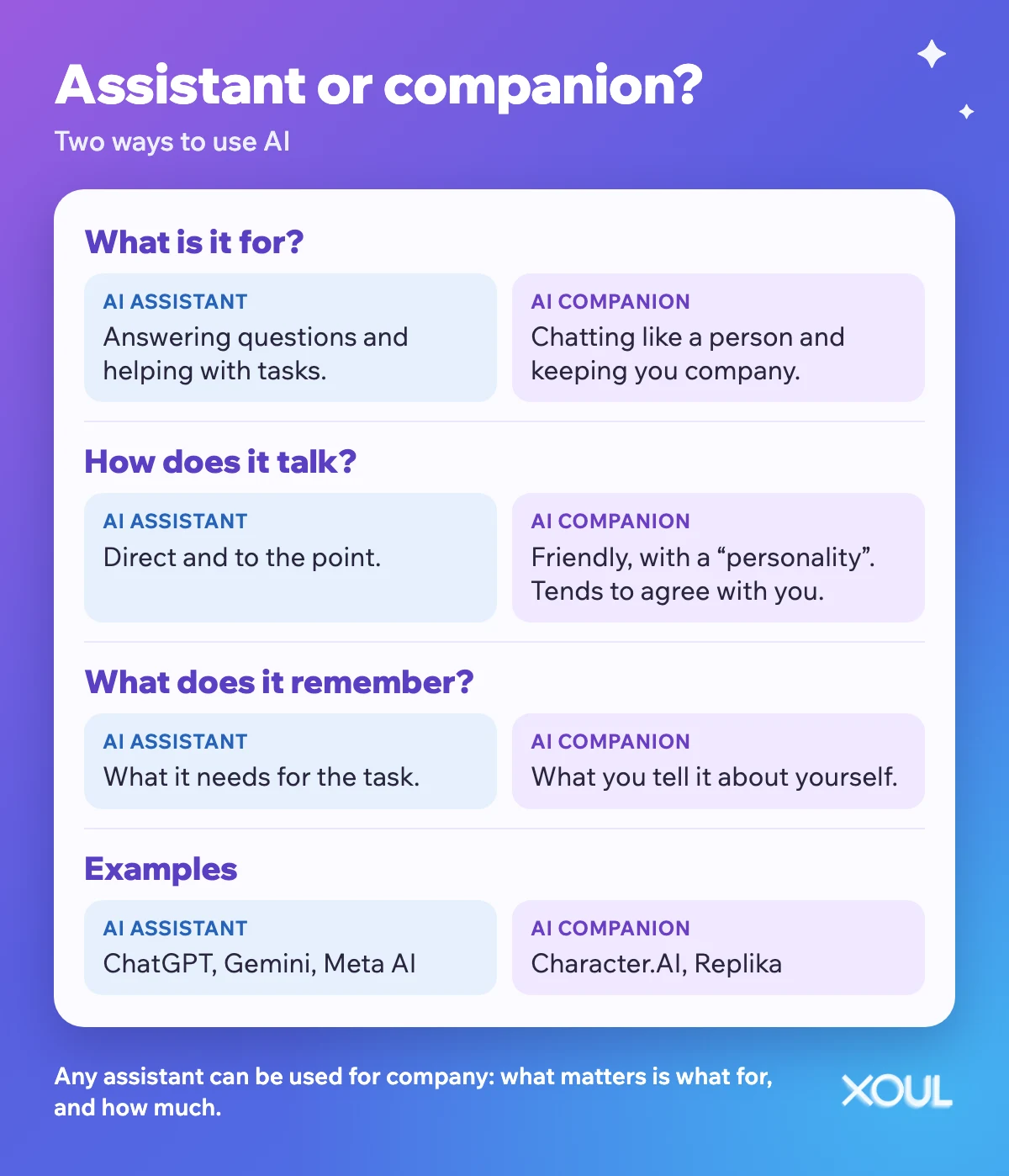
An AI assistant answers questions and helps with tasks: it summarises a text or explains a maths topic. ChatGPT, Gemini and Meta AI mostly work like this.
An AI companion is designed to chat like a person: it remembers what you tell it, has a “personality” and is always available. Some let you build a character or role-play, like Character.AI or Replika.
In practice, the line blurs: any assistant can be used for company. That isn’t necessarily bad. What matters is what they use it for, how much, and what place it takes in their life.
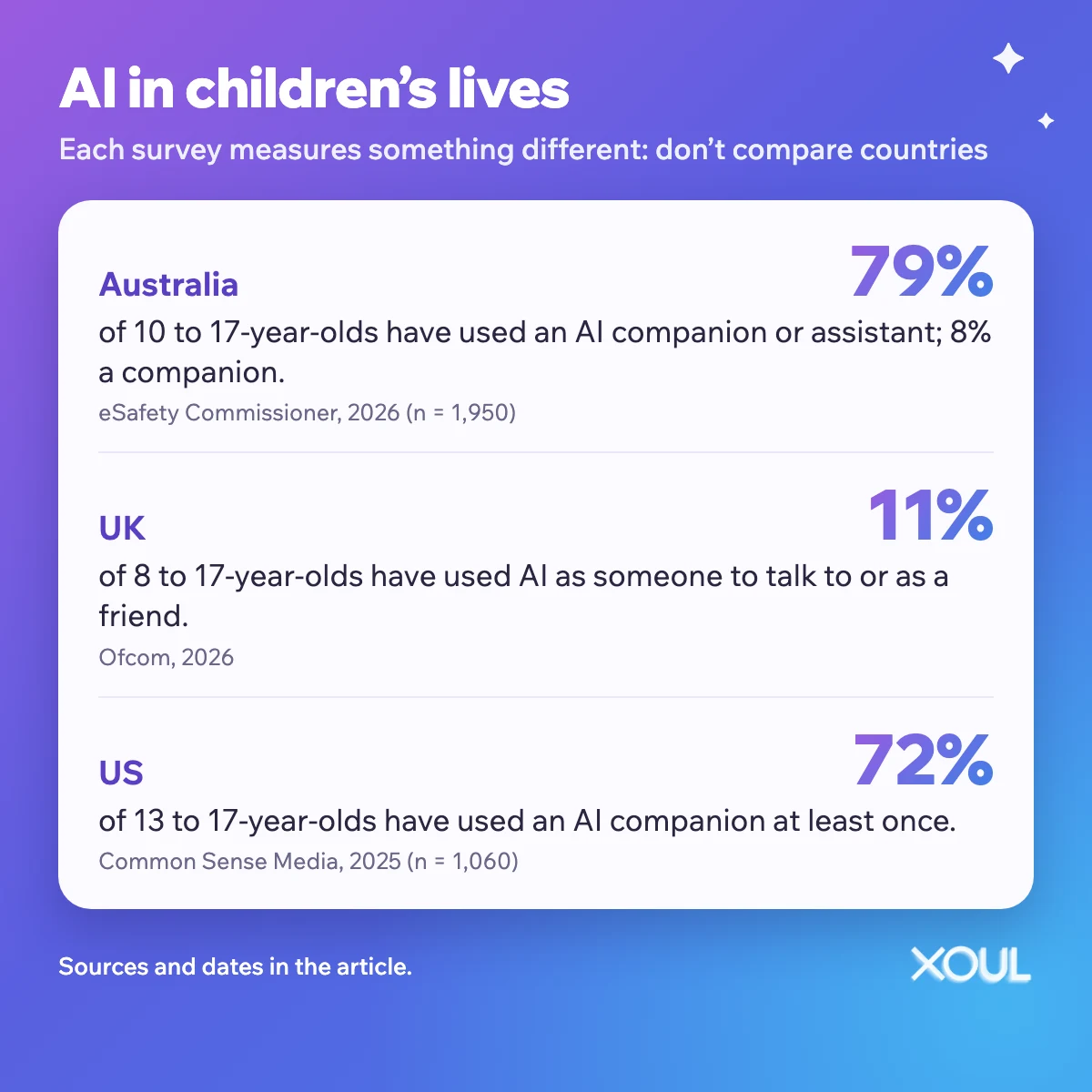
Each survey measures something different, at different ages, so it’s best not to compare countries:
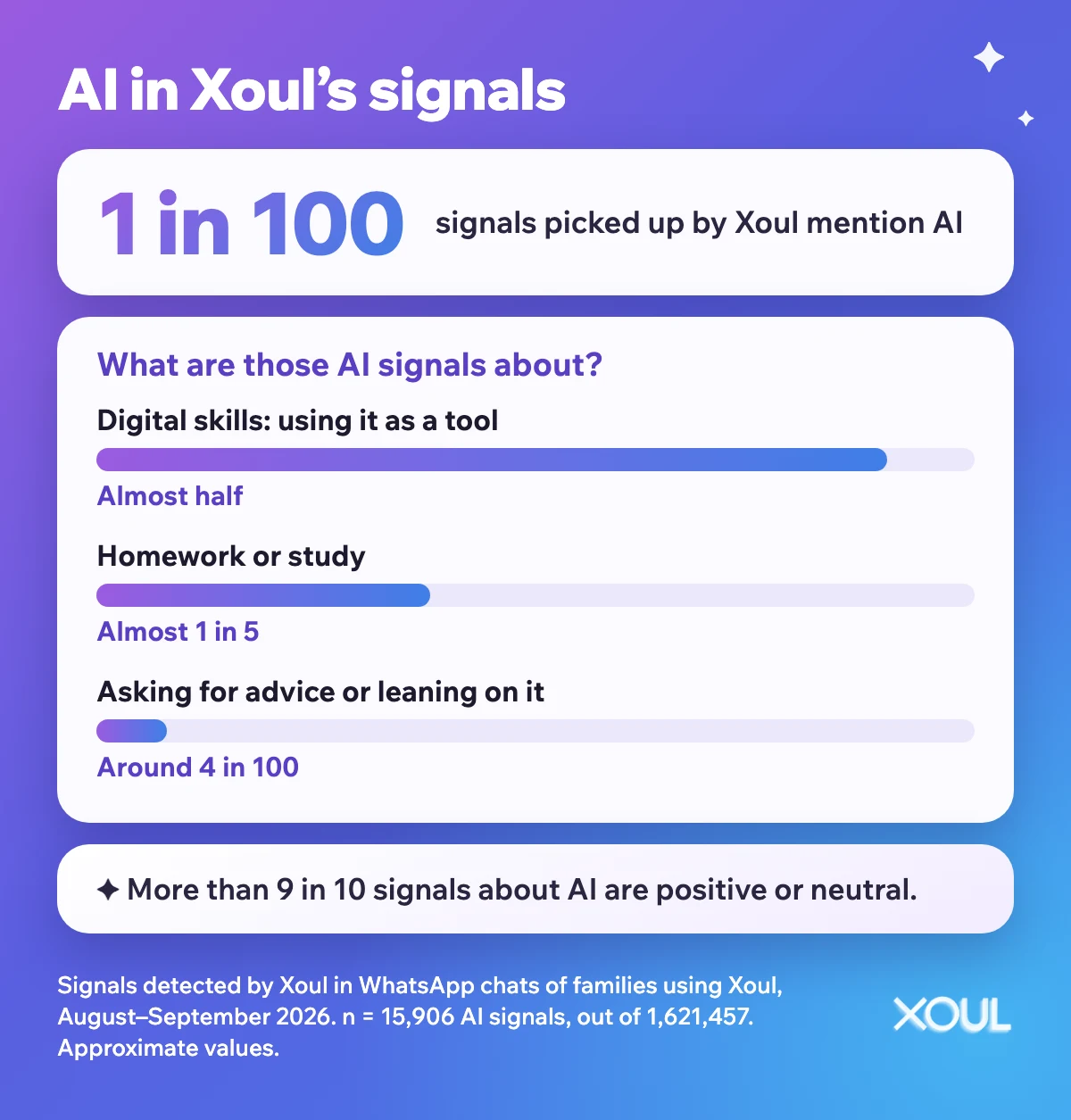
In August and September 2026, around 1 in 100 signals that Xoul picked up in families using Xoul mentioned AI. It isn’t just older teens: at 10 to 12 it shows up a little more often than at 13 to 15. And it stayed steady from one month to the next.
What kind of signals are they? Almost half show digital skills: using AI as a tool. Almost 1 in 5 are about homework or study. Asking it for advice, or leaning on it to cope with something, is much less common: around 4 in 100 AI signals. And more than 9 in 10 are positive or neutral.
That minority matters, though: a small number of signals point to uses that are worth a conversation.
A note on what Xoul sees: Xoul analyses your child’s WhatsApp, with their consent. If they talk to Meta AI inside WhatsApp, that conversation can be part of the analysis like any other, and you don’t see the messages, only how they are. Xoul can’t see what happens in other apps, such as ChatGPT or Character.AI: only what your child says or does on WhatsApp can show up, for example telling a friend they talk to a chatbot when they feel down.
AI can be a real help: it can explain what didn’t make sense in class and help them organise their ideas. But there are four risks worth knowing about:

Using AI isn’t a warning sign. Look for changes:
No single sign is a diagnosis. If several show up together and last more than a few days, it’s worth talking about.
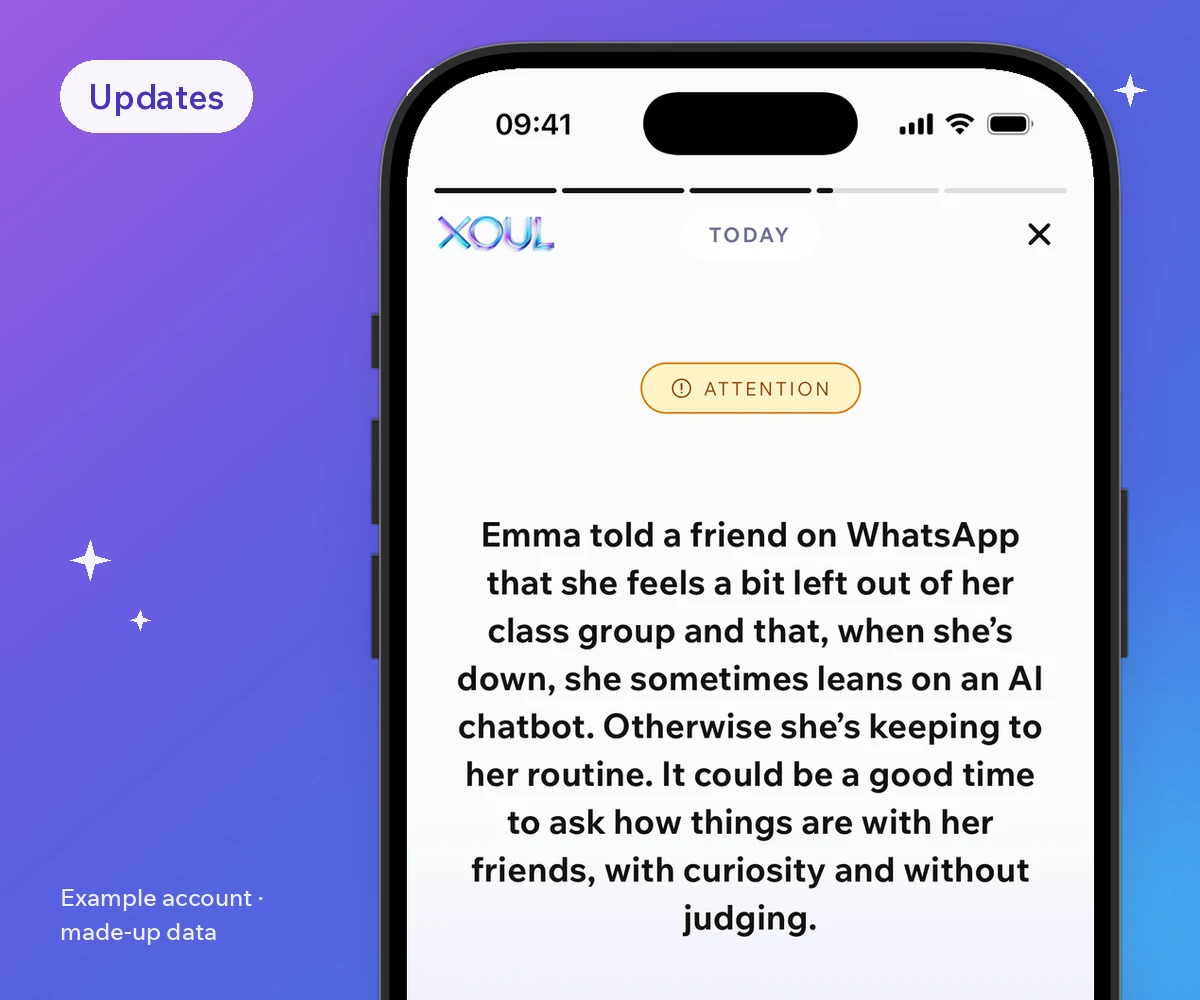
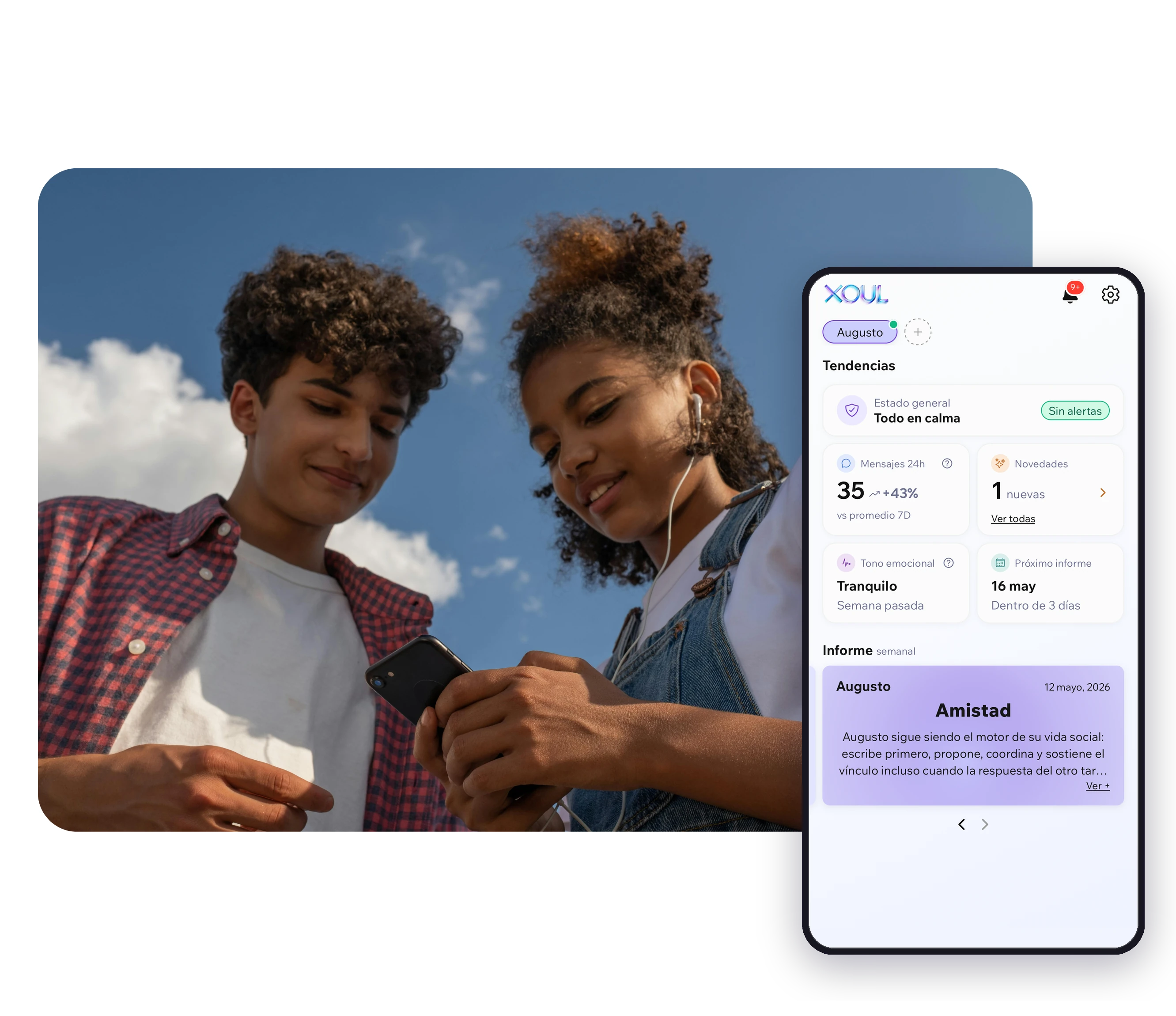
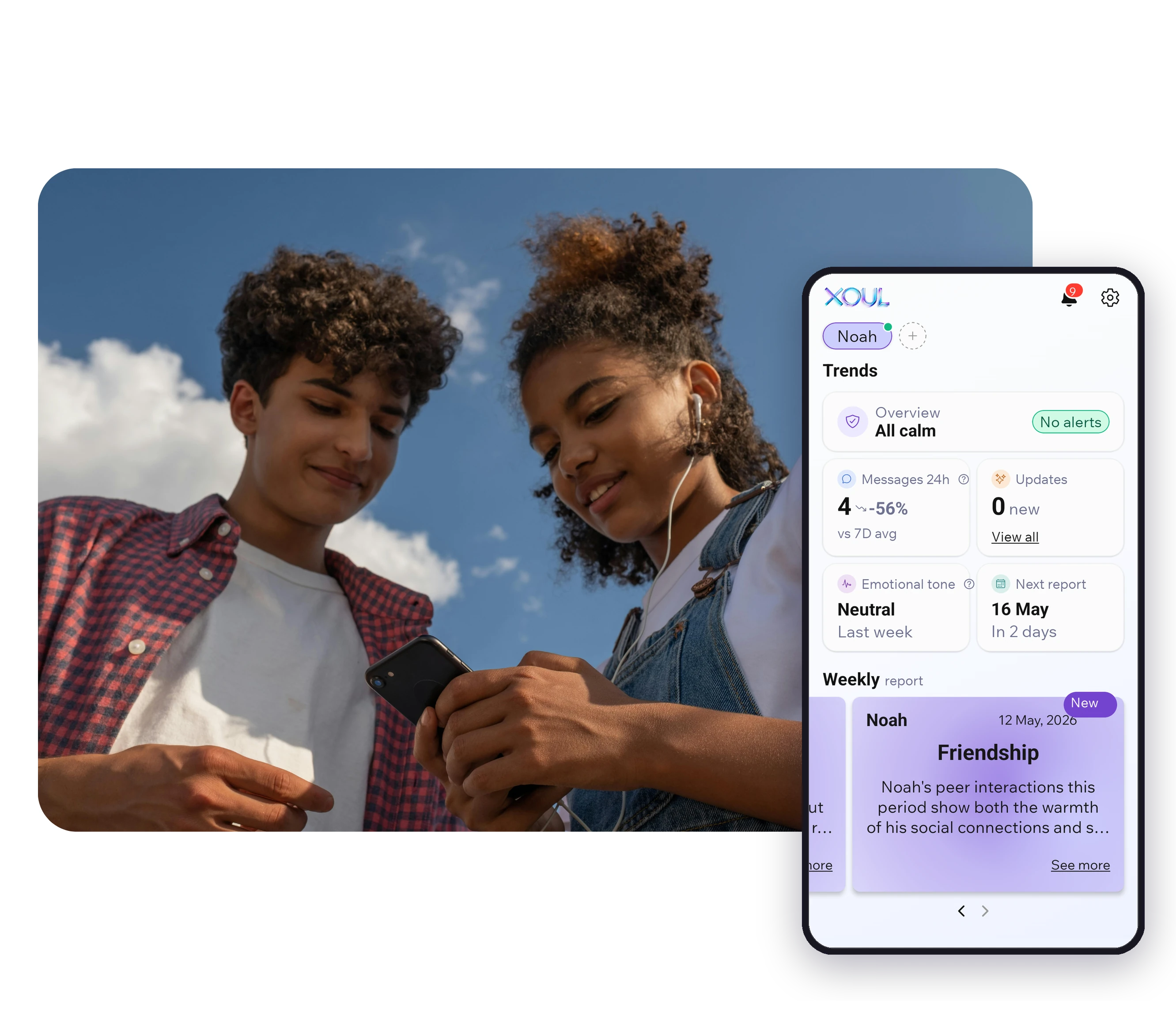
This is how an Update looks in the app. Example account with made-up data.
If you use Xoul, what your child shares in their chats, like feeling lonely or preferring to talk to an AI, can show up in the report, or in Updates with an “Attention” label when something needs care. Xoul doesn’t show you their messages: it shows you how they are.

Start with curiosity, not an interrogation:
The conversation idea in every Xoul report can help you get started. To set up ChatGPT as a family, see our guide to ChatGPT parental controls, and on girls and AI, girls and technology: supporting their entry into AI.
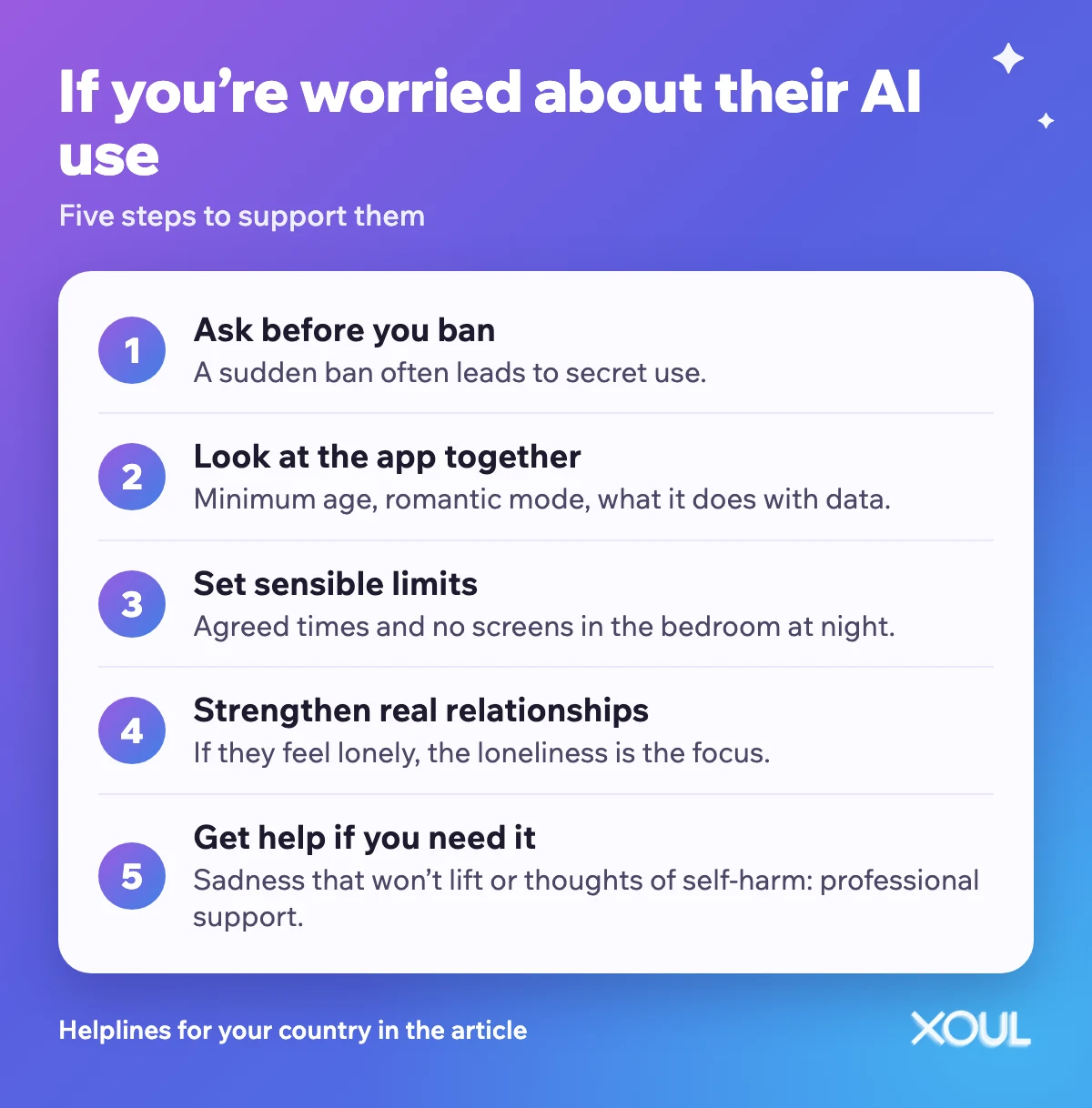
In the weeks that follow, the Xoul report can help you see how their mood and friendships are going, without asking them every day.
Best avoided: making fun of them (“did you fall in love with a robot?”), reading their chats without agreement, or treating any AI use as a problem.
A general summary (not a substitute for legal advice):
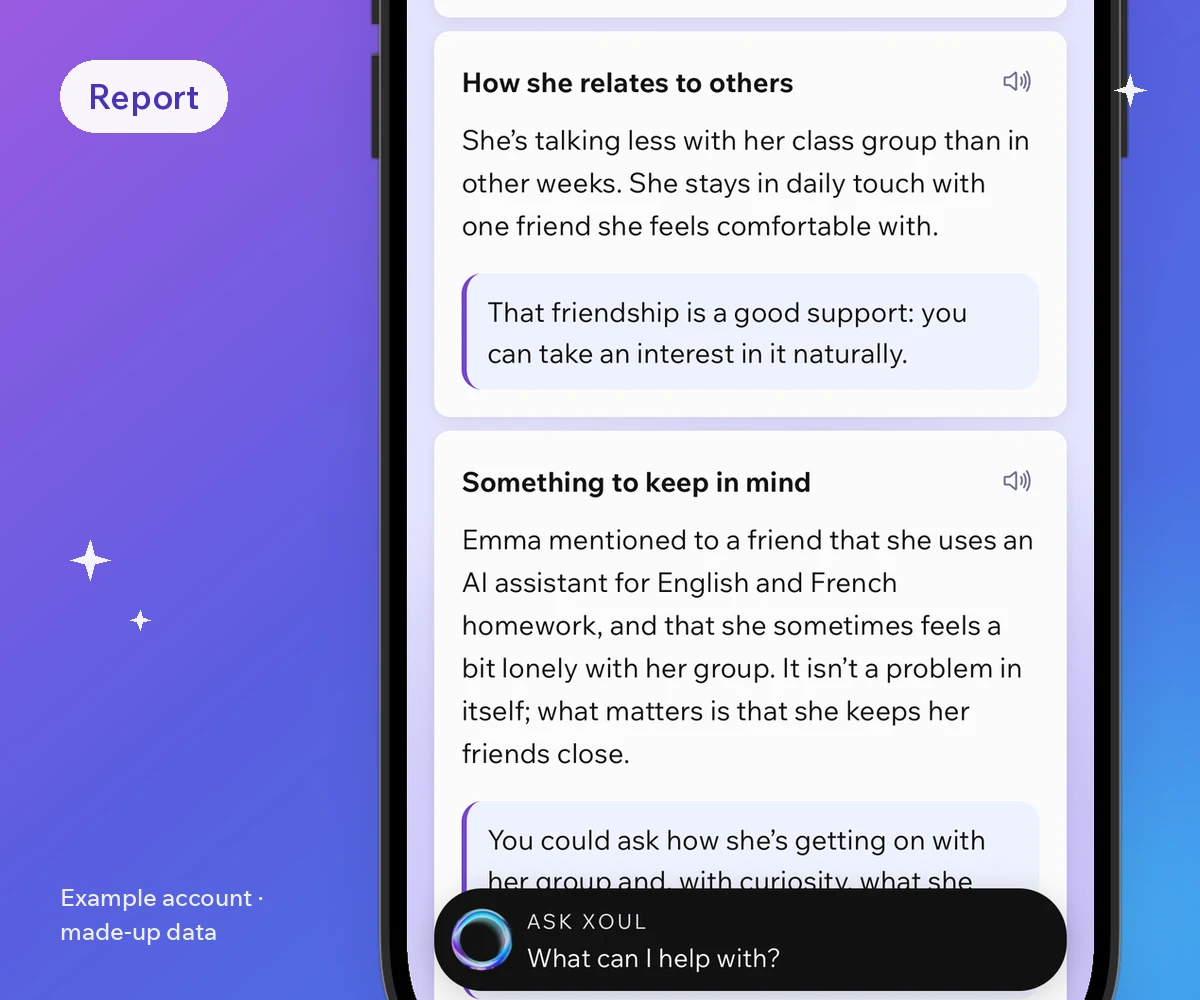
This is how a report looks: what was noticed and an idea for a conversation. Example account with made-up data.
Xoul connects to your child’s WhatsApp with a QR code, always with their consent. An AI overseen by a clinical team tells you how they’re doing in regular reports: their mood, their friendships, what’s worrying them and an idea for a conversation. If something needs attention, like leaning on an AI more than on friends, it can show up in the report or in Updates. In Trends you can see how things change over time.
What you never see are their messages, which are deleted after the system analyses them. Xoul doesn’t analyse images either.
No. For studying or creating, it can be a real help. What matters is that it doesn’t replace their own effort or other people, and that they know it can be wrong.
Many apps say 13, and some companion apps say 18. But few actually check. More than the exact age, what matters is staying involved: choosing the app together and agreeing what it’s for.
It depends where. Xoul analyses your child’s WhatsApp, with their consent: if they talk to Meta AI inside WhatsApp, that conversation can be part of the analysis like any other, and you don’t see the messages, only how they are. Xoul can’t see what happens in other apps, such as ChatGPT or Character.AI. What can show up in the report or in Updates is what they say or do on WhatsApp.
Ask what they get there that they don’t get elsewhere. Often there’s loneliness or a fear of being judged behind it. If you notice sadness that lasts for weeks, seek professional support.
AI is here to stay. The question isn’t how to keep it away, but how to help them use it well and keep turning to people when it matters.
The first Xoul report is free, arrives in 10 minutes and doesn’t need a card. Download Xoul to get started.
XOUL gives you private reports with risks, emotions and important moments, always from a respectful approach.