
On 10 December 2025, Australia became the first country to require major social media platforms to stop under-16s from having accounts. This coming 10 December marks one year, and the same questions are coming up in homes everywhere: is this coming here? What's the right age for social media? And what about WhatsApp?
This guide sums up what changed in Australia, what the UK and the US are doing, and what you can do at home, whatever the law says where you live.
In short:
Australia's law, the Online Safety Amendment (Social Media Minimum Age) Act 2024, requires platforms to take "reasonable steps" to stop under-16s from creating or keeping an account. The regulator, eSafety, considers Facebook, Instagram, Snapchat, Threads, TikTok, Twitch, X, YouTube, Kick and Reddit to be age-restricted.
In eSafety's view, these are not age-restricted, among others: WhatsApp, Messenger, Discord, Roblox, YouTube Kids and Google Classroom. The law's rules exclude standalone messaging apps and online gaming. The list can change, and a court decides in the end. And there are no penalties for children or parents; fines apply to platforms.
So what happened? By mid-December 2025, platforms had restricted 4.7 million under-16 accounts (accounts, not people). In July 2026, eSafety published the first findings of its evaluation, which follows more than 4,000 children and families:
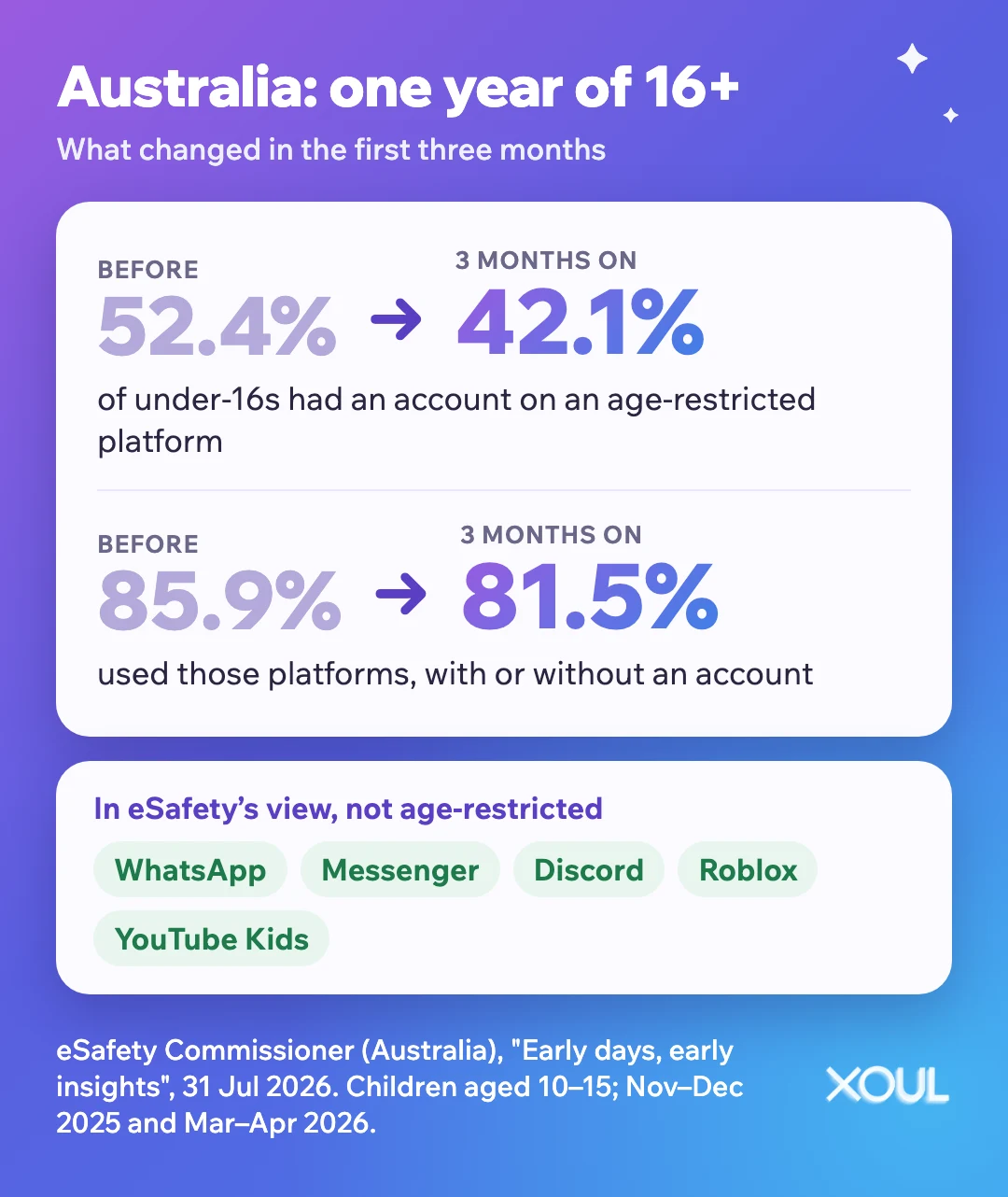
eSafety also flagged something every parent will recognise: in some groups, especially girls and 10- to 12-year-olds, parents knew less about what their children were doing on social media. Its takeaway is that open conversation at home still matters. In September 2026, Parliament passed a bill to strengthen eSafety's enforcement powers. Results from the evaluation will keep being published until 2028, so it's too early to say whether the law is meeting its goals.
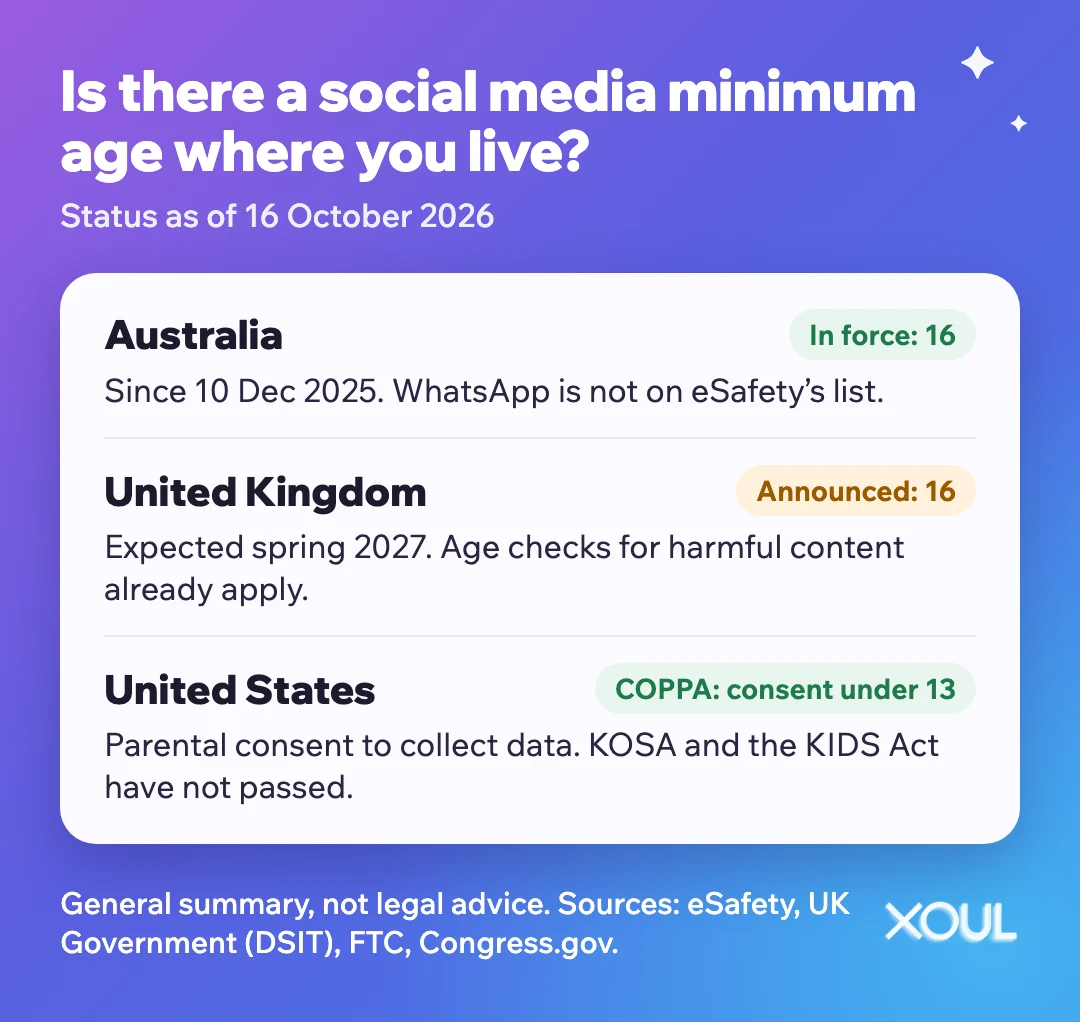
A general summary as of 16 October 2026 (not legal advice). It helps to separate what already applies from what has been announced or is still a bill:
While the rules are debated, everyday life has moved ahead. Each study measures something different, so it's best not to compare countries directly:
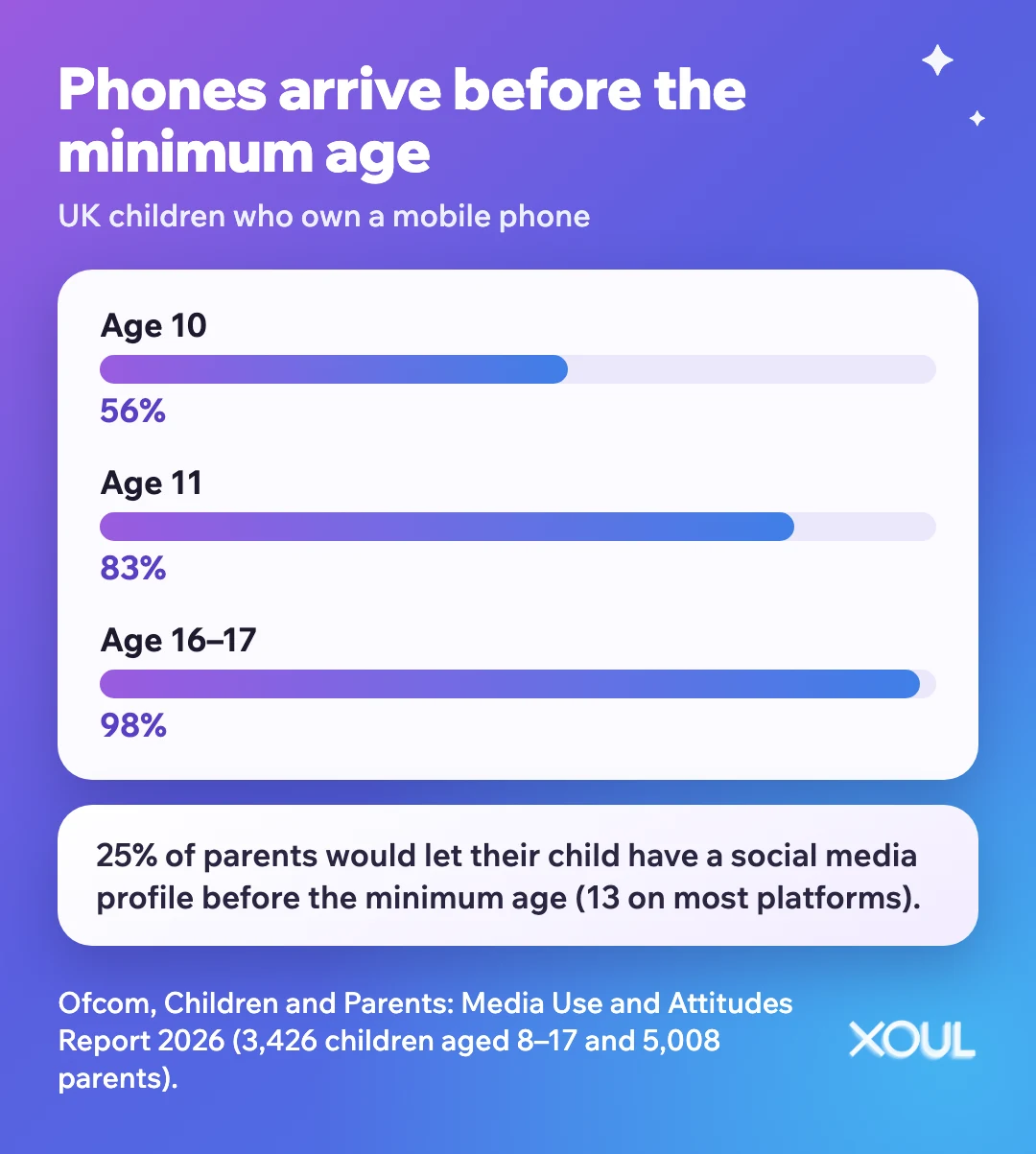
In other words: law or no law, many kids have a phone and social media before the age platforms ask for. So the conversation at home can't wait for the rules to change.
Each rule says it differently. Australia lists WhatsApp as not age-restricted. The UK says children will keep access to messaging services to stay in touch with family and friends. The US Kids Online Safety Act, as drafted, names messaging applications among the services it covers; it hasn't passed.
WhatsApp is one of the places where a big part of social life happens for many kids. Here's what the signals Xoul detected in the WhatsApp chats of families that use Xoul showed in August and September 2026:

If access to social media comes later, class, team and friendship group chats may matter more. A minimum-age law may not reach those chats. Families can.
When an app closes the door or asks for an older age, social life doesn't vanish: sometimes it moves elsewhere. A few signs worth noticing:
No single sign is a reason to panic. If several show up together and stick around, it's worth a calm chat.

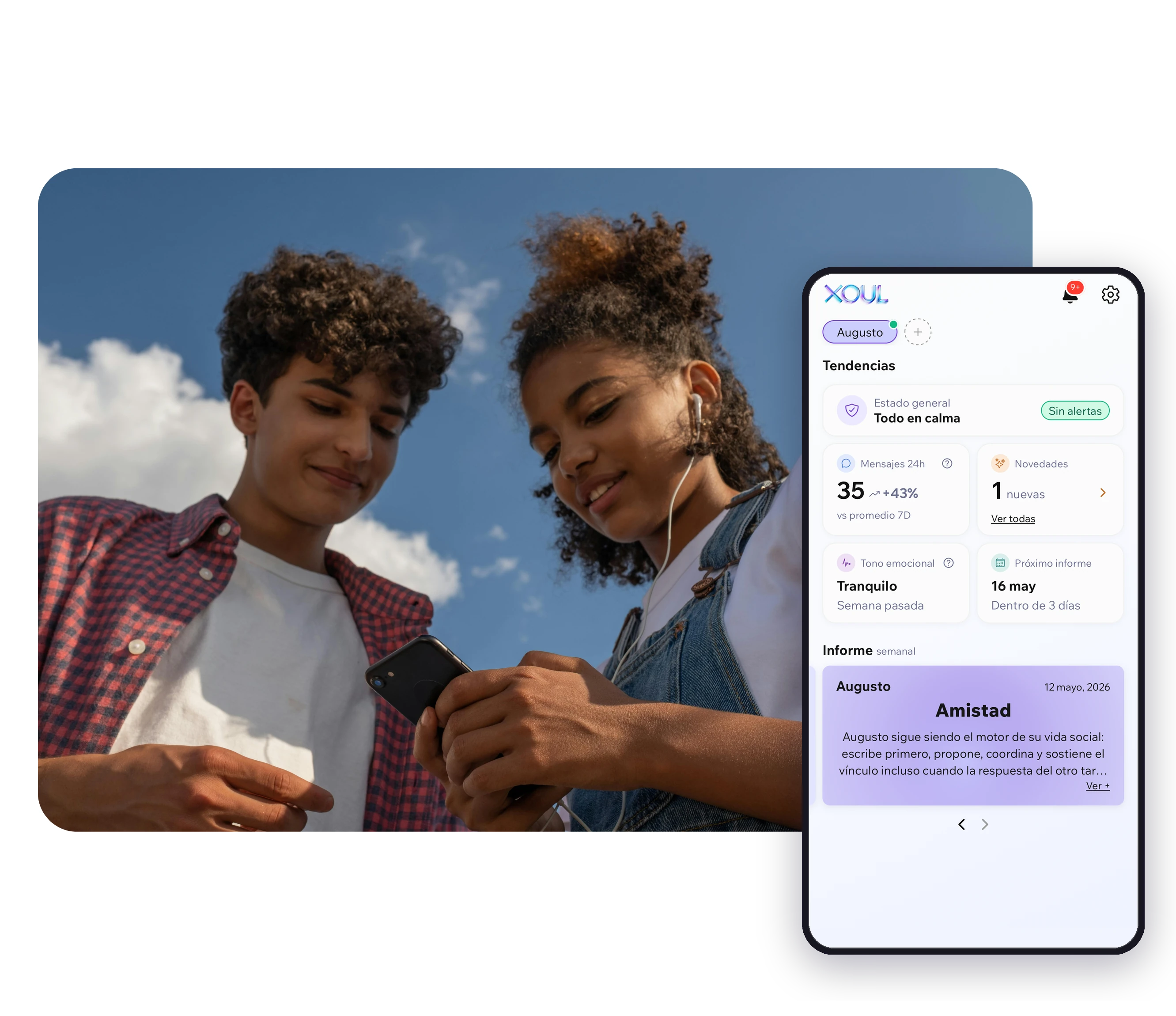
This is what an Update looks like in the app. Example account with made-up data.
If you use Xoul, something like being left out of a group or a change in mood may show up in their report or in Updates, labelled ‘Attention’ when it needs care. Xoul doesn't show you their messages: it shows you how they're doing.
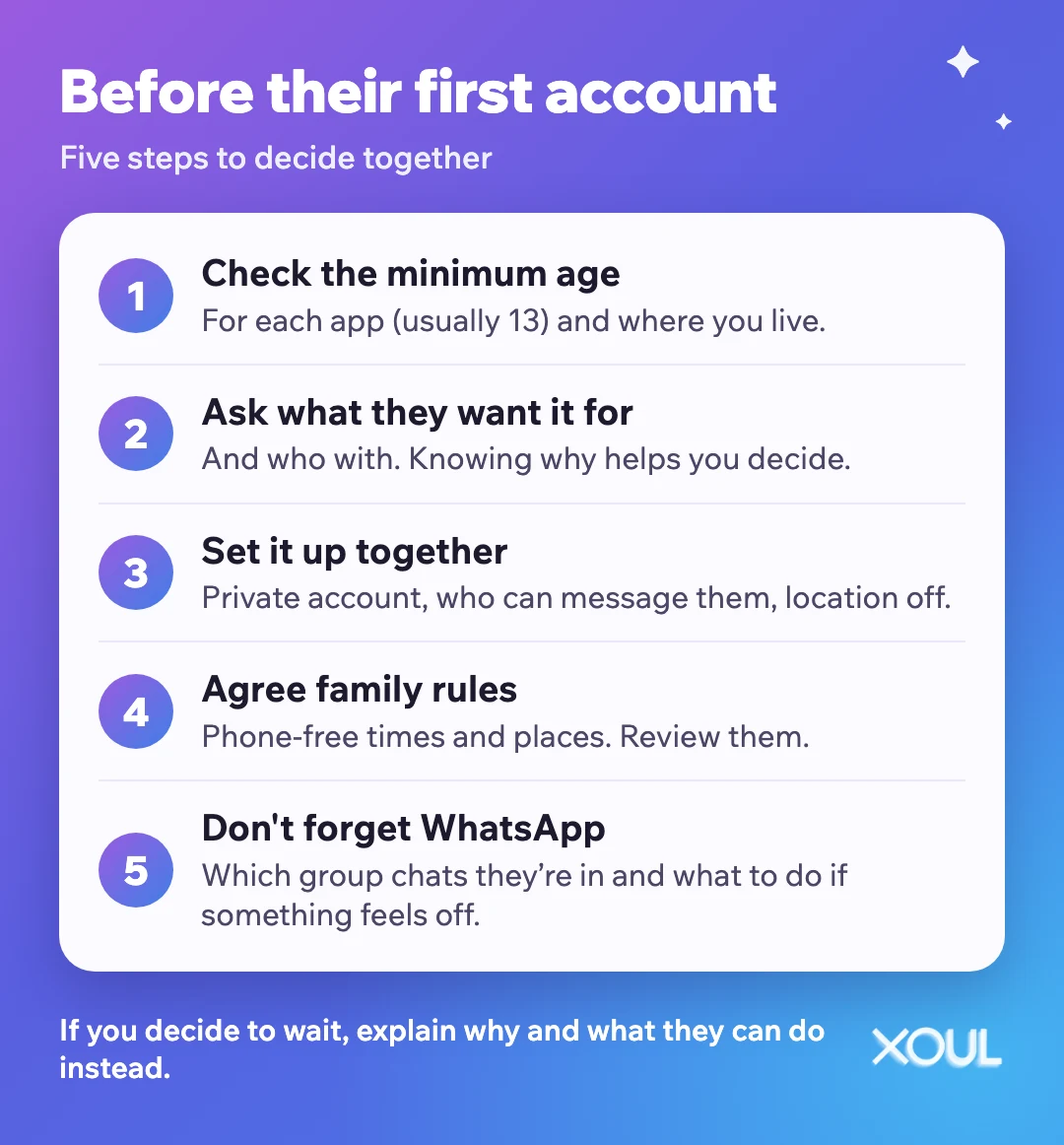
If you decide to wait, explain why and what they can do instead. Saying no without a reason often leads to accounts you don't know about.

The minimum-age debate can be a good way to start a conversation without turning it into a lecture. A few ideas:
If you use Xoul, the conversation idea in each report can help you get started. More in social media and teens: how to care without spying.
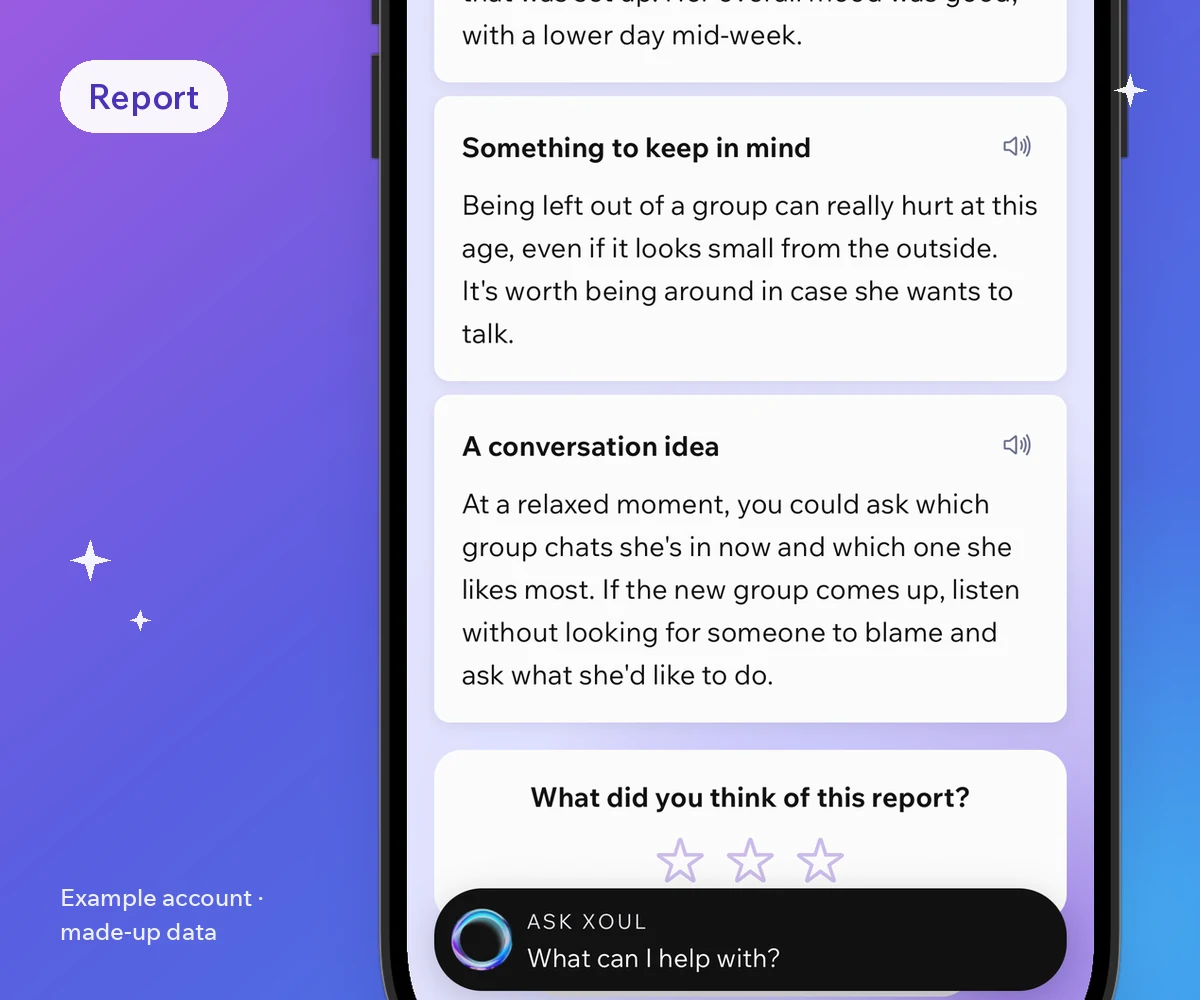
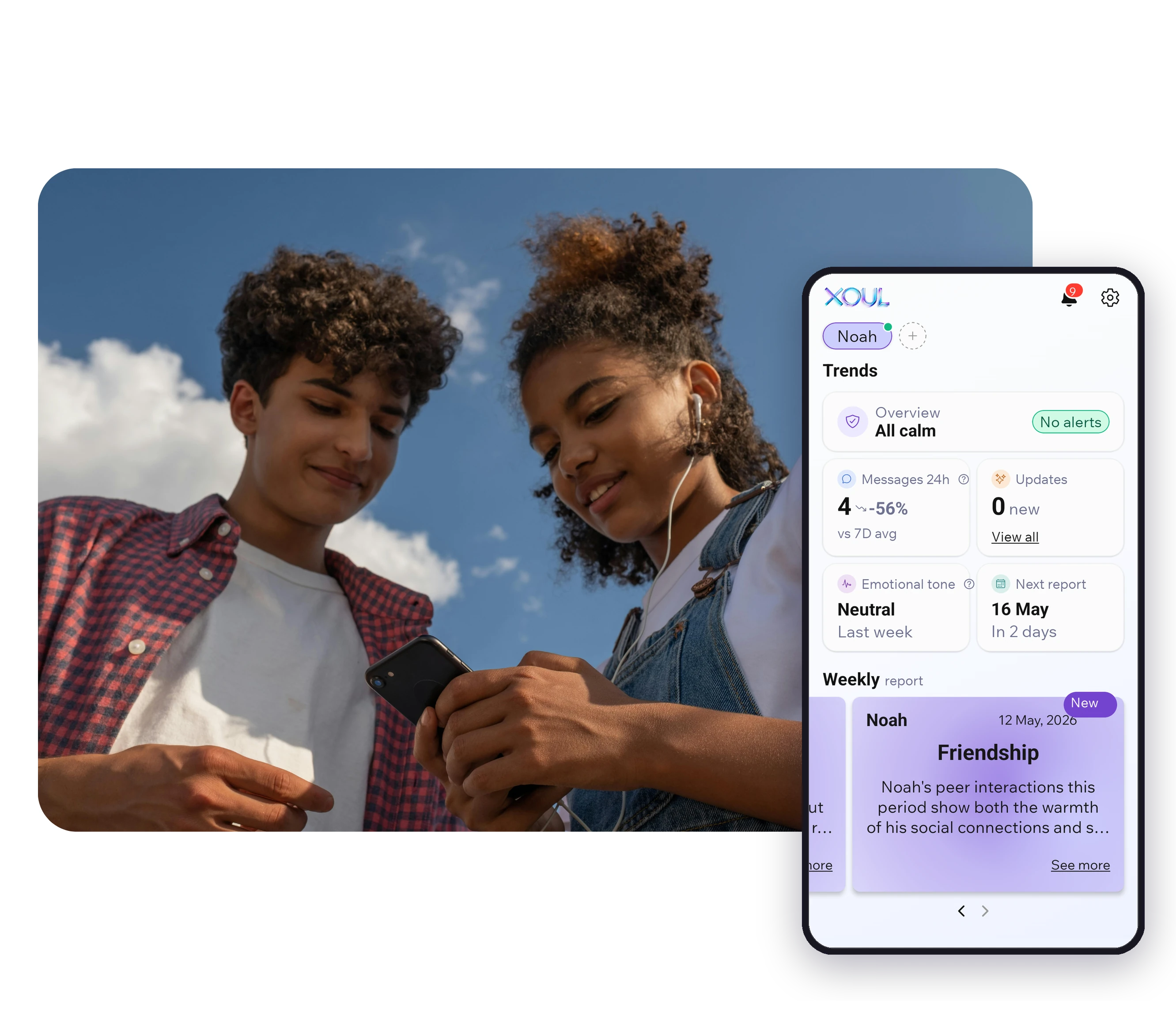
This is what a report looks like: what was noticed and an idea for a conversation. Example account with made-up data.
Xoul supports families on WhatsApp, one of the places where many kids' social life happens. It connects to your child's WhatsApp with a QR code, always with their consent. AI supervised by a clinical team tells you how they're doing in regular reports: their mood, their friendships, what's worrying them and an idea for a conversation. If something needs attention, it may show up in the report or in Updates, and Trends shows you how things change over time.
What you never see are their messages, which are deleted after the system analyses them. Xoul doesn't analyse images either.
In Australia, platforms have had to keep under-16s off since 10 December 2025. In the UK, a ban is expected to come into force in spring 2027. In the US there's no federal under-16 rule; most platforms ask for 13 in their terms.
It depends on the rule. Australia lists it as not age-restricted, and the UK has said children will still be able to use messaging services; the US Kids Online Safety Act, as drafted, would cover messaging apps, but it hasn't passed. WhatsApp sets its own minimum age in its terms, which can vary by country.
It's too early to tell. After three months there were fewer under-16 accounts, but many children were still using social media. Results from the official evaluation will keep being published until 2028.
Through conversation, agreements and, if you like, Xoul: you see how they're doing in reports and Updates, without access to their chats and always with their consent.
Laws can set limits for platforms, but they can't replace an adult who's around to ask, listen and agree on things together. And on WhatsApp, where so much of their social life happens, that support starts at home.
Your first Xoul report is free, arrives in 10 minutes and needs no card. Download Xoul and start today.
XOUL gives you private reports with risks, emotions and important moments, always from a respectful approach.