
Updated 19 October 2026 · 9-minute read
They come home from school and go straight to their room. Suddenly they don't want to go to a classmate's party. They have a stomach ache every Monday morning. It might be a bad day, a falling-out that's over by tomorrow, or something that has been going on for weeks. This guide helps you tell the difference and respond calmly.
In short:
School violence is any physical, verbal, sexual or psychological harm that happens at school, on the way there or in class group chats. Bullying is one form of it: behaviour that is repeated, deliberate and involves someone with more power targeting someone with less. A one-off argument between equals isn't bullying, even if it hurts.
| Ordinary conflict | Bullying | Serious violence | |
|---|---|---|---|
| What it looks like | Arguments, anger, misunderstandings between equals | Teasing, insults, exclusion or hitting that keeps happening | Serious physical assault, threats, weapons, abuse |
| How long it lasts | Sorted within days | Weeks or months | A single incident can be enough |
| What to do | Listen and help them work it out | Talk to the school and ask about its anti-bullying policy | Keep everyone safe, tell the school and call emergency services if anyone is at risk |
Getting this right cuts both ways: not panicking over every argument, and not brushing off what keeps happening. In the WhatsApp conversations of families who use Xoul, the two show up in very different proportions.
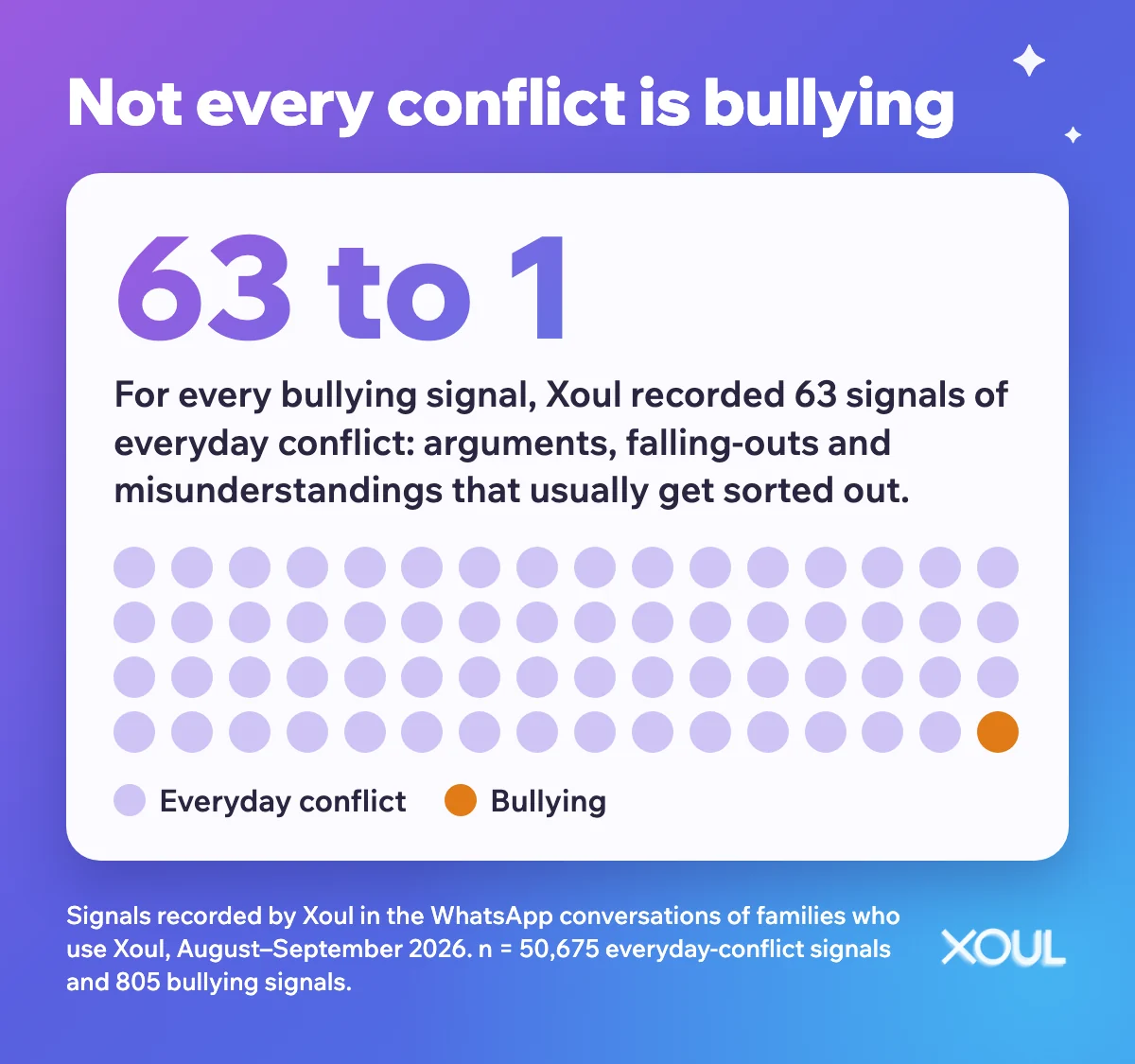
For every bullying signal, Xoul recorded 63 signals of everyday conflict: arguments, falling-outs and misunderstandings that usually sort themselves out. Telling them apart helps you support your child calmly, and step in when it really matters.
Signals recorded by Xoul in WhatsApp conversations, August–September 2026. n = 50,675 everyday-conflict signals and 805 bullying signals.
Fairly common. In PISA 2025, the OECD's international assessment, around one in five 15-year-olds across OECD countries said they were bullied a few times a month or more, and the rate has risen in most countries since 2022. Worldwide, UNESCO estimates that almost one in three students has been bullied in the past month.
| Country | What the data say | Source |
|---|---|---|
| Australia | 23% of 15-year-olds were bullied a few times a month or more (OECD average: 20%) | OECD, PISA 2025 country note |
| United Kingdom | 23% of 15-year-olds were bullied a few times a month or more; 3% had upsetting information posted about them online | OECD, PISA 2025 country note |
| United States | 19% of high school students were bullied at school in the past year | CDC, Youth Risk Behavior Survey 2023 |
PISA 2025 has no comparable bullying figure for the US, so the US row uses a different survey. Figures from different surveys can't be compared directly.
What happens in the classroom often carries on in the group chat. In England and Wales, the Office for National Statistics found that 7 in 10 children bullied online said it was by someone from their school.
Children rarely say "I'm being bullied". What you're more likely to see are changes that last: not wanting to go to school, headaches or stomach aches before class, poor sleep, an unexplained drop in grades, no longer mentioning friends, damaged or missing belongings, or a sudden change in how they use their phone.

Some concrete signs, based on the guidance from Bullying No Way, the national initiative run by Australia's education authorities:
One sign on its own proves nothing: it's a reason to talk. If you notice several together and they don't go away, it's worth getting in touch with the school.
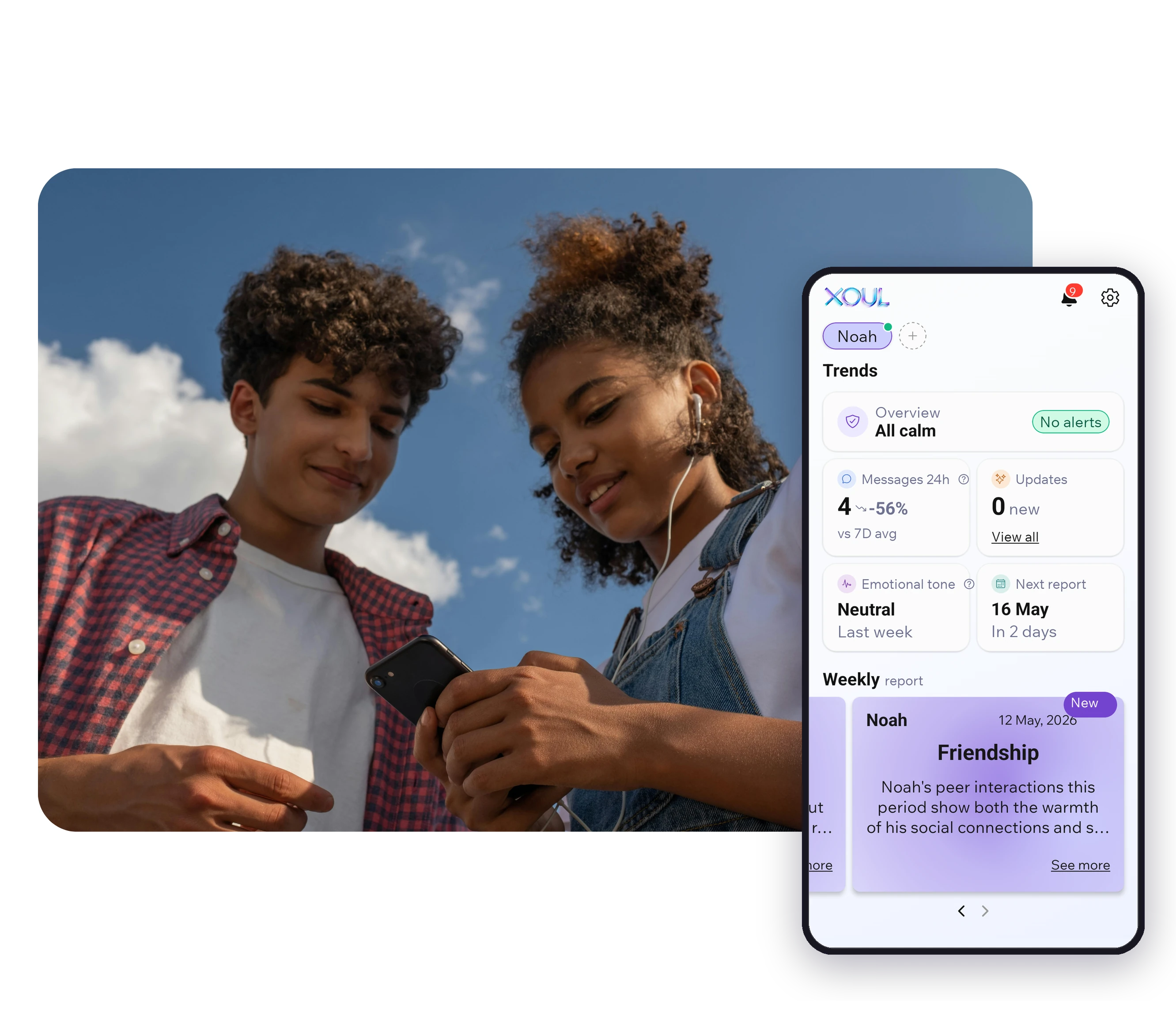
What might show up in Xoul. Xoul doesn't show you your child's messages: it shows you how they're doing. If their WhatsApp conversations show signs of teasing, insults or being left out of a group, this may appear in their report or in their Updates, along with a suggestion for how to support them. It isn't an instant or real-time alert, and Xoul doesn't analyse images, only the text and voice notes in their conversations.

It happens more often than many parents and carers think. In a significant share of the bullying signals Xoul records, the young person is joining in with the teasing or with a group that leaves someone out, rather than being the target. That doesn't make them "a bully": often they join in for fear of being the next target.
If you find out, avoid shaming or making an example of them. Ask what happened and how they think the other person feels. Ask them to put it right (an apology, leaving a chat where someone is being mocked) and let the school know you're aware and want to work together. What tends to help is putting things right and changing the behaviour, not just a punishment.
Pick a calm moment without screens in the way: in the car, while cooking or on a walk. Start with what you've noticed, not an accusation, and listen more than you talk. Most importantly, make sure they know that telling you won't get them punished: you won't take their phone away for it.
Some phrases that help:
If they don't want to talk right then, don't push. Let them know the door is open and try again another day. Sometimes they tell you on the third try, or in a message.
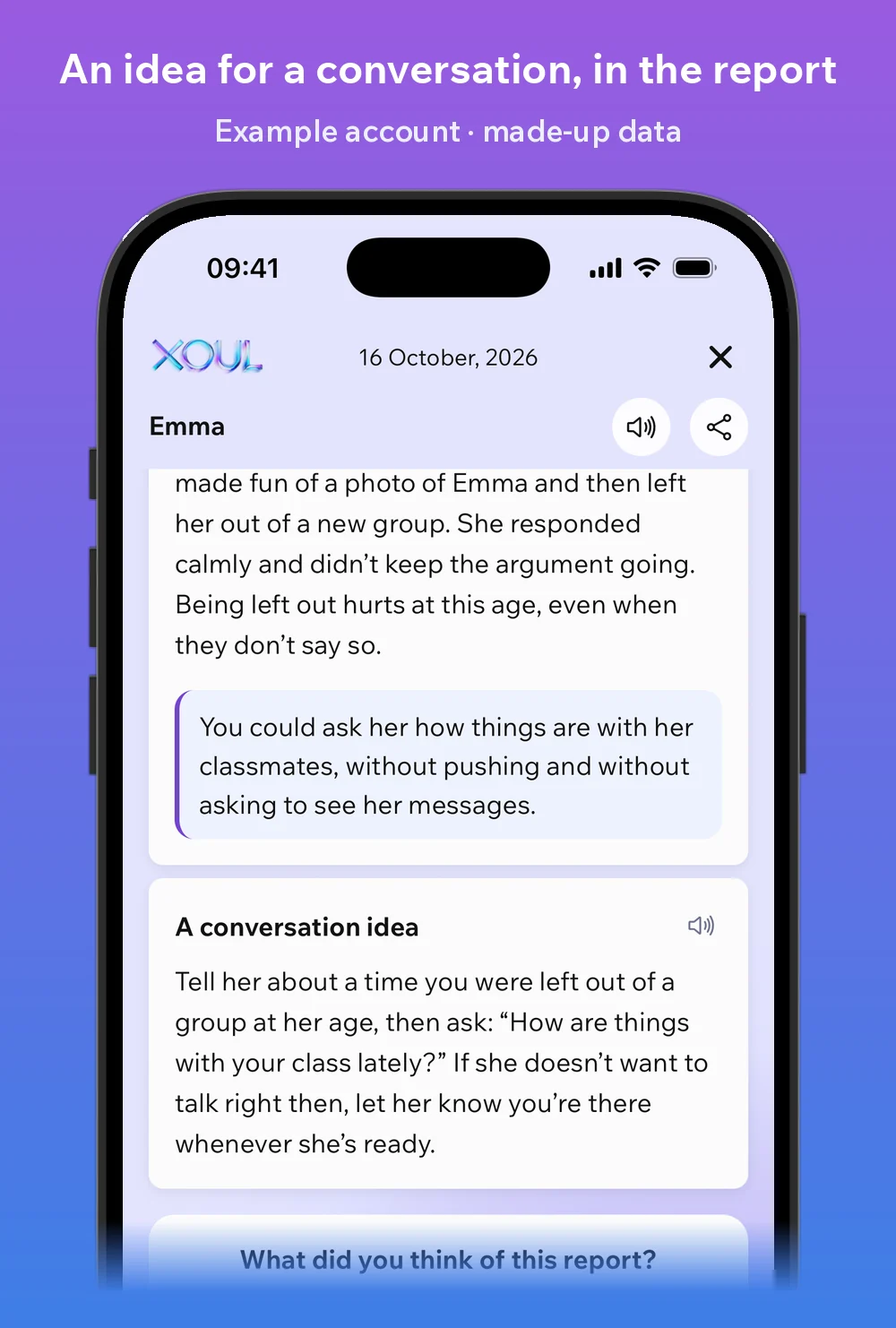
Each Xoul report includes an idea for a conversation. It's a specific suggestion, tailored to their age and what they're going through, so you can start talking without mentioning their messages or asking to see them. Xoul's team includes psychology professionals.
Schools can't act on bullying they don't know about, and they have a duty to respond. Book a meeting with your child's teacher or head of year, bring written notes on what happened and when it started, ask what steps their policy sets out, and agree when they'll update you. Avoid contacting the other family directly: it often backfires.
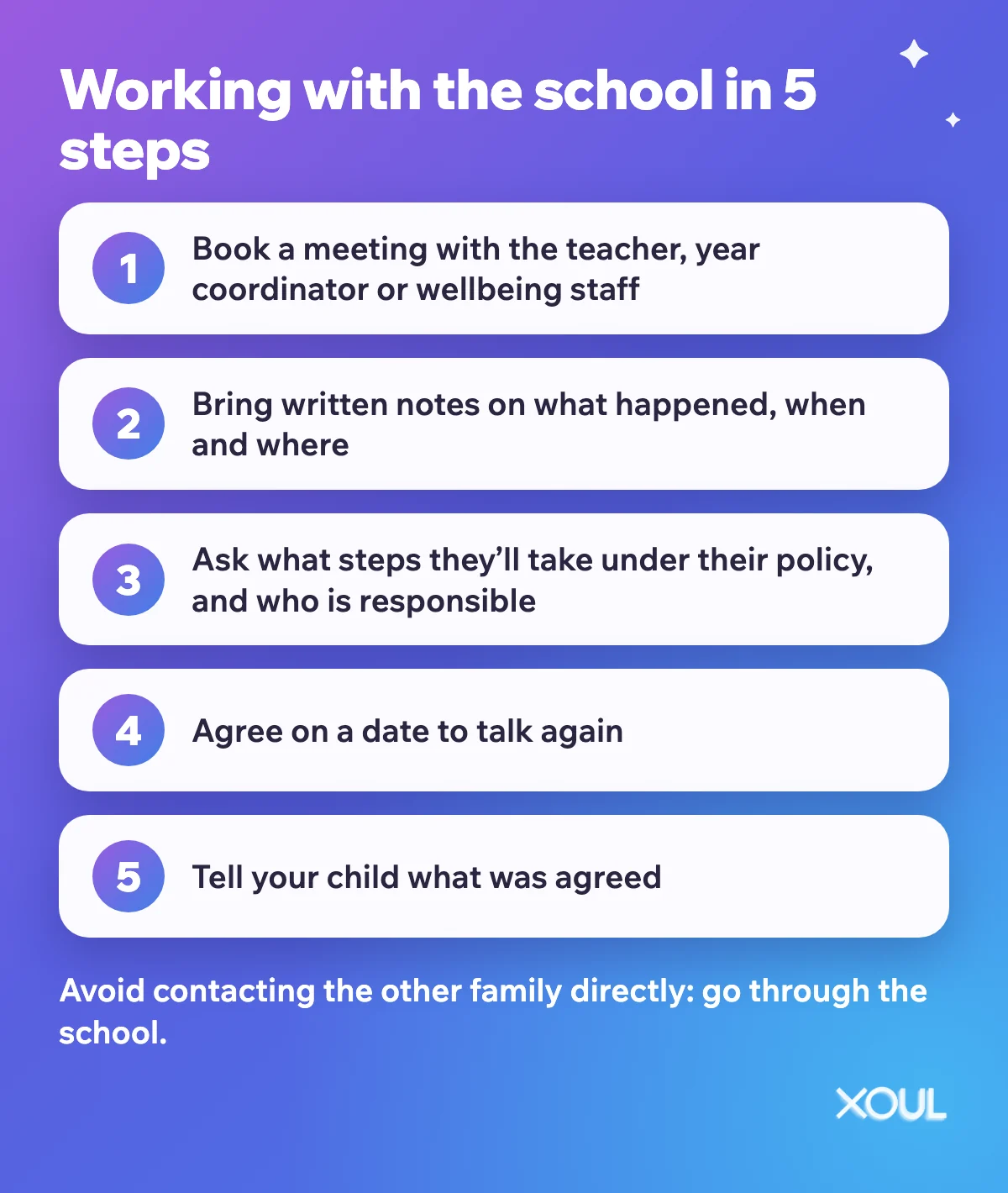
What the rules say:
Take it seriously, but stay calm. If your child tells you someone has threatened to hurt others, or that they've seen a weapon or a plan, tell the school the same day. If the danger seems immediate, call emergency services. Don't forward viral threats: show them to the school or the police instead.
Thank your child for telling you: very often, the person who speaks up is a classmate. And if you notice your child spending a lot of time in forums or groups that glorify violence, don't respond with a ban. Ask what they find there and what draws them in, and get support from their school or a mental health professional.
Start with your child's school, and remember you don't have to handle it alone. If your child is being bullied or hurt at school, these free services support both young people and their parents and carers. If someone is in immediate danger, call emergency services.
If the bullying carries on online, our guide to cyberbullying: what it is, how it affects kids and what to do at home explains how to keep evidence and report it in the apps. You can also read how to spot cyberbullying.
A lot of school social life carries on in class WhatsApp groups. Xoul helps you understand how your child is doing there, without reading their chats. With their consent, you connect their WhatsApp with a QR code and receive emotional wellbeing reports, Updates and ideas for conversations.
To understand how group chats work and what goes on in them, read our parents' guide to WhatsApp for kids. To see what a report looks like, take a look at how Xoul works. Your first report is free and arrives in about 10 minutes: download Xoul.
Look at three things: whether it keeps happening, whether it's deliberate and whether there's an imbalance of power (several against one, someone older or more popular). A falling-out between friends that's over in a few days is part of growing up. If it lasts for weeks or your child is scared, it's more than a falling-out.
It's best not to approach them directly. It tends to escalate things and puts your child in an awkward position. The recommended route is through the school, which has a duty to step in and to talk to all the families involved.
Ask for their response in writing and request a meeting with the principal or head teacher. If nothing changes, you can follow the school's formal complaints procedure or contact your local education authority. In the meantime, look after your child: make sure they know you believe them and they're not alone.
Xoul doesn't send instant alerts. If their WhatsApp conversations show signs of teasing, insults or exclusion, this may appear in their report or in Updates, with a suggestion for how to support them. Xoul doesn't show you their messages or analyse images, and it requires your child's consent.
XOUL gives you private reports with risks, emotions and important moments, always from a respectful approach.