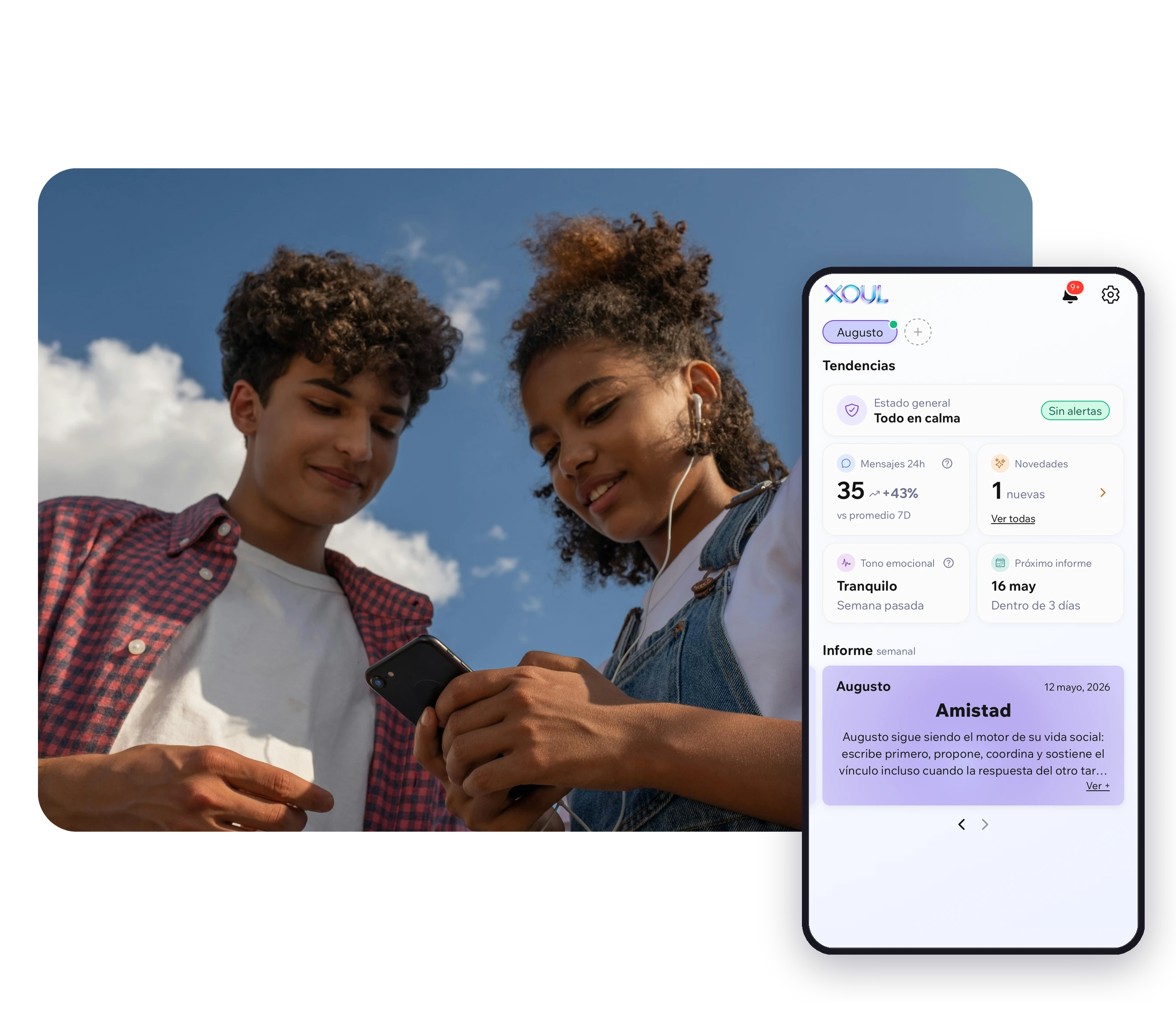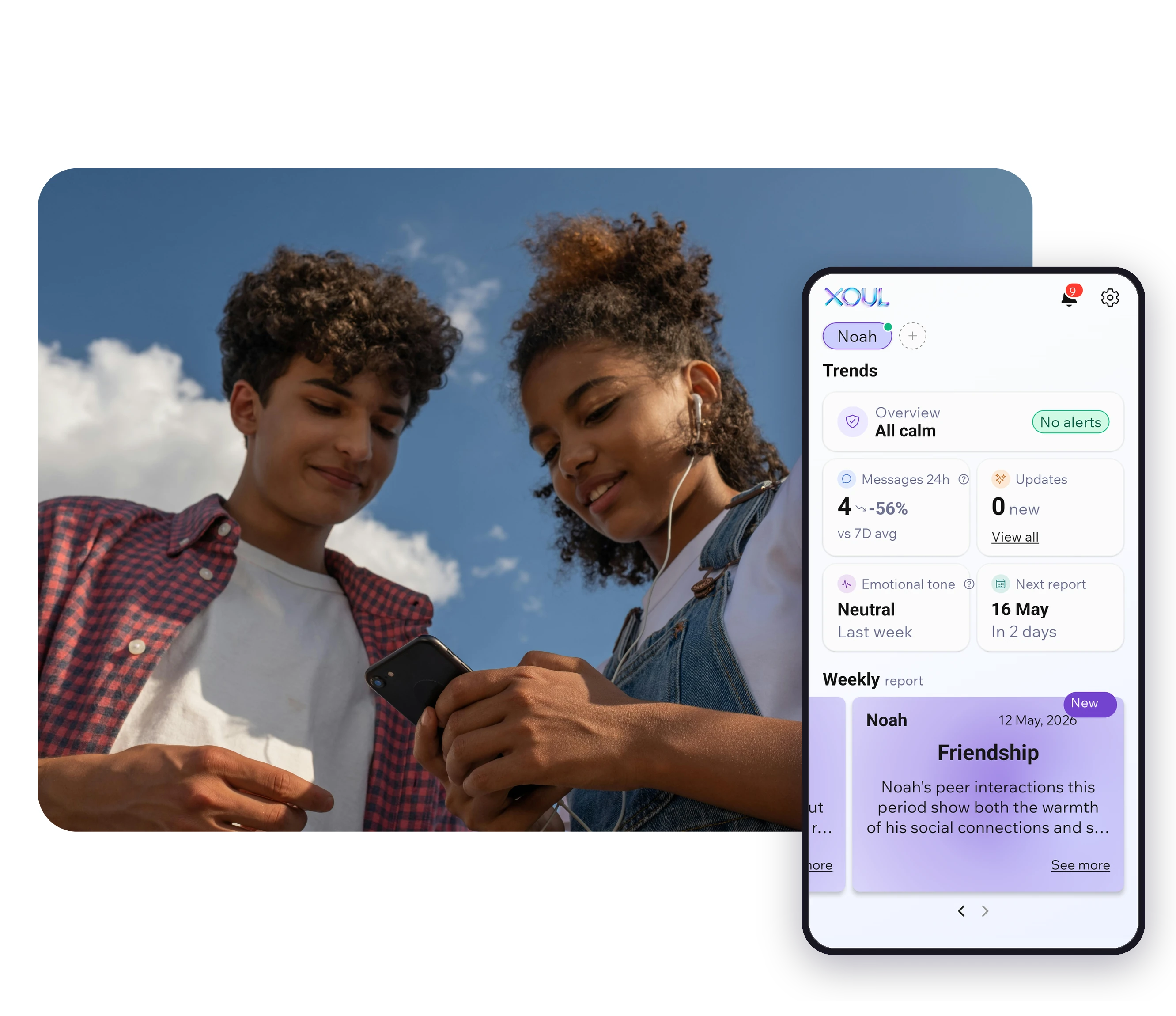
Direct answer: yes. Reading conversations and understanding how your child is doing are two different things. It's possible to analyze signals — emotional tone, shifts in their relationships, behavioral patterns — and deliver that reading to a parent without exposing message content. That's accompaniment: the adult gets context, not transcripts.
A parent who reads a hundred of their daughter's messages has a hundred messages. They don't necessarily have an answer to the question that actually matters: is she okay?
Teen conversations are mostly noise: memes, half-finished voice notes, inside jokes, plans that change three times. The signal is in the pattern, not the isolated line. A shift in how she says goodbye to friends, a conversation that goes quiet, a group she stopped participating in. That doesn't show up by reading — it shows up by comparing.
And there's a cost: reading without permission breaks trust at exactly the stage when trust is the only tool still working. When a teenager finds out they were read, they don't start writing less. They start writing somewhere else.
Direct answer: parental control restricts (blocks apps, limits hours, filters content). Accompaniment interprets (detects emotional and risk signals, and gives the adult context for a conversation). Control acts on the device; accompaniment acts on the relationship. They aren't mutually exclusive, but they answer different questions.
Most families need some of both. An 8-year-old with a new tablet needs limits. A 14-year-old who already lives on their phone needs, above all, someone who understands how they're doing. You can go deeper on the distinction in our parental accompaniment guide and compare approaches in the 2026 app comparison.
The process has four steps, and the order matters:
That's how XOUL works. The adult knows the emotional tone shifted this week, or that tension appeared in a group chat. They don't know who said what. The details of how data is handled are in privacy and security.
Worth stating plainly: risk detection is technology under continuous development and it can make errors or omissions. Alerts are interpretive signals, not certainties. They exist to help you move closer and ask, not to confirm anything.
That's a fair objection and it deserves a direct answer. The difference comes down to three concrete points:
One external reference point: when OpenAI launched ChatGPT's parental controls, it made the same design decision. Linking a teen's account lets a parent manage settings and receive safety notifications, but it does not give access to conversations. We cover this in our guide to ChatGPT parental controls.
Not all signals carry the same weight. These are the ones clinical practice treats as most informative:
On that last point, an important clarification: clinical risk signals are not a metrics dashboard. When they appear, the next step is to talk with your child and, if needed, consult a mental health professional. No tool replaces that.
The conversation works better when it comes before the install, and when it's honest about the limits of what you'll actually see. Three things that help:
We have a dedicated guide on how to talk to your child about XOUL.
Yes. It's possible to analyze patterns in their digital activity — emotional tone, relationships, behavioral shifts — and deliver that reading to a parent without exposing conversation content. The adult receives interpretations, not transcripts.
Parental control restricts: it blocks apps, limits screen time, and filters content. Accompaniment interprets: it detects emotional and risk signals so the adult can start a conversation. Control acts on the device; accompaniment acts on the relationship.
No. XOUL analyzes messages to generate reports, but adults never access the content. No transcripts, screenshots, or history are available. Original conversations are deleted once the report is generated.
Yes. XOUL requires the child's explicit consent during setup, and they can disconnect the link at any time from their own WhatsApp.
Emotional tone, shifts in social relationships, behavioral patterns, and signals associated with risk situations such as cyberbullying, grooming, sexting, or harmful content. Alerts are interpretive signals, not certainties: the technology can make errors or omissions.
Yes. Use is grounded in parental authority, which includes the right and responsibility to accompany a minor child's life, including their digital life. XOUL additionally requires the child's explicit consent.
Between 8 and 16, when independent digital life begins. In early childhood, control tools usually matter more; in adolescence, accompaniment does.
The first report arrives in 10 minutes, is free, and requires no credit card.
XOUL gives you private reports with risks, emotions and important moments, always from a respectful approach.