Direct answer: ChatGPT parental controls let you link your account to your teen's in order to manage features, schedule hours when the app can't be used, and receive safety notifications in limited, serious situations. They do not let you read their conversations or view their chat history. Since August 2026, users aged 13 to 17 are automatically placed into ChatGPT for Teens, an experience with protections on by default.
AI stopped being a novelty and became part of kids' daily routine. According to Common Sense Media's 2026 census on AI use among children aged 9 to 17, 86% already use or interact with some form of AI, 52% do so at least weekly, and 24% every single day. Among 16- and 17-year-olds, that figure climbs to 92%. Chatbots are the most-used category (67%), and ChatGPT tops the list at 40%.
But the number that matters most to our team is a different one: more than 4 in 10 kids say no parent or guardian has ever talked to them about AI safety.
That's the real problem. It isn't that kids use AI. It's that they use it alone.
Almost all of the progress on protections for minors in ChatGPT happened in the past year. It's worth reviewing, because many guides still describe a product that no longer exists.
ChatGPT no longer relies solely on the age a user declares. A prediction system reads behavioral signals — topics discussed, time-of-day patterns, account age — to identify accounts likely to belong to someone under 18 and route them into the restricted experience automatically. It still isn't identity verification, but it's a meaningful step up from self-reporting.
The internal spec that governs how the model responds now includes teen-specific principles grounded in developmental science. They go beyond blocking sexual or romantic content: the model should not use romantic language, should not encourage emotional dependence, and should not imply that it has feelings or consciousness. That's a significant design choice, because it targets the least visible risk of all — attachment.
This is the biggest shift. Users aged 13 to 17 — or anyone the system estimates to be under 18 — are automatically moved into a distinct experience, rolling out globally in stages. It includes:
Notifications related to eating disorders were added to the existing set, with an explicit principle of sharing the minimum necessary and only in moments where offline adult support may matter most.
ChatGPT's parental controls come with a stated, deliberate limit: linking accounts does not give a parent or guardian access to the teen's conversations, chat history, or real-time activity. Safety notifications describe the type of concern detected, but never include the transcript.
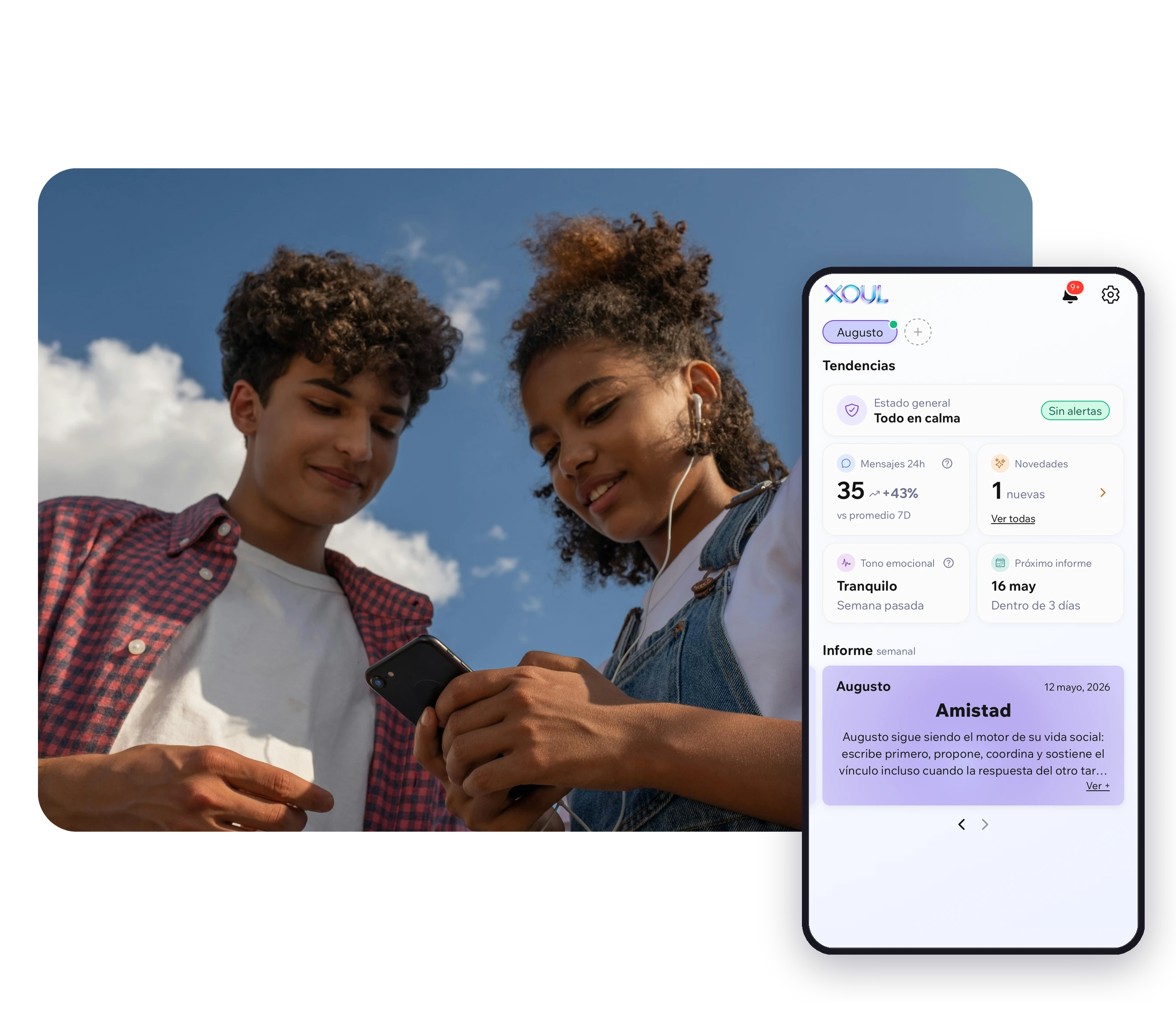
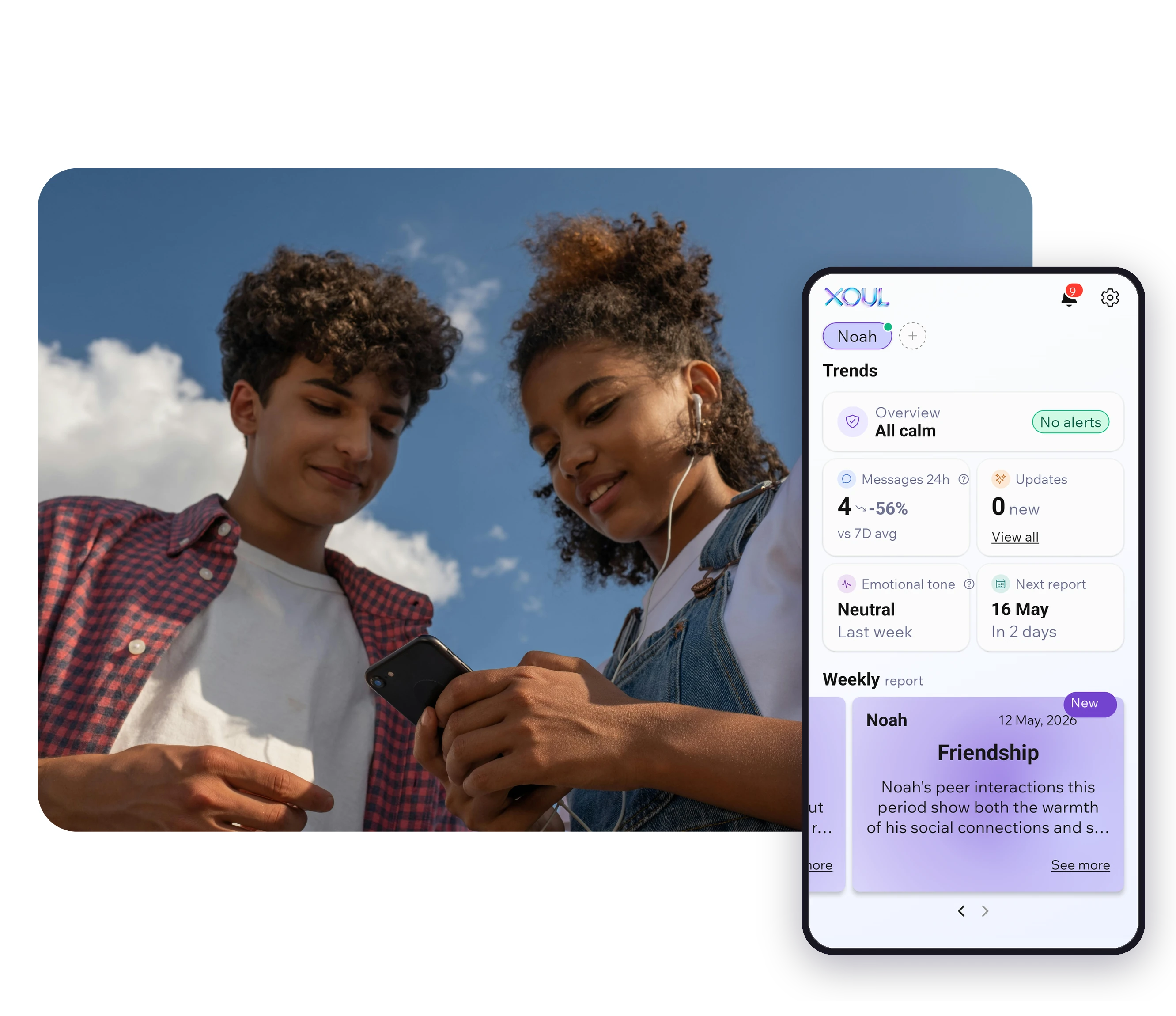
That's the exact same design decision we made at XOUL when we built the product: an adult can know how their child is doing without reading what they write.
The fact that one of the most widely used platforms in the world reached the same conclusion confirms something we've been arguing for a while. The debate is no longer control or no control. It's about what information an adult actually needs in order to support their child, and how much of the child's privacy has to be traded away to get it. Increasingly, the answer is: less than people assumed.
Before you configure anything, sit down with your teen and explain why. Controls set up in secret tend not to last: teens notice, unlink, or open a second account. An agreement you talked through lasts far longer.
If you send the invitation:
If your teen invites you: from their account, under Settings > Parental controls, they can select Invite a parent and send you the request.
Either of you can unlink the accounts at any time. If your teen unlinks, you are notified.
Two useful clarifications: your teen cannot change settings you manage while accounts are linked, and study hours do not block access — they only change how conversations start. To block usage, use quiet hours.
When they turn 18, the account leaves the teen experience, parental controls are removed, and safety notifications stop. Both of you are notified.
Being honest about limitations is part of supporting your child well. These are the weak points worth keeping in mind:
At XOUL, we don't think the answer to those gaps is reading more. We think it's understanding better.
A parent doesn't need their child's transcripts in order to support them. They need to know how their child is doing: whether their emotional tone shifted, whether signs of social tension appeared, whether something deserves a conversation this week. That's what XOUL analyzes in a teen's WhatsApp activity — with their explicit consent and under clinical supervision — to deliver interpreted signals, never their messages.
ChatGPT's parental controls and accompaniment aren't competitors; they complement each other. The controls define the frame. Accompaniment tells you whether your child is doing well inside it. We go deeper in can you know how your child is doing without reading their messages? and in our parental accompaniment guide.
A note of care: self-harm, eating disorders, and emotional distress are sensitive topics, and no configuration resolves them. If you're worried about how your child is doing, the most useful thing is to talk with them and consult a mental health professional. No tool — not OpenAI's, not ours — replaces that conversation.
No. Linking accounts lets you manage settings, schedule hours, and receive safety notifications, but it does not give access to conversations, chat history, or real-time activity. Notifications describe the type of concern without including transcripts.
It's the experience OpenAI launched on August 18, 2026 for users aged 13 to 17. It applies protections by default in higher-risk areas, adds learning tools like Study Mode and responsible homework reminders, and includes break reminders and sensitive-image upload prompts.
Through the age declared on the account and through an age-prediction system, live since January 2026, that estimates whether a user is under 18 based on behavioral signals. It is not identity verification and it can be wrong.
They can unlink the accounts at any time, and you'll be notified if they do. What they cannot do is change the settings you manage while the link is active.
13. Between 13 and 17, the account sits in the teen experience. At 18, parental controls are removed automatically.
They're a solid starting point, but they have limits: they're optional, they only cover that one platform, notifications aren't real-time monitoring, and they don't tell you how your teen is doing emotionally. The conversation at home remains the most important layer.
That's exactly what XOUL does. It analyzes their WhatsApp activity with AI supervised by a clinical team and delivers signals about emotions, relationships, and possible risks, without ever exposing their conversations. The first report is free and arrives in 10 minutes.
XOUL gives you private reports with risks, emotions and important moments, always from a respectful approach.