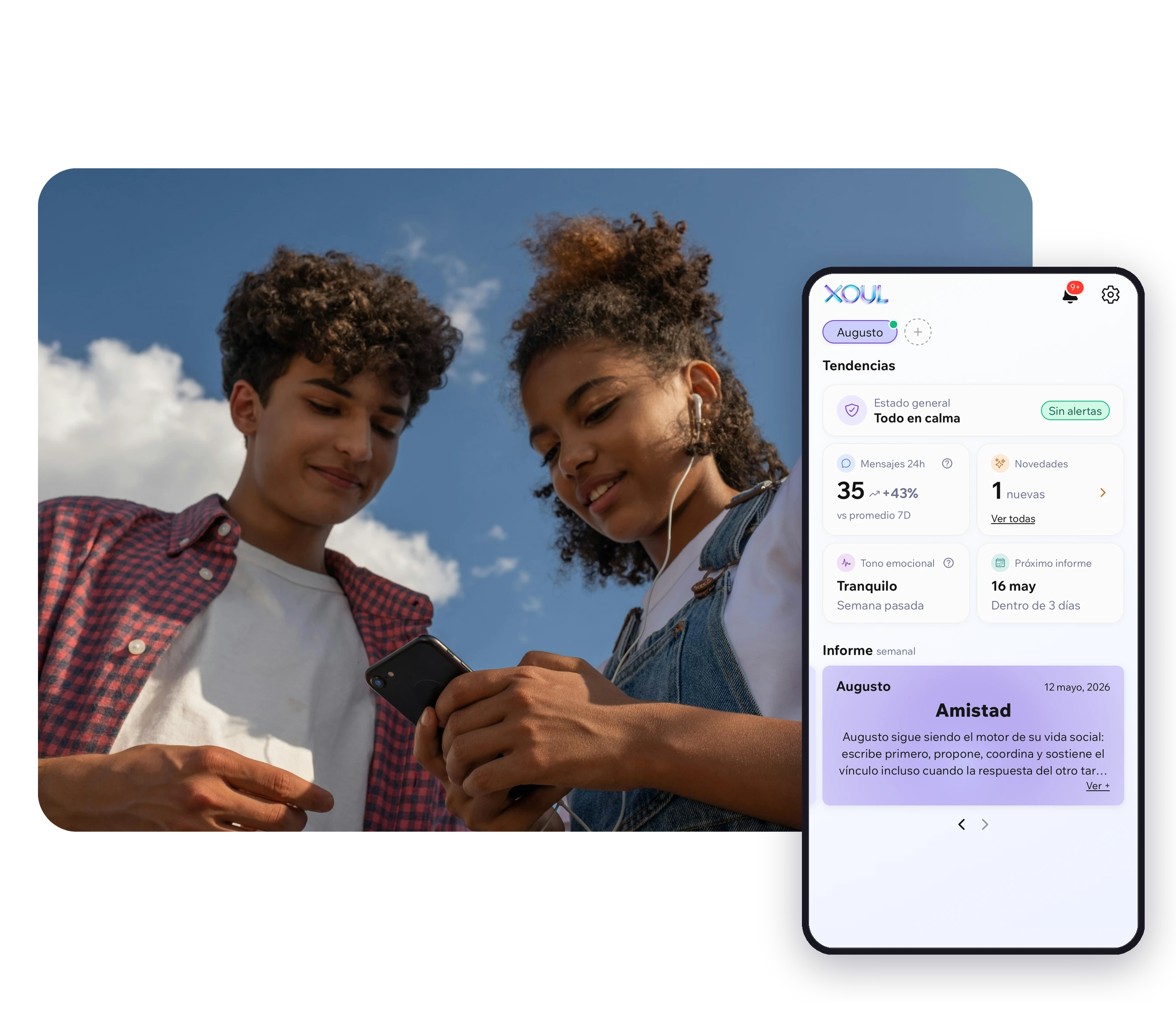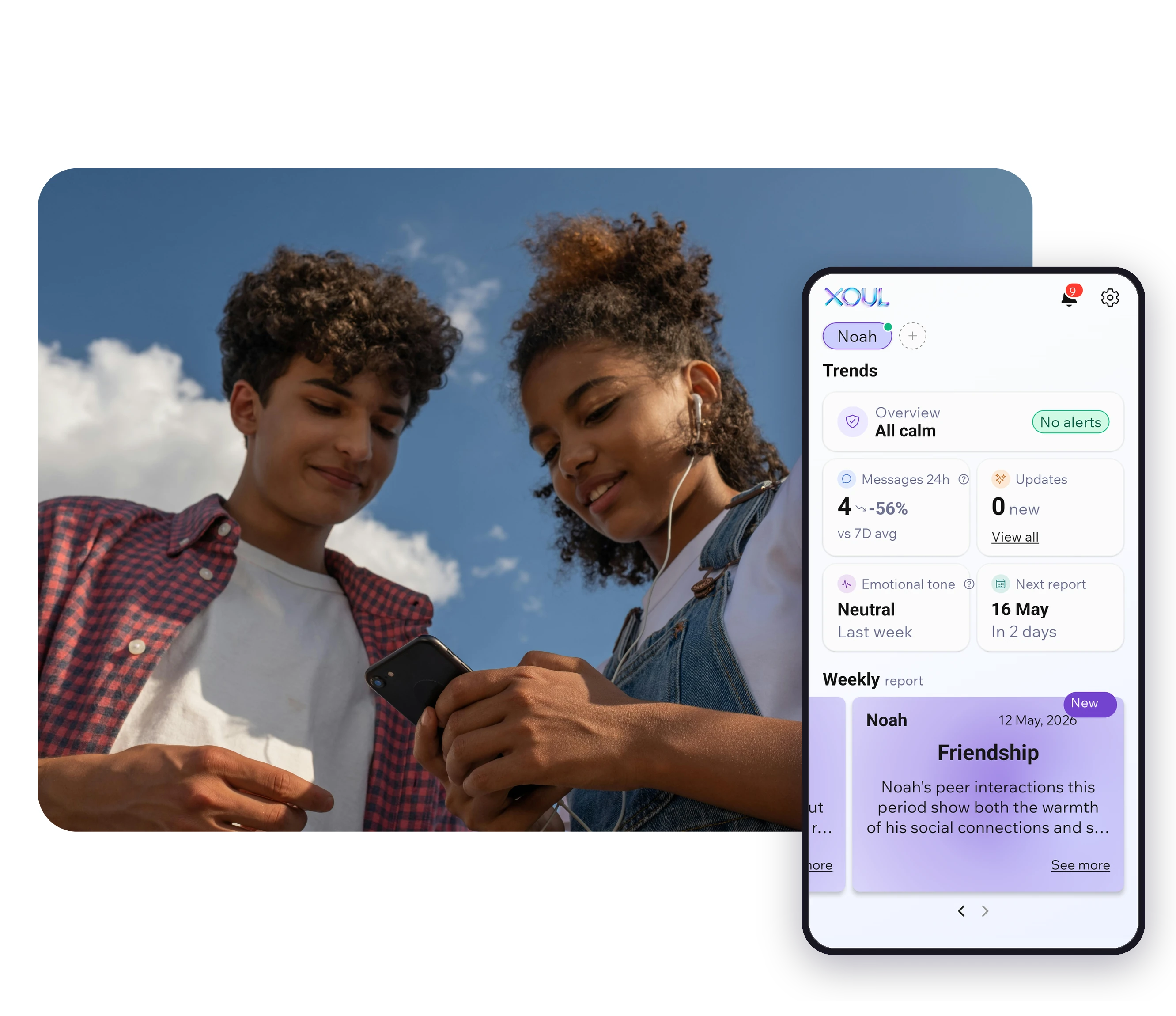
Did you know that the way adults get involved in their children's digital lives matters as much as — or more than — the tools they use? The research is clear: talking, listening and sharing the online world with your children increases the opportunities technology gives them and reduces the risks. Banning or restricting without dialogue tends to have the opposite effect: it cuts down opportunities without necessarily making kids any safer.
That's why, before installing XOUL — and it's worth underlining this: the app should be installed with your child's consent — we want to help you with something just as important: the conversation. This article gives you five keys to opening that dialogue with confidence, respecting your child's privacy and strengthening your relationship.
Transparency is the first step. Before installing the app, explain to your child what it is and what it's for. You can tell them you found a tool that helps you better understand their online world and be there if something worries them or puts them at risk, without invading their privacy.
One important point worth underlining: XOUL doesn't show chats, searches or detailed activity. It only shares relevant information about their digital wellbeing. This isn't about spying, it's about being present. That difference — told in your own words — can completely change how they take the news.
One of teenagers' main concerns about any monitoring tool is the feeling that their parents don't trust them. Get ahead of that fear.
Explain that using XOUL doesn't mean you're going to go through their phone, their conversations or their searches. Quite the opposite: it's a way of giving them more independence. It's about stepping back a little and trusting that they can handle their digital world, while staying close in case they need support. Support from the sidelines, not control.
When kids feel their parents trust them, they're more likely to come to them when something is wrong. That's exactly what we want to build.
Before getting to any agreements, it's worth having a broader conversation about the internet. Not as a lecture, but as a genuine exchange.
You can explore together everything the digital world offers: learning, playing, creating, connecting with friends, discovering new interests. And also talk, without drama, about the challenges that sometimes come up: the constant comparison on social media, peer pressure, cyberbullying, or content that isn't right for their age.
The most valuable part of this conversation isn't the content itself, it's the implicit message: they can talk to you about these things without fear of being judged. That's the ground everything else is built on.
This is one of the most powerful parts of the process: proposing instead of imposing, agreeing as a family instead of deciding unilaterally.
Talk about how you want to use XOUL. Will you review the reports together or will only you receive them? What happens if something worries you — will you talk first, or look at the phone together? There's no single right answer. What matters is that the rules are built together, that your child feels their opinion counts, and that you both understand the goal is to look after each other, not to watch each other.
These agreements can also evolve over time. As trust grows, the way you support them can change too.
Installing XOUL isn't the end of the process, it's the beginning. The conversation about technology and digital life doesn't happen once — it happens many times, at different moments, with different questions.
Bring the topic back every now and then. Listen more than you talk. Show genuine interest in what they do online, the games they like, the creators they follow. You don't need to understand everything or know every social network. What matters most is that you connect with curiosity and warmth.
Let them know they can come to you both when something worries them and when something excites them. That bond of trust is, ultimately, the best digital protection there is.
Technology can help you be more present in your child's digital life. But no app replaces the conversation, the listening and the trust you build day by day.
XOUL is designed to strengthen that bond — not to replace it. Use it as a starting point for a dialogue that will keep growing over time.
XOUL gives you private reports with risks, emotions and important moments, always from a respectful approach.