
They're up late with their notes. They give one-word answers. On Sunday nights they get a tummy ache. And when you ask how it's going, they say "fine" and close the door.
In Australia it's the thick of exam season: the HSC written exams in New South Wales run from 13 October to 5 November, and Victoria's VCE exams from 27 October to 18 November. Elsewhere, end-of-term tests are on the way too. This guide is for parents and carers who want to support their child without adding pressure: how to tell everyday stress from stress that needs help, what the data says and what you can do at home, day to day.
In short:
Stress is the body's response to something that matters. Before an exam, the heart beats faster, the mind sharpens and it's easier to concentrate. When the exam is over, it settles. That's expected, and it's nothing you need to get rid of.
Anxiety that needs attention is different: it doesn't settle after the exam, it takes over (they can't think about anything else, can't sleep, can't eat) and it crowds out things they used to enjoy, like seeing friends, sport or gaming.
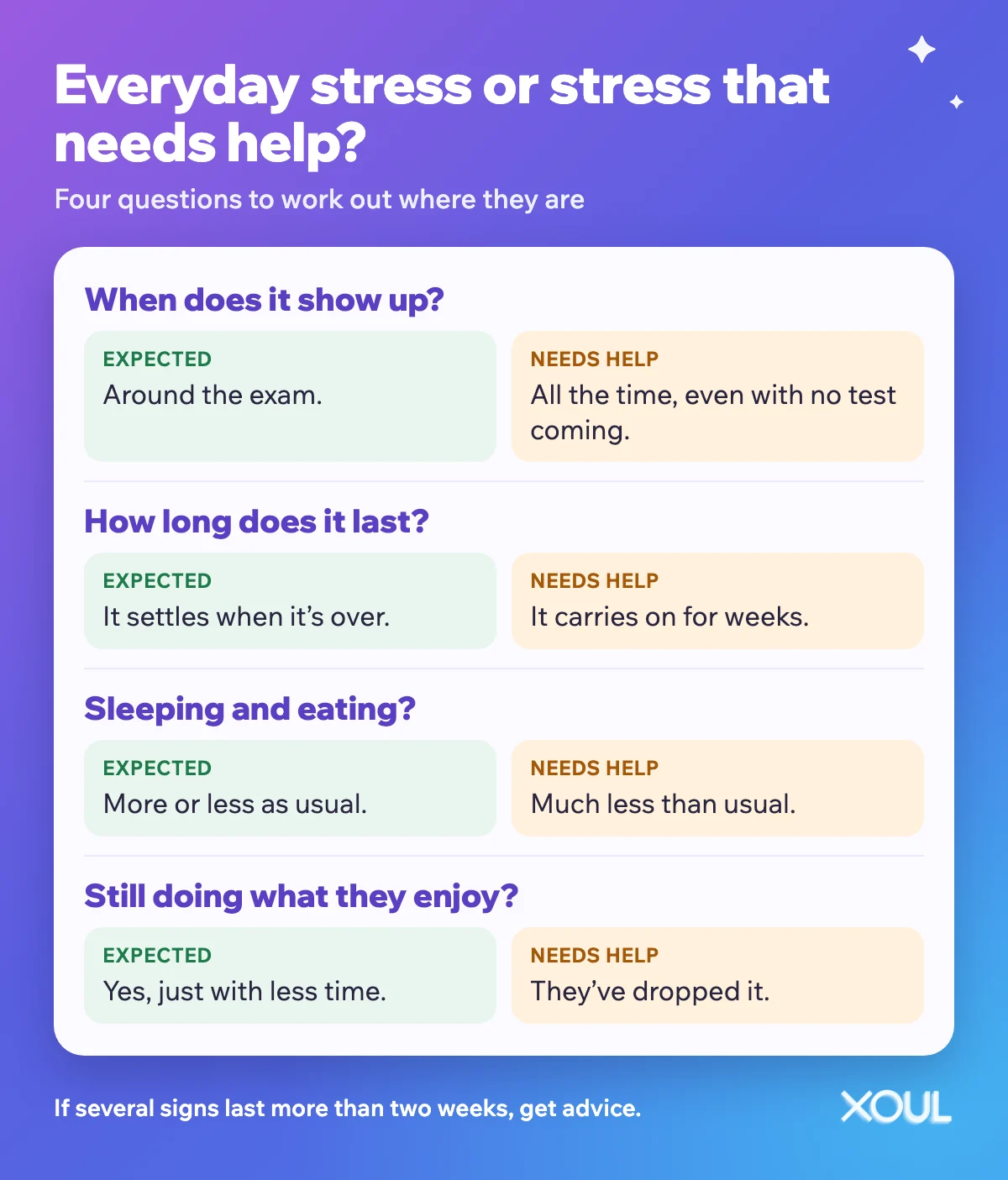
A few simple questions can help you work out where things stand. Do the nerves show up only around exams? Can they switch off at the weekend? Are they still doing things they enjoy? If the answer to all three is "no", it's worth talking it through and, if nothing changes after a few weeks, getting professional advice.
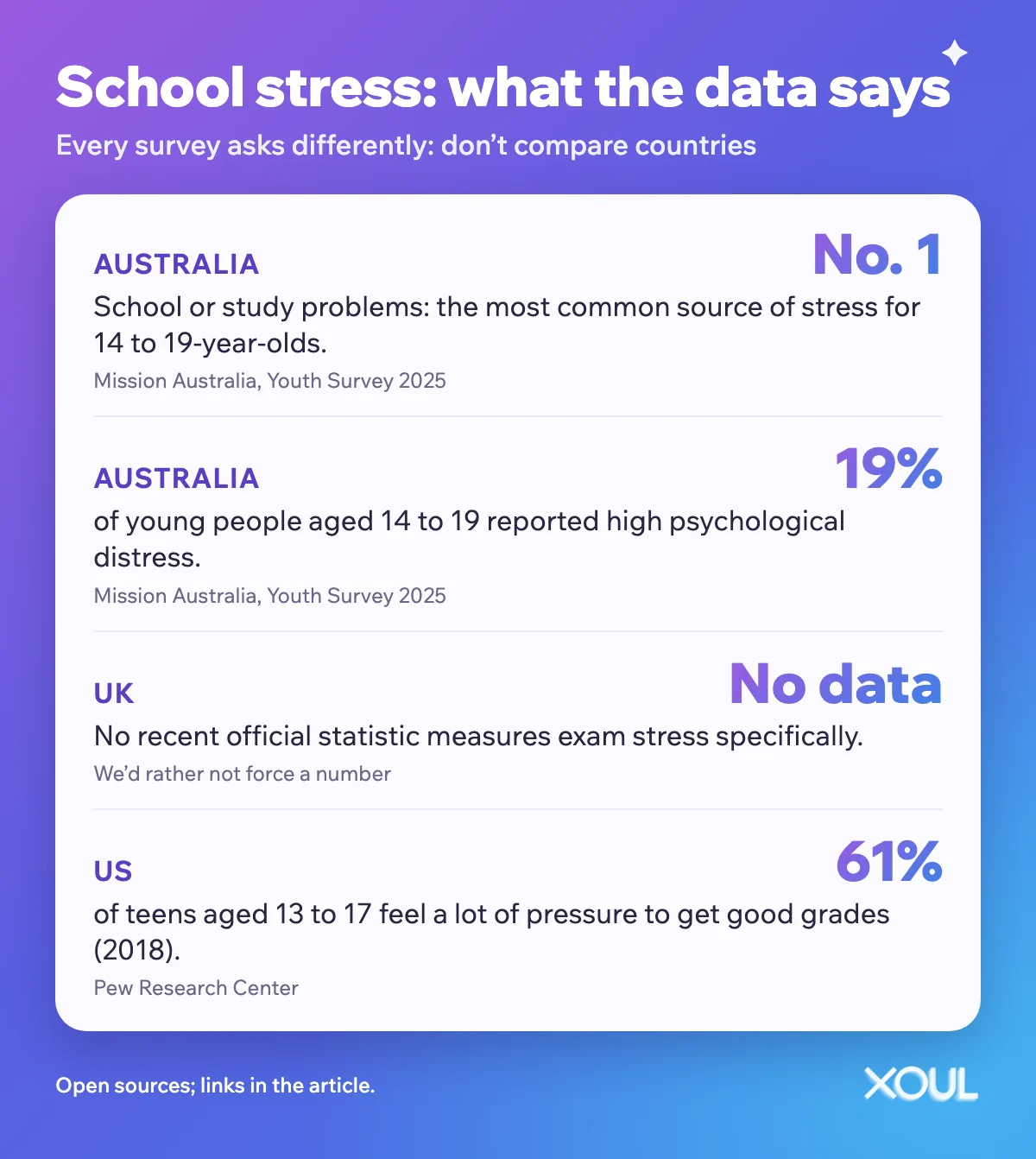
Every survey asks different questions, at different ages, so it helps to read each figure in its own context rather than compare countries.
We looked at the stress signals detected by Xoul in WhatsApp chats in the families using Xoul, in August and September 2026. In August, about 1 in 8 was linked to school. In September, when school was back in full swing for most of these families, it was nearly 1 in 4. The striking part is that overall stress barely changed: there wasn't more stress, there was stress about something else. We say "linked to school" because it isn't all about marks: tiredness, timetables and feeling unwell in class show up too.
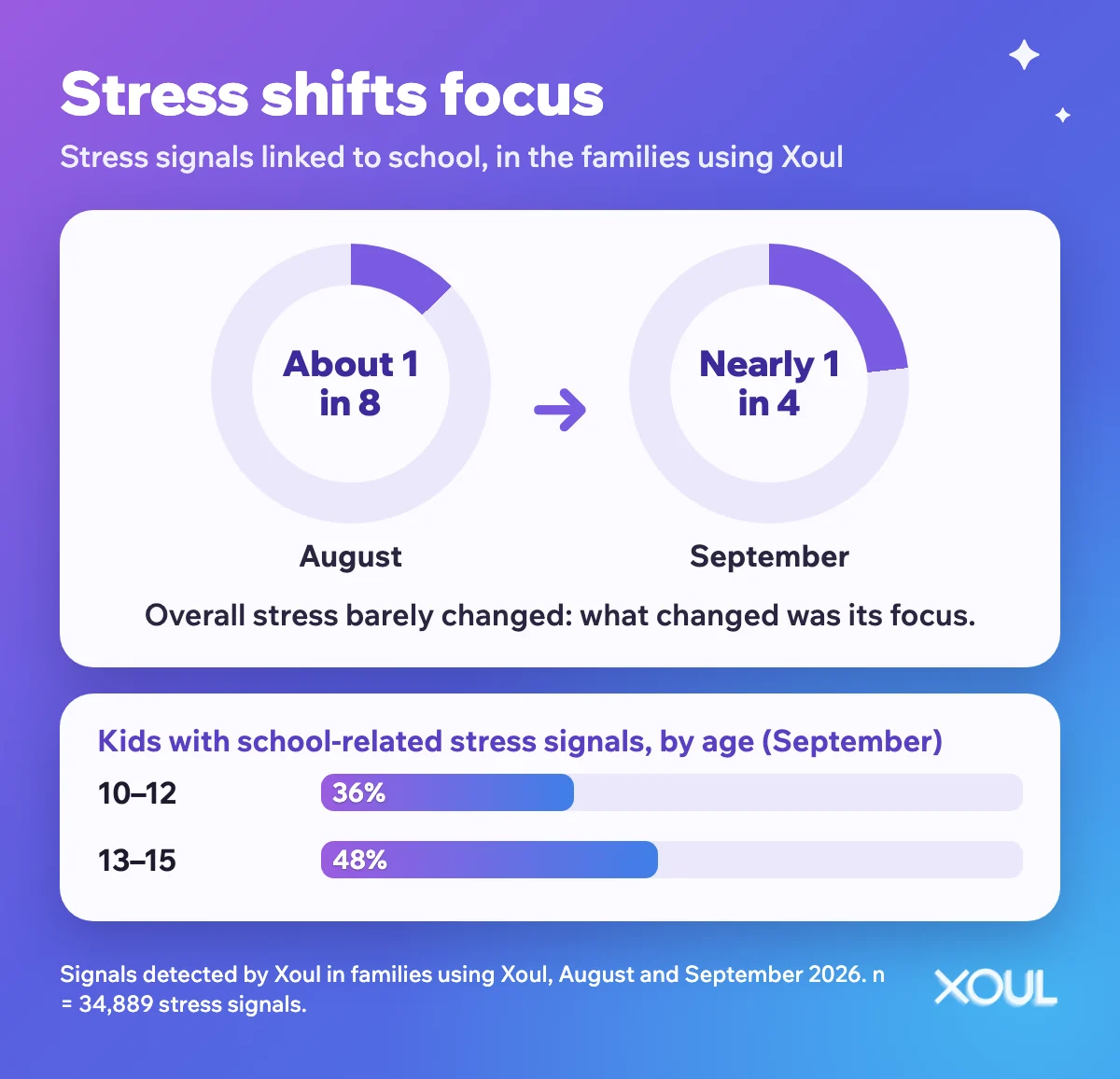
These signals also show up more often at 13–15 than at 10–12: in 48% of the 13 to 15-year-olds in these families versus 36% of the 10 to 12-year-olds (September). And something that rarely gets mentioned: school brings more good news than bad. For every negative school-related signal, Xoul detected two positive ones: an achievement, a good mark, a teacher who helped, a study group.

Teenagers rarely say "I'm anxious". What you usually see are changes:
No single sign is a diagnosis. If several show up together and last more than two weeks, it's worth talking about. There's more in our guide on how to spot digital anxiety early.

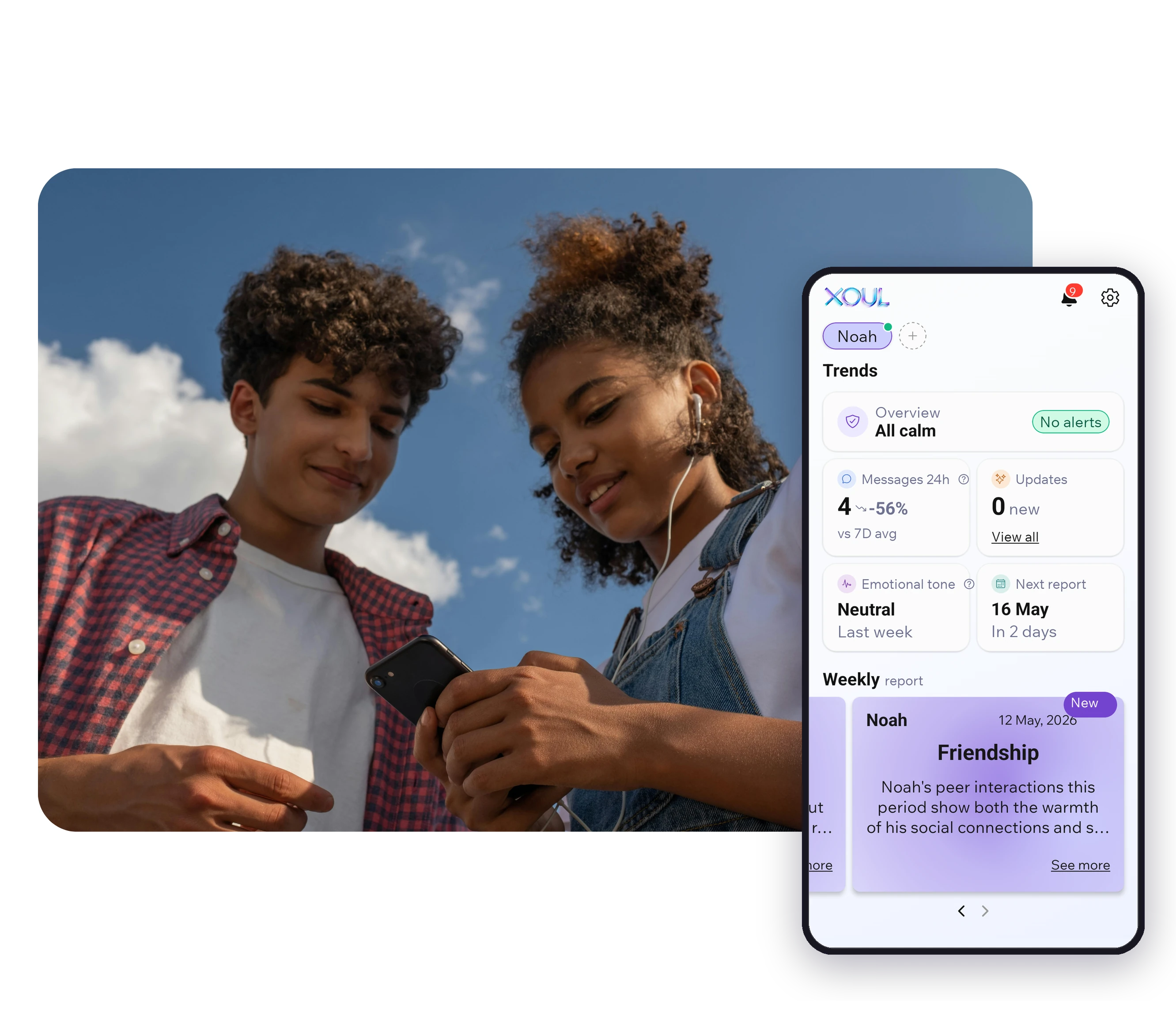
This is what an Update looks like in the app. Example account with made-up data.
If you use Xoul and any of this comes through in their chats, it may show up in their report or in Updates, where anything that needs care is labelled "Attention". Xoul doesn't show you their messages: it shows you how they're doing.
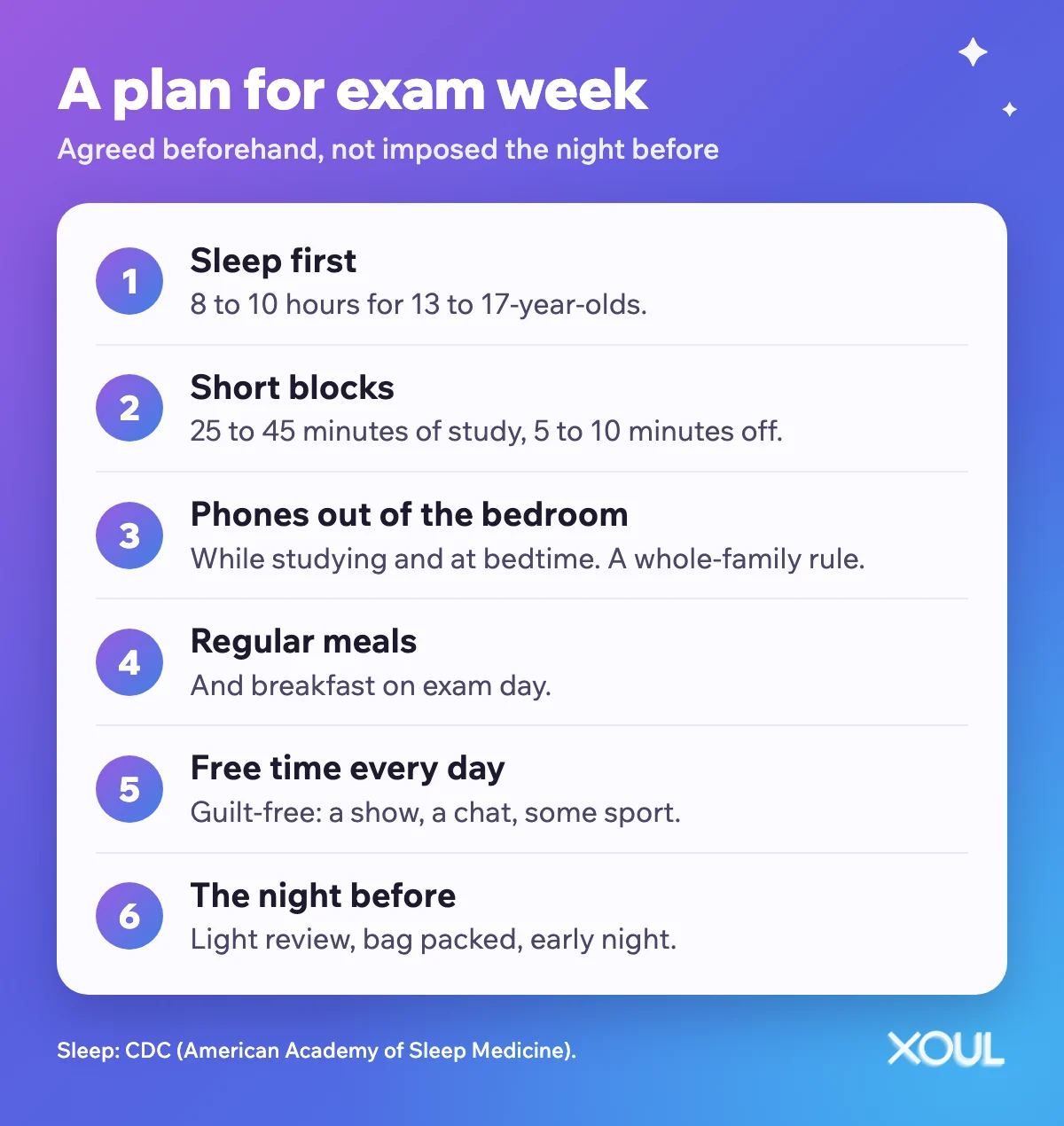
You don't need a perfect plan. A few simple agreements are enough, talked through beforehand rather than imposed the night before:

Pressure often comes less from what we say than from what they hear. A few ideas to make the conversation help:
If you use Xoul, the conversation idea in each report can be a good way in, especially when it's hard to find the right moment.
Results day needs support too. If it went well, celebrate it without making it the new benchmark. If it didn't, first ask how they feel; then, together, what could change next time. A bad mark can be turned around. Their trust that they can tell you how it went is harder to win back.
Seek professional support (your GP, the school counsellor or a psychologist) if:
Where to call:

This is what a report looks like: what was noticed and an idea for a conversation. Example account with made-up data.
Xoul connects to your child's WhatsApp with a QR code, always with their consent. An AI overseen by a clinical team tells you how they're doing in regular reports: their mood, their friendships, what's worrying them and an idea for a conversation. If exam pressure starts to weigh on them, it may show up in the report or in Updates. The good news shows up too: an achievement, an effort, a friend who helped them study. In Trends you can see how things change over time, for example from one exam week to the next.
What you never see is their messages, which are deleted after the system analyses them. Xoul doesn't analyse images either.
Yes. A few nerves help them focus. What's worth watching is whether it settles after the exam and whether they can get on with life: sleeping, eating, seeing friends.
Agreeing on rules works better than imposing them. Keeping it out of the bedroom while they study and at bedtime helps, as a rule for the whole family. Taking it away as a punishment tends to add stress.
Stress shows up around something specific and settles when it's over. If the distress lasts for weeks, stops them sleeping or makes them avoid school, talk to a professional. You don't need the right label to ask for help.
Mostly from the changes you notice at home and from calm moments to talk. If you use Xoul, anything that needs attention may show up in the report or in Updates; it isn't an instant alert. It doesn't replace the conversation, but it helps you know when it's time to have one.
Exams come and go. What stays is how they felt along the way: whether someone close asked how they were, not just what mark they got.
Your first Xoul report is free, arrives in 10 minutes and doesn't need a card. Download Xoul to get started.
XOUL gives you private reports with risks, emotions and important moments, always from a respectful approach.