
Butterflies before a test. A night spent tossing and turning over a message that never came. An "I'm fine" that doesn't sound fine at all. Feeling nervous, worried or low is part of growing up, and it usually eases with a bit of time and someone close by.
Sometimes, though, the worry sticks around. It lasts for weeks, keeps them up at night or makes them stop wanting to see friends. This guide is for parents and carers who want to tell the two apart, understand what part screens really play (without blaming them for everything) and know when and where to get help.
In short:
Anxiety is a normal reaction: the body gearing up for something that feels hard or uncertain. A test, a class presentation, a falling-out with a best friend, a new school. In those moments, nerves show up, do their job and fade.
It becomes a problem when the worry is bigger than the situation, lasts a long time or stops them doing everyday things: they avoid places, can't sleep, pull away from friends or keep getting tummy aches. You don't need a diagnosis to take it seriously. And you don't need to panic over every bad day either.
Three questions can help you get your bearings:
Each study measures something different, at different ages, so it's best to read each figure on its own terms rather than compare countries. Some estimate mental health conditions, others measure symptoms.
Worldwide, the World Health Organization estimates that 1 in 7 young people aged 10 to 19 live with a mental health condition, and that most aren't recognised or treated.

It's tempting to think the phone explains everything. Most studies find a link between problematic social media use and more distress, not proof that one causes the other. Sometimes use spirals because a young person is already struggling; sometimes heavy use makes things worse.
The stress signals Xoul picks up tell a similar story. Based on keywords in each signal, phones, social media or gaming come up in around 1 in 20. School and friendships come up far more often: roughly 1 in 5 or 6 each, with family in about 1 in 7. In these signals, the big themes are the everyday ones: school, friends and family. And a lot of that also plays out in the group chat.

So rather than counting minutes, it helps to look at how they use it and how they feel afterwards: are they staying up late, coming away upset from a group chat, unable to put it down even when they want to? There are more ideas in our post on screens and sleep in adolescence.
Some good news first: in August and September 2026, in the families using Xoul, almost 9 in 10 signals Xoul picked up (87%) were positive or neutral. Plans, jokes, wins, chats with friends. Stress or distress made up around 2 in every 100.
And alongside stress, how they cope shows up too: for every 10 stress signals, Xoul picked up 8 about how they cope or who supports them, like asking for help, getting organised, venting to a friend or getting encouragement from family. Of the children with at least one stress signal in September, almost 9 in 10 also had a coping or support signal that same month.

Stress signals were also a little more common at 13 to 15 than at 10 to 12 (22.5 versus 18 per 1,000 signals). The early teen years are a good time to check in a little more often.
Anxiety rarely announces itself as "I feel anxious". It tends to show up in the body, in their mood or in what they stop doing:
No single sign is a diagnosis. If several show up together and stick around, it's worth talking about.

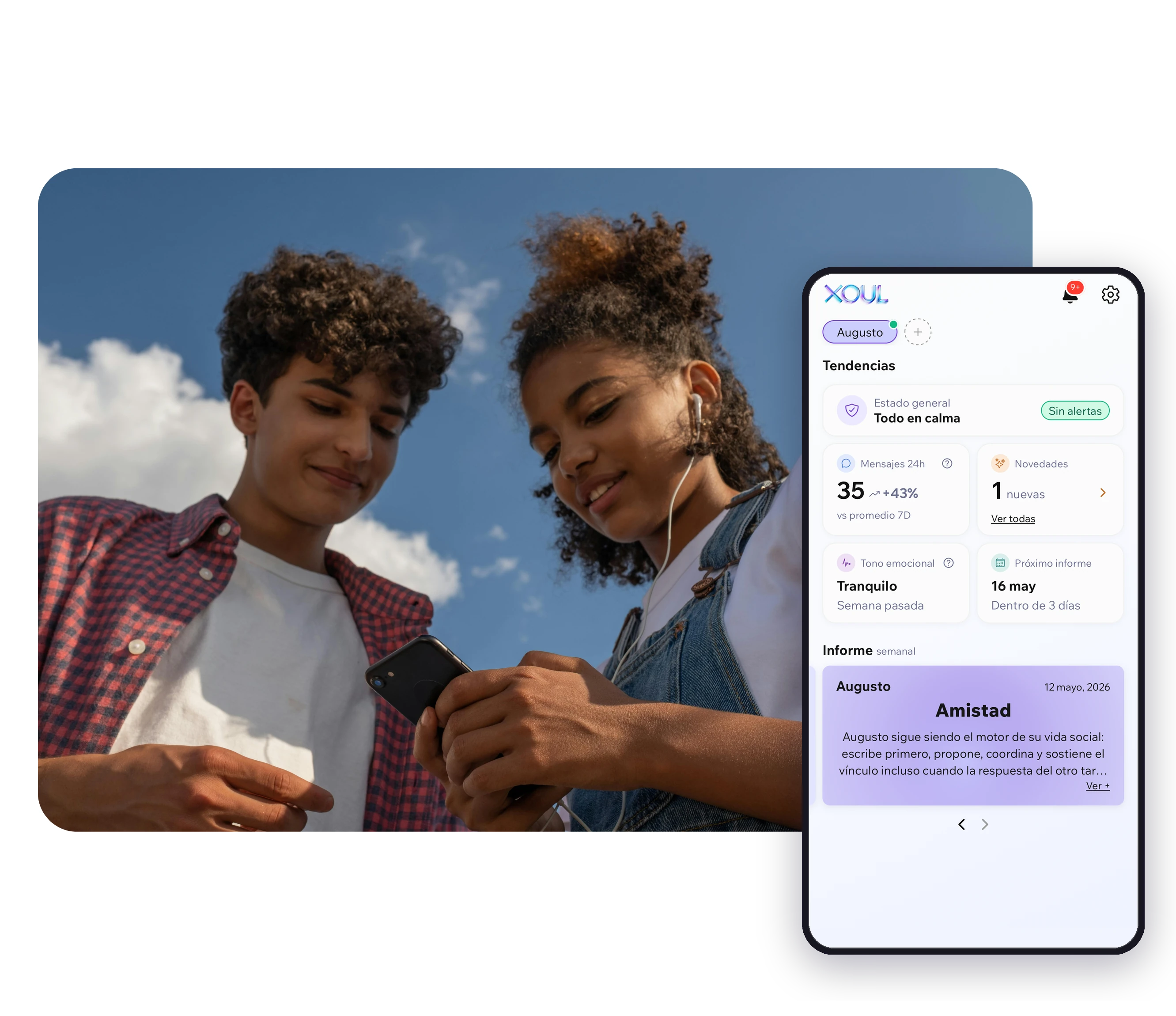
This is what an Update looks like in the app. Example account with made-up data.
If you use Xoul, some of these changes may show up in their report or in Updates, where anything that needs care is labelled "Attention". Xoul doesn't show you their messages: it shows you how they're doing.

Asking for help isn't overreacting or failing as a parent. It's what you'd do for a fever that won't go down.

The best conversations often happen side by side: in the car, while cooking, on a walk. A few ideas:
If you use Xoul, the conversation idea in each report can be a good way to start.

If something that happened online is behind the distress, like bullying in a group chat, our guide to cyberbullying walks you through what to do.

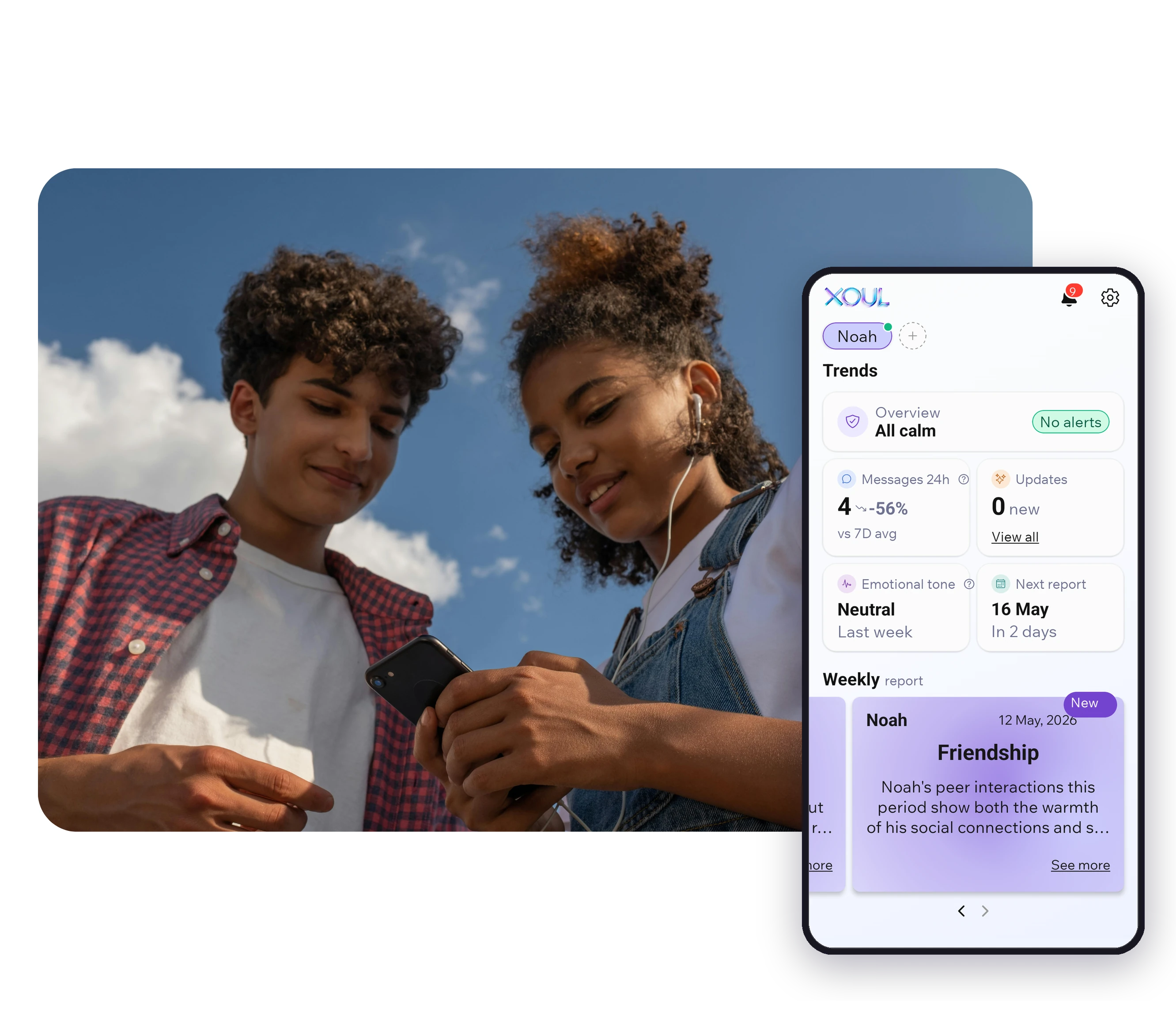
This is what a report looks like: how their mood has been, something to keep in mind and an idea for a conversation. Example account with made-up data.
Xoul connects to your child's WhatsApp with a QR code, always with their consent. An AI supervised by a clinical team tells you how they're doing in regular reports: their mood, their friendships, what's on their mind and an idea for a conversation. If something needs attention, it may show up in the report or in Updates. Trends show you how things change over time, which helps you notice whether a rough patch is dragging on.
What you never see are their messages, which are deleted after the system analyses them. Xoul doesn't analyse images, doesn't diagnose and doesn't replace a professional.
There's no evidence it's the cause on its own. Use that gets out of hand is linked to more distress, but sometimes the distress comes first. Rather than banning it, it helps to look at how they use it and how they feel afterwards.
It can start in childhood, though it's often more noticeable in adolescence. In Xoul's signals, stress is a little more common at 13 to 15 than at 10 to 12.
No. Reading them behind their back can break trust just when you need it most. With Xoul you see how they're doing without reading their messages, and always with their consent.
Xoul doesn't diagnose. Anything that needs attention may show up in the report or in Updates, not as an instant alarm. It doesn't replace talking or a professional, but it helps you know when it's a good moment to reach out.
Anxiety isn't solved by taking the phone away or with one big talk. What helps most is an adult who's available, listens without judging and knows when to ask for help.
Your first Xoul report is free, arrives in 10 minutes and no card is needed. Download Xoul and get started today.
XOUL gives you private reports with risks, emotions and important moments, always from a respectful approach.