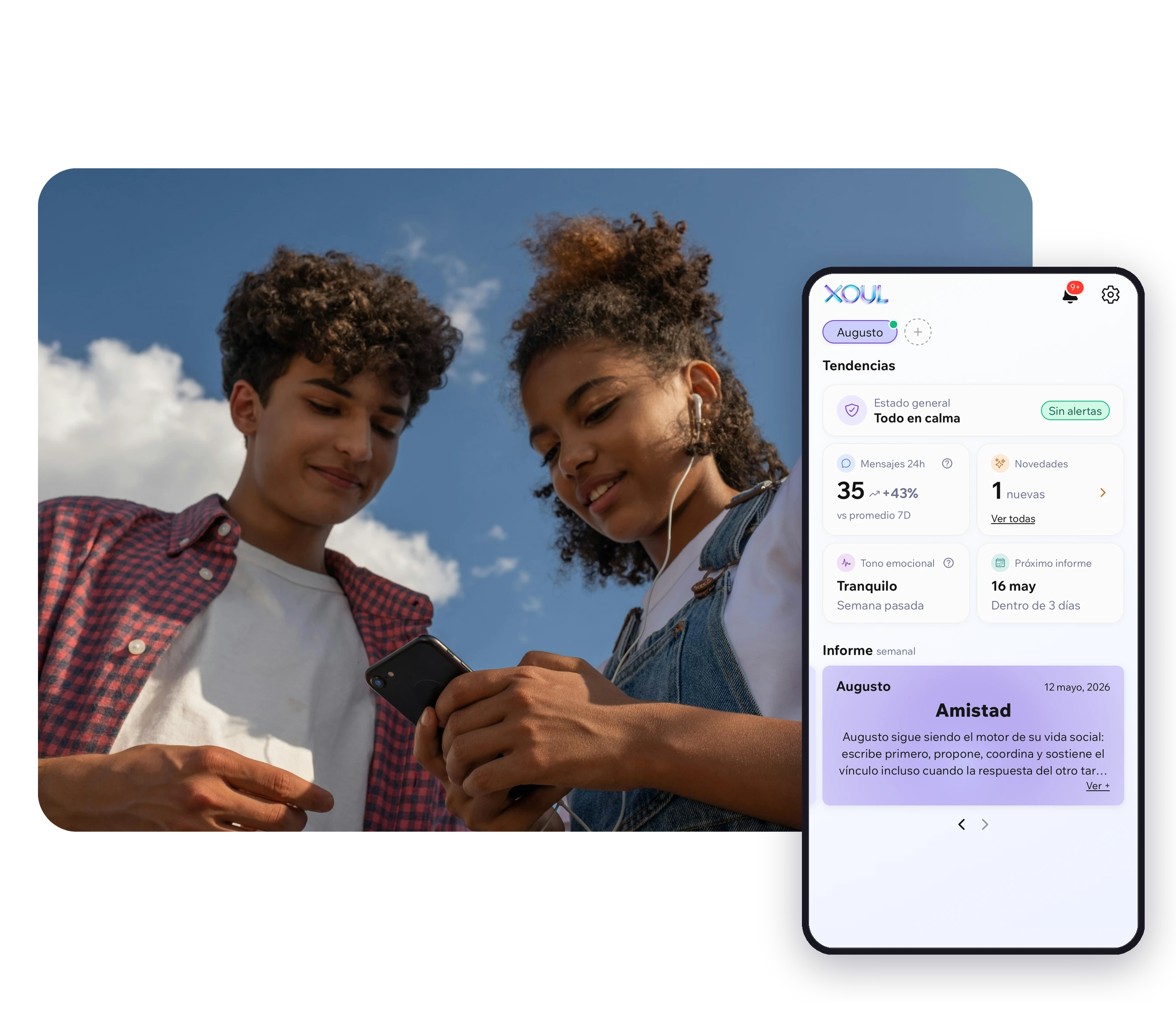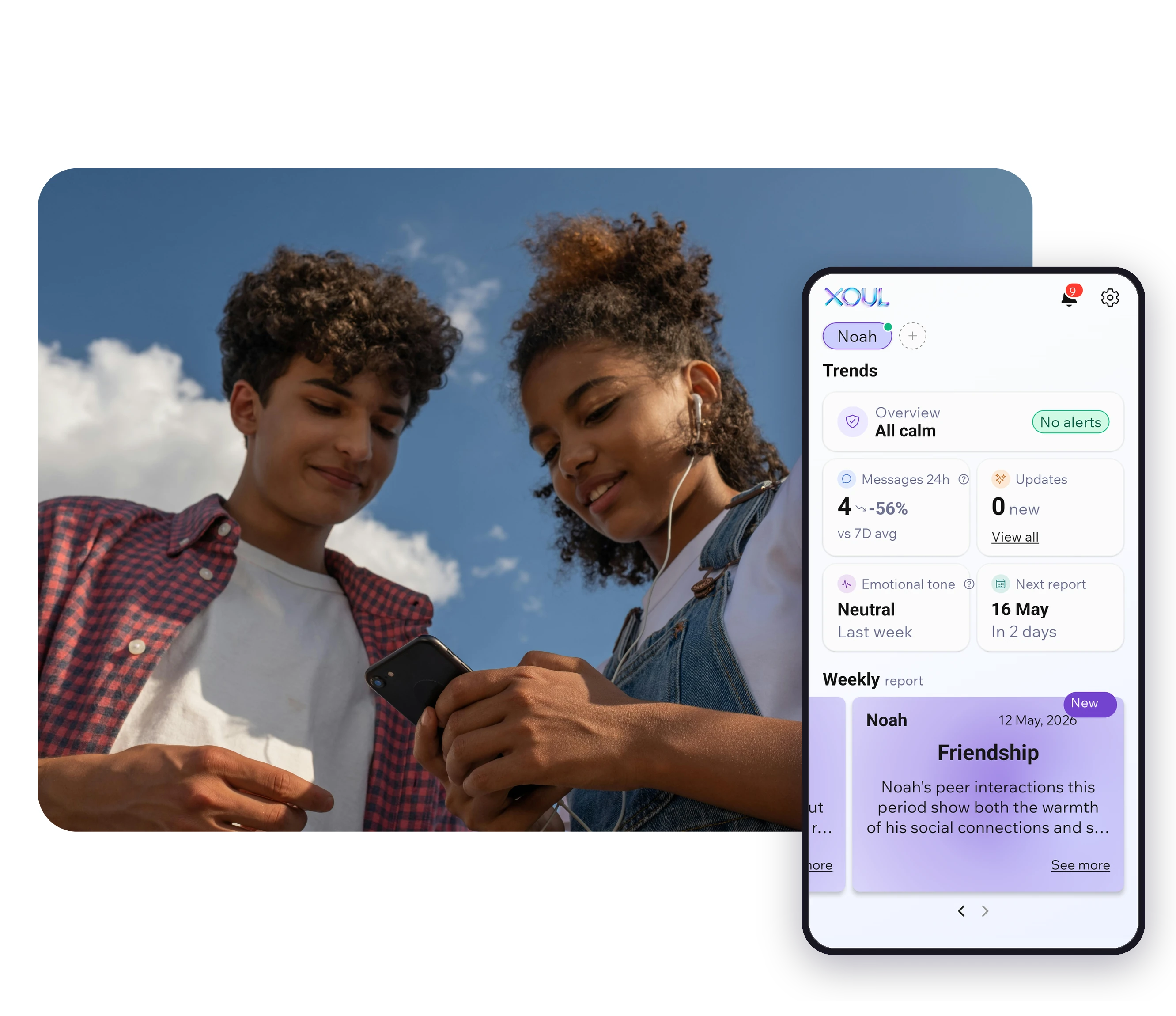
TL;DR. The three apps solve different problems. Qustodio is traditional parental control with focus on screen time, content blocking, and geolocation, exposing the full activity to the adult. Bark is multi-platform with AI alerts, but exposes literal conversations when an alert is triggered. Xoul specializes in WhatsApp with structural privacy: the adult never reads messages, and installation doesn't touch the minor's device. The choice depends on the specific problem you need to solve.
| Aspect | Xoul | Bark | Qustodio |
|---|---|---|---|
| Category | Parental accompaniment | Control + AI alerts | Traditional parental control |
| Main focus | Multi-platform | Screen time and blocking | |
| Conversation access | Never exposes content | Exposes literal conversations in alerts | Detailed activity access |
| Minor consent | Required | Optional | Optional |
| Installation on minor's device | Not required | Required | Required |
| Time to first report | 15 minutes | Hours or days | Hours or days |
| AI risk detection | Yes, with clinical training | Yes | Basic filters |
| Screen time / app blocking | No | Yes | Yes |
| Geolocation | No | Yes | Yes |
| Recommended age | 8-16 years | 6-18 years | 4-18 years |
| Interface languages | ES + EN | EN (limited in ES) | ES + EN + more |
| Availability | Global | US primarily | Global |
| Pricing model | Monthly or annual subscription | Monthly subscription | Annual subscription |
Before diving deeper, two things that distinguish Xoul from Bark and Qustodio in practical terms:
1. Xoul does not require installing anything on the minor's device. Bark and Qustodio need the adult to install their app on the child's phone, with administrative permissions. Xoul works through the connection the minor makes from their own WhatsApp (similar to WhatsApp Web). The minor's device stays untouched.
2. Setup in 3 minutes, first report in 15. Xoul is configured in approximately 3 minutes and delivers the first report 15 minutes after the connection. Bark and Qustodio have more complex installation processes and require hours or days of accumulated activity before delivering useful analysis.
These two points are operational but matter: they define how quickly you get value and how much friction the product generates in the relationship with your child.
Bark combines parental control with AI alerts across multiple platforms. When it detects a concerning signal (cyberbullying, sexual content, self-harm), it sends an alert to the adult and, in many cases, exposes the literal conversation where the signal appeared. It also has traditional functions: web filter, screen time management, geolocation. Its strong availability is the United States. WhatsApp is an important gap: on iOS it doesn't monitor due to Apple restrictions; on Android, with limitations.
Qustodio is the most established option in traditional parental control. Its proposal is clear: see what your child does on their devices, manage screen time, and block what you don't want them to see. It works well for pre-teens (4-11 years) where active supervision is expected and useful. For adolescents from ages 13-14 it tends to generate friction: "seeing everything" doesn't accompany the development of the minor's own digital judgment and can damage family trust.
Xoul is a different category: parental accompaniment with structural privacy. The AI analyzes the minor's WhatsApp conversations (with their consent) and delivers interpreted reports on precise emotions, relationships, and possible risks to the adult, without exposing message content. The clinical team doesn't produce one-on-one reports; instead, it continuously trains the model through a human in the loop process: sampling, correction, and iteration. Designed for the 8-16 age range, where consent and trust are critical.
If your child is pre-adolescent (8-11 years) and your priority is controlling screen time and filtering content: Qustodio is probably the best option of the three.
If you live in the United States and need broad coverage of local platforms (Snapchat, Instagram, Gmail): Bark covers that well, although you sacrifice the minor's privacy.
If your child is an adolescent, WhatsApp is central to their life, and the underlying question is "how to accompany without invading": Xoul was designed exactly for that case. Structural privacy, minor consent, no installation on their device, and setup speed make it an option natively aligned with that philosophy.
No app is perfect and the three can be combined depending on the case. The question is not which is the best app in absolute terms, but which solves your specific problem.
If you want to evaluate Xoul before deciding, the first report is free and arrives in 15 minutes. No credit card required.
XOUL gives you private reports with risks, emotions and important moments, always from a respectful approach.