TL;DR
For many young people, betting doesn't even feel like gambling. It's a prediction with friends, a promo during the match or a mystery box in a game. Here's what the research shows and how to talk about it at home.
The newest Australian data comes from the 2022–23 Australian Secondary Students' Alcohol and Drug (ASSAD) survey. In New South Wales, the NSW Office of Responsible Gambling and the University of Newcastle found that 21% of secondary students aged 12 to 17 had gambled in the past year, about 1 in 5. In Victoria, the state government's summary of the same survey reports that 18% of students aged 12 to 17 had gambled in the past year and 9% had bet on sport.
Games and ads are part of the picture too. In the NSW study, 28% of students had paid real money for a loot box, and 58% recalled at least one gambling ad in the previous four weeks, most often on TV.
The Gambling Commission's Young People and Gambling 2025 survey (11- to 17-year-olds in England, Scotland and Wales, run by Ipsos) found that 30% had spent their own money on gambling in the past 12 months, mostly on arcade machines and bets with friends or family. 8% had gambled online.
Ads reach many more of them. In the past year, 56% had seen gambling ads on social media. Among the 16% who follow gambling-related content online, 31% had seen gambling ads from influencers, creators or streamers they follow.
We found no recent national figure for all US teens. The closest is Common Sense Media's Betting on Boys (boys aged 11 to 17, surveyed in July 2025, published January 2026): 36% of boys had gambled in the past year, rising from 32% at age 11 to 49% at 17. The definition is broad and includes loot boxes and fantasy sport. 12% of boys had taken part in sports-related gambling.
A single bet or loot box isn't a red flag. What matters is a recurring pattern, such as:
If several appear together, it's a good moment to talk and, if needed, to ask for help. See also 5 signs that may point to problematic phone use in adolescents.
Teens open up more when they don't feel judged. Some ideas:
All are free and confidential. The gambling helplines also support family members.
Xoul's AI turns patterns in a child's WhatsApp conversations into signals, without parents reading any messages. We looked at betting-related signals from April to September 2026. They come from families who use Xoul, mostly in Spanish-speaking countries, so they're a snapshot of our community rather than a national survey.
Betting talk rose during the World Cup. The share of young people with betting signals linked to football (soccer) was 2.7 times higher in June and July than in April and May, then fell once the tournament ended. Many were predictions or bets between friends; signals of betting involving money rose less (about 1.8 times). Big sporting events are a natural time to bring it up.
It starts earlier than many people expect. In August and September 2026, about 1 in 25 young people in our community had signals of betting involving money. Among 13- to 15-year-olds it was 1 in 20, and it was already showing up among 10- to 12-year-olds. These are estimates based on language cues, so some may be jokes or bets between friends with no real money involved.
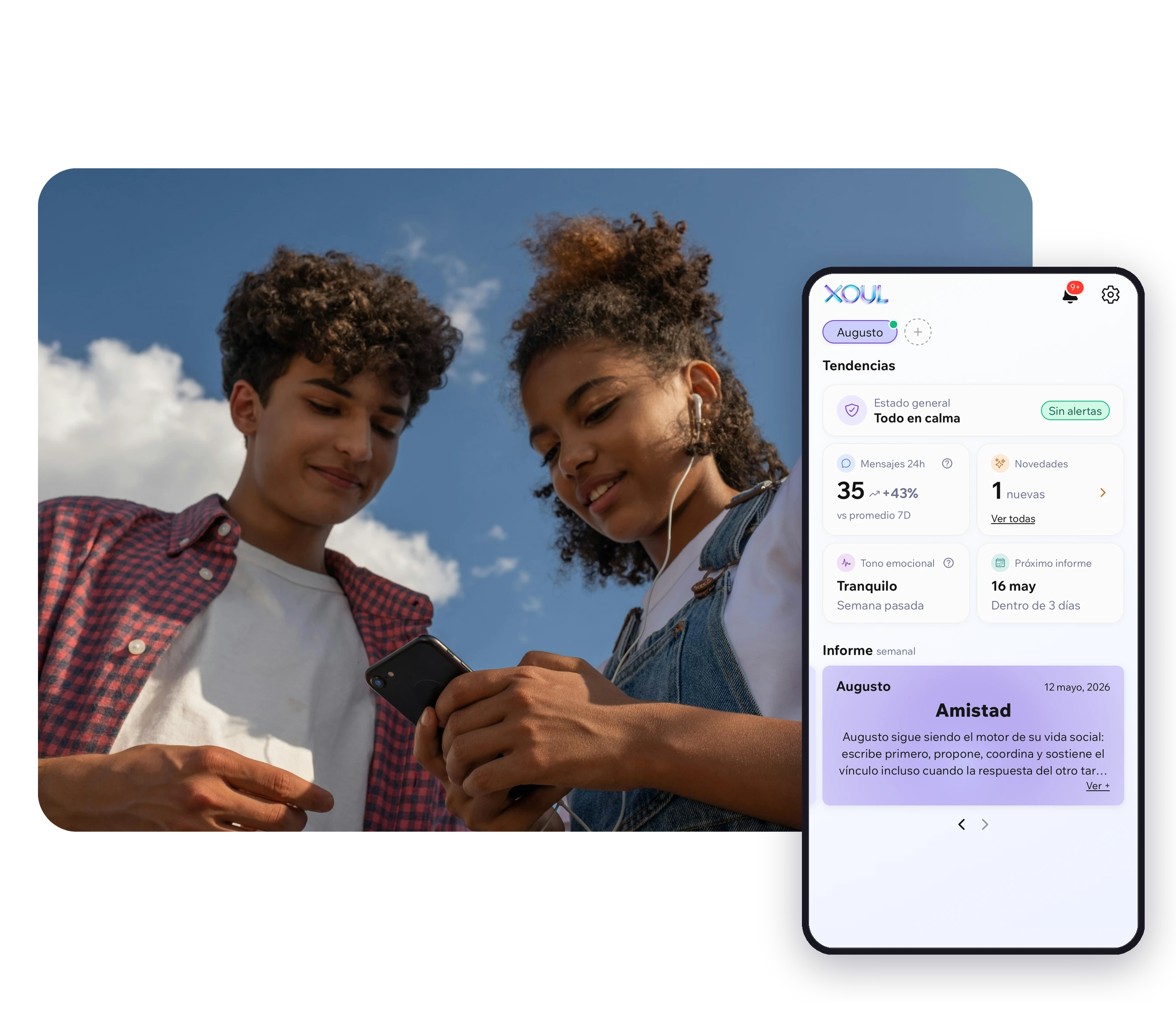
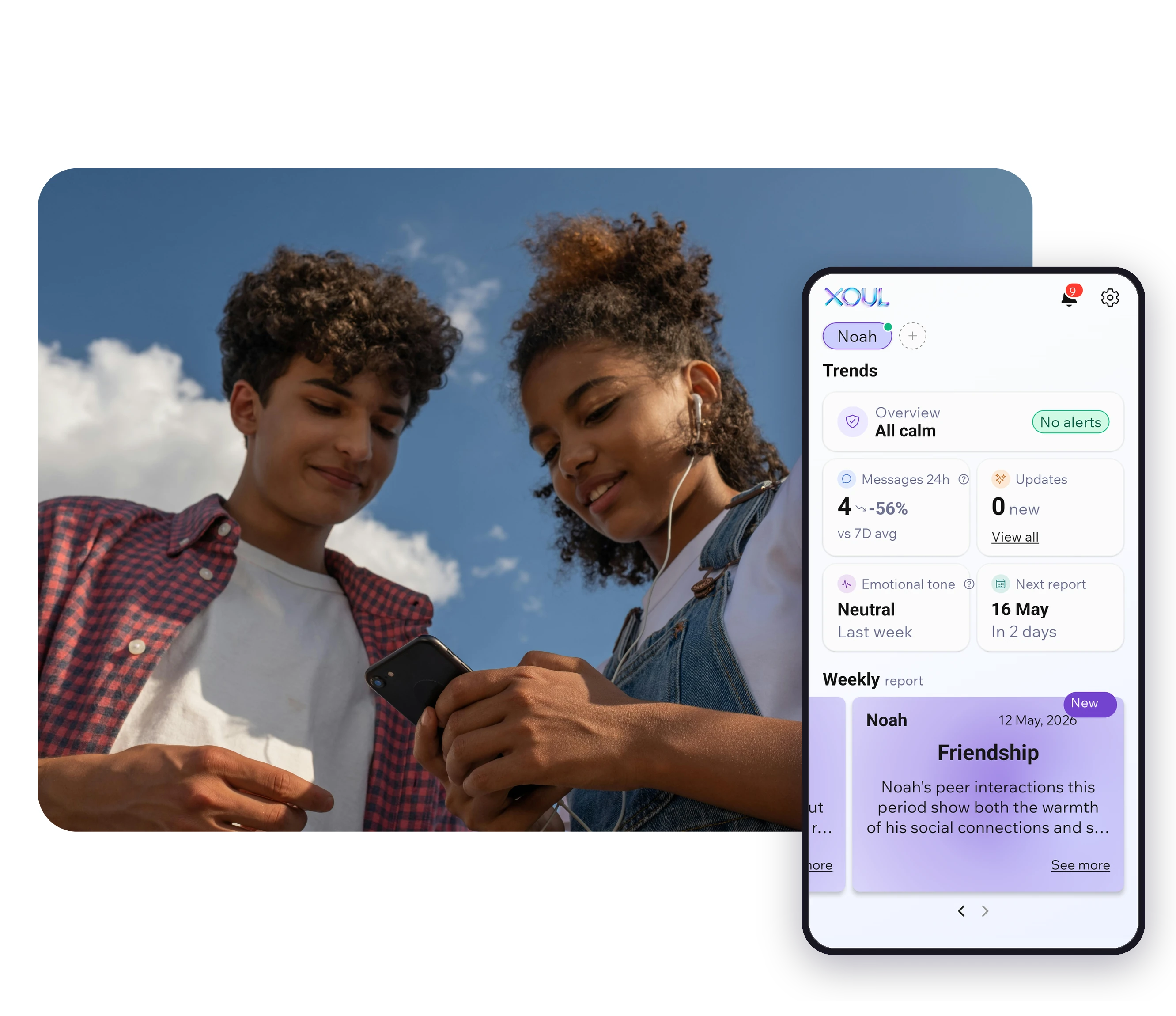
How Xoul helps. Xoul connects through a QR code on your child's WhatsApp, with their consent. Every 4 days you get a report on their mood, friendships and what's on their mind, with an idea for a conversation, plus Updates when something stands out. You never read their messages. If betting shows up, it can appear in your reports and Updates, never as an instant alert, so you can raise it calmly. Read more about knowing how your child is doing without reading their messages.
Usually not on its own. It's mostly social, and it's a good chance to talk about money and odds before the stakes get bigger.
In both, you pay for a random prize. That's why researchers in Australia and the US ask about them, and why Australia now requires newly classified games with paid loot boxes to be rated at least M.
Through bets with friends, arcade machines, games and sometimes adults' accounts. In the UK survey, 7% of young people who had played betting, casino or bingo games online had used a parent's or guardian's account without permission.
If betting shows up in their conversations, it can appear in your reports and Updates, with context and ideas for talking about it. It's never an instant alert, and you never see the messages.
Betting is part of the world teens are growing up in. You don't need every answer. Staying close and curious is enough. Xoul can help you find the right moment to talk. Your first report is free, arrives in 10 minutes and needs no card.
XOUL gives you private reports with risks, emotions and important moments, always from a respectful approach.