The cell phone has become a constant companion in the daily life of many adolescents. While technology use isn't necessarily negative, in some situations the phone can start to interfere with daily life. Learning to recognize certain signs can help families open conversations in time.
There's no exact number of hours that determines when cell phone use becomes problematic. More than the time itself, what matters is observing how the device is used and whether it begins to interfere with daily life.
1. The phone starts to interfere with sleep: During adolescence it's normal for sleep schedules to shift later. However, when the phone is used frequently near bedtime or during the night, it can extend that shift and affect the length or quality of rest.
2. Phone use interferes with responsibilities: When the time spent on the phone starts to make it harder to complete schoolwork, commitments, or other daily responsibilities, it can be a sign that the balance between activities needs reviewing.
3. The phone becomes a frequent source of arguments: If the phone repeatedly comes up as a source of tension or disagreement in the family, for example around schedules or moments of use, it may indicate that agreements or expectations about its use aren't entirely clear.
4. It becomes hard to put the phone down: Phone use often stretches longer than planned. Even when the intention is to use it just for a moment, screen time ends up being much longer.
5. Other activities start taking a back seat: Activities like sports, hobbies, in-person meetups with friends, or family time start happening less often than before.
If several of these signs show up frequently, it may be a good time to talk about how the phone is being used and what place it holds in daily life. Some actions that can help:
Some digital tools can help you observe phone use patterns, like how much time the device is used or which times of day it appears most often. This information can serve as a starting point for talking about digital habits in the family.
Used transparently and with prior agreement, these tools can support building more balanced digital habits.
XOUL: a tool to support digital well-being in the family
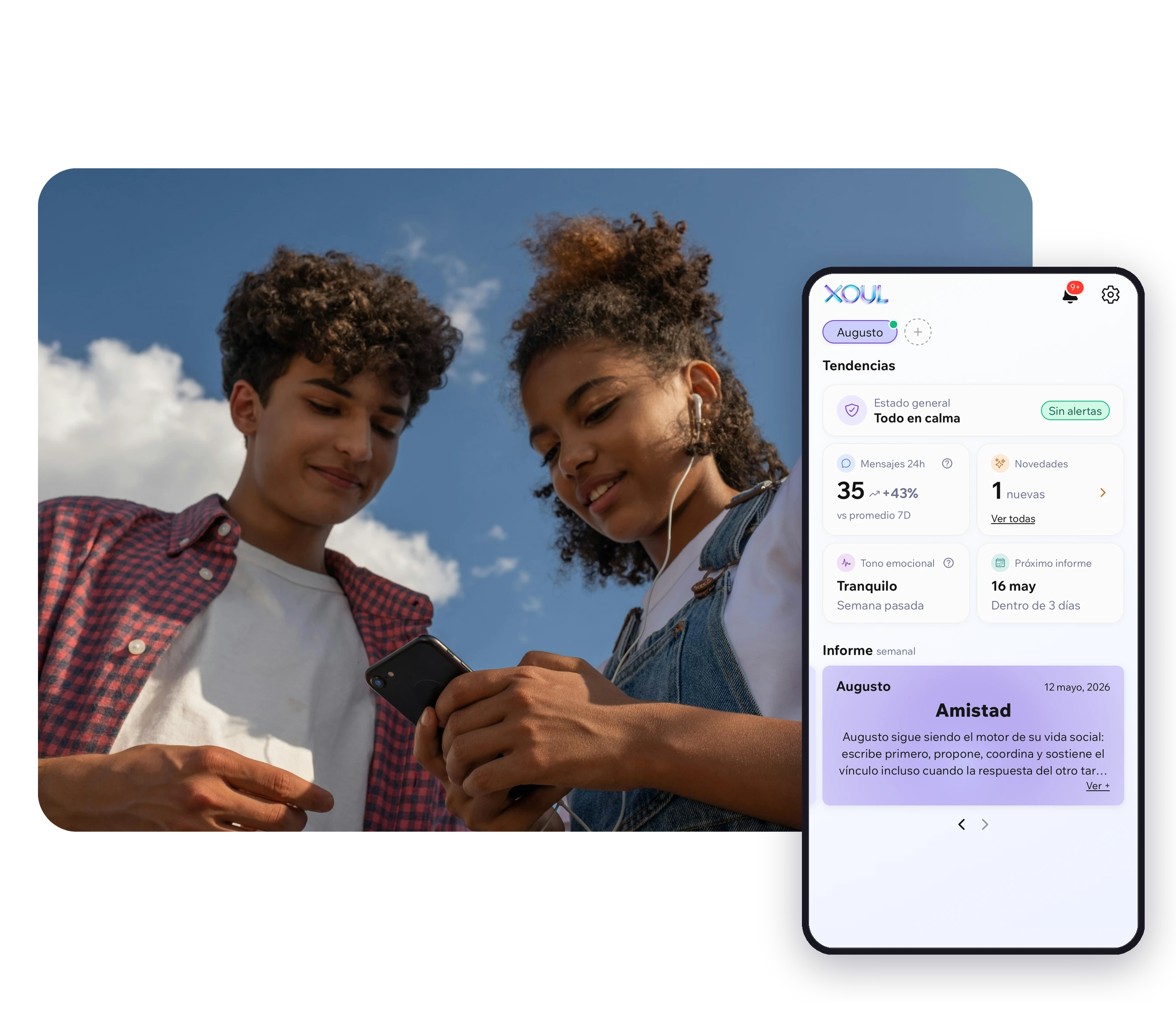
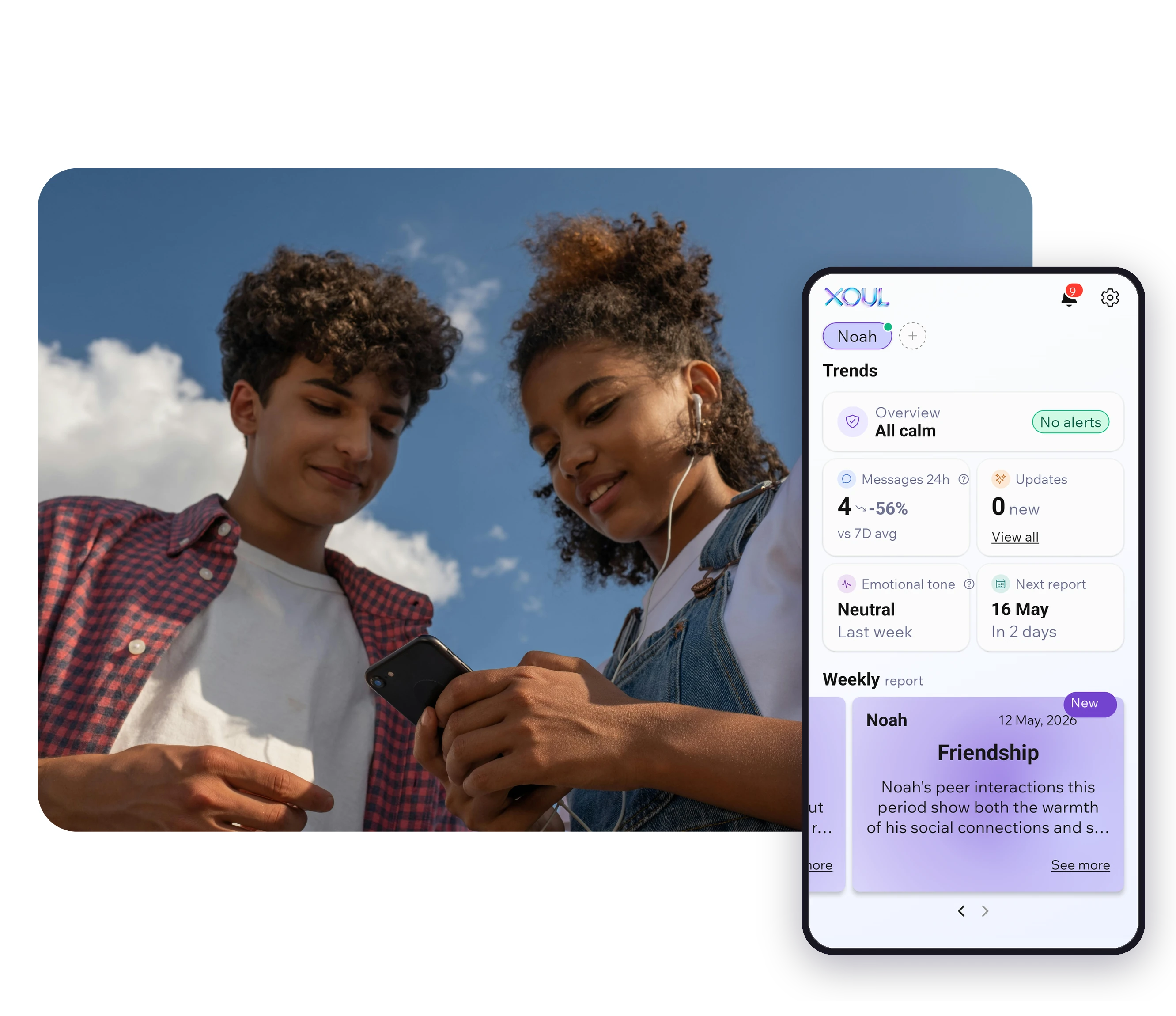
XOUL is a tool that can complement family conversations and agreements about technology use. By connecting to your child's WhatsApp, it analyzes their digital behavior safely and privately and sends you periodic reports that can help identify aspects of technology use worth discussing as a family. It can also offer signals about how digital habits are forming and when it might be a good time to open a conversation.
Family agreements about technology use aren't a one-size-fits-all solution, but they can be a good starting point for talking about digital habits and expectations at home. In many families, starting with an open conversation about technology is already an important step.
XOUL gives you private reports with risks, emotions and important moments, always from a respectful approach.