When we interview families who use Xoul, one of the first questions we like to explore is the purpose: what Xoul has to offer them and what their main concerns are about their children's digital lives.
We often hear responses like: "I worry that a stranger might contact my child," "I want to know if they're having conflicts with classmates, or if they can set limits," "I want to know they're okay, because they don't talk to me."
Today we know that technology can be a bridge to many benefits, like staying in touch with peers and family, learning new things, and being entertained. At the same time, the digital world can come with online risks that understandably worry many parents.
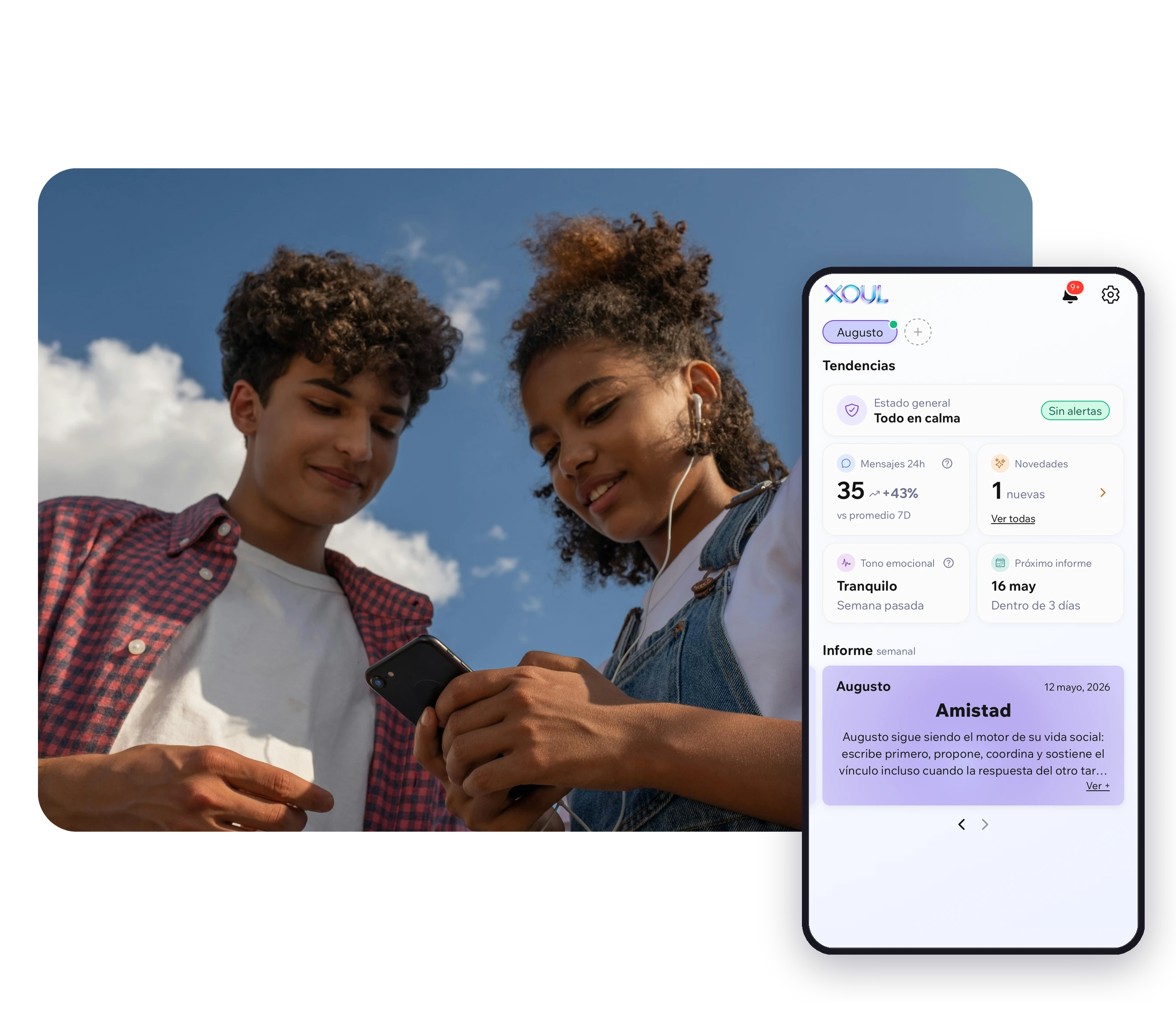
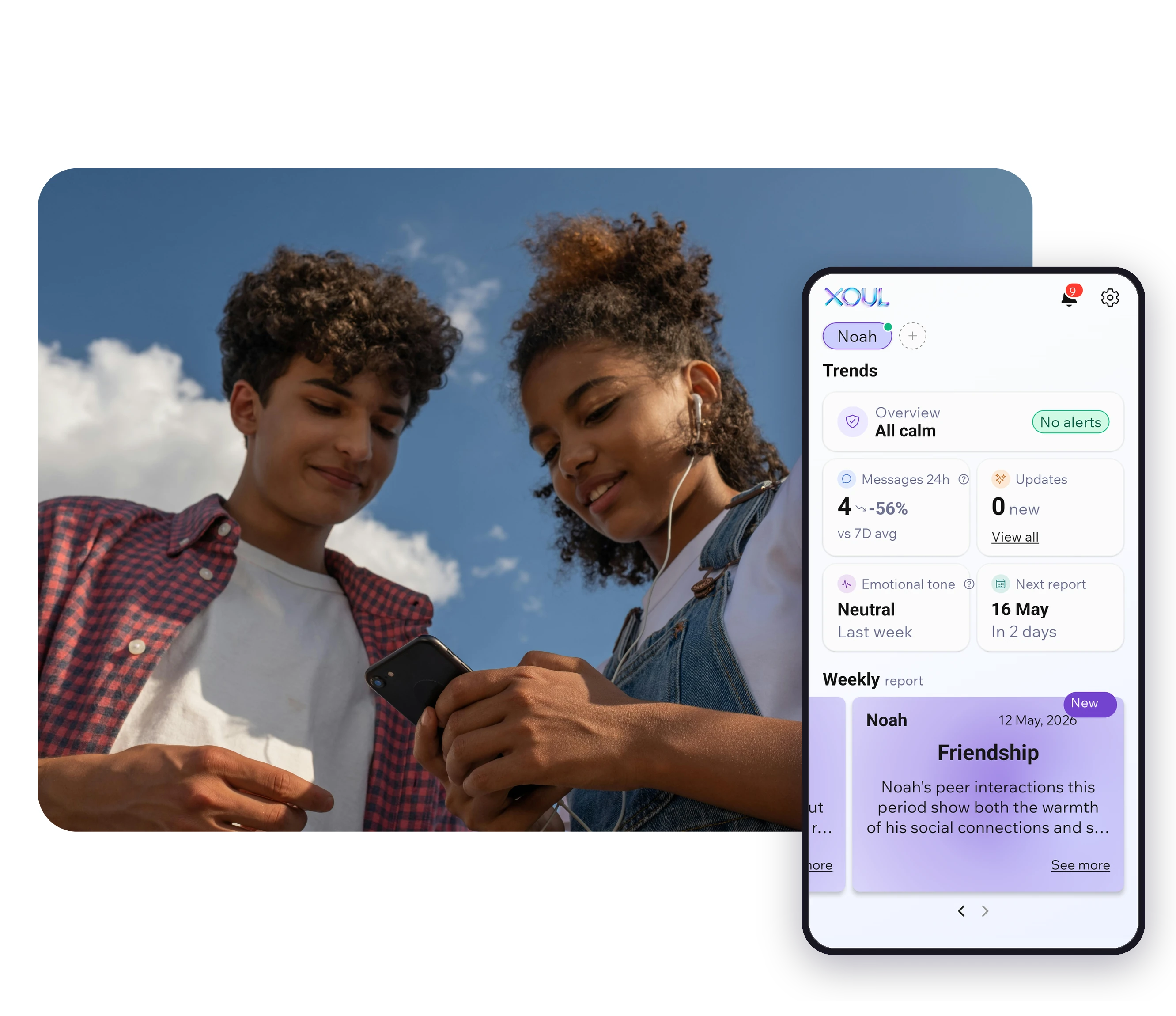
That's why at Xoul we aim to support families by bringing them information about how their children are using their devices, and by providing tools to help them step in.
Xoul uses artificial intelligence to analyze information from young people's phones, particularly their WhatsApp conversations. This analysis is done securely and generates reports based on observations that can help better understand what's going on, always protecting their privacy and prioritizing information that can be useful for their caregivers.
Through this analysis, it's possible to observe different aspects of their digital lives. Many interactions are part of an everyday, healthy use of technology, where kids connect with their peers, express themselves, organize, and build their relationships. In some cases, signals may also appear that point to distress or possible risks, which may require closer attention.
Having this information allows families to gain a closer view of that digital world and makes it easier to open conversations that often don't come up on their own.
Risk situations Xoul has already detected
Xoul currently supports more than a thousand families. In this time, we have been able to identify various risk situations that we report so that parents can have the information they need to look after their children's well-being.
These are some of the situations we encounter most often:
Technology as a bridge
Many times, kids don't talk to the adults around them. Sometimes because they don't want to, or because they fear being judged or punished, because they can't find a space to feel heard, or even because they have normalized experiences that deserve attention, or don't have the tools to recognize that something isn't right.
That's why the role of adults becomes key in providing support through information and, above all, through availability and active listening.
Technology, used well, can be that bridge. It can help us better understand what young people are experiencing in the digital world, open conversations that wouldn't otherwise happen, and step in when the situation calls for it. Having information doesn't have to feel like an invasion when the goal is clear and oriented toward care. It means being able to support with more tools and fewer assumptions.
The digital world our children are growing up in is full of possibilities and also has its risks. Being able to navigate that world alongside them, from an informed and close place, is a concrete way to care.
XOUL gives you private reports with risks, emotions and important moments, always from a respectful approach.