Every May 2, the world observes the International Day Against School Bullying, a date promoted by UNESCO to shed light on a reality that has become part of daily life for children and adolescents. In 2026, the conversation is no longer limited to the schoolyard: a significant portion of bullying happens —and is amplified— on social media, chat groups, and AI-powered platforms.
Cyberbullying is not simply "school bullying gone online." It is a distinct form, with specific mechanisms, that touches young people's lives 24/7 and, when it shows up, often takes a long time for adults to detect. That's why, instead of repeating the classic definition, we've updated this guide for what's really happening today.
Cyberbullying is a repeated and deliberate form of psychological aggression that takes place through digital channels. It can come from known classmates or anonymous groups, from peers or strangers, and it primarily affects children and adolescents between 10 and 17 years old.
In 2026, the most frequently reported forms include:
According to recent studies from UNICEF, UNESCO, and local organizations in Argentina, Mexico, and Spain, the current picture suggests:
These numbers aren't meant to alarm: they're a reminder to take seriously whatever comes up, even when it looks like "just kid stuff."
Adolescents rarely say "I'm being cyberbullied." What shows up first are subtle changes. These are the most frequent signs that psychologists and pediatricians share in their practices:
No single sign is a diagnosis. But when two or more appear together and persist over time, it's worth opening a conversation.
When you notice something, the first step isn't to ask for the phone. It's to open a conversation. Find a calm moment, away from siblings, and start with something general: "You've seemed different these past few weeks, is something going on?" If there's silence, don't rush to fill it: waiting is part of the dialogue.
If concrete information surfaces —messages, images, screenshots— don't delete it. Save screenshots with date, username, and context. They're essential for reporting to platforms, schools, or law enforcement.
Every social network has specific channels for reporting cyberbullying. Instagram, TikTok, WhatsApp, Discord, and Roblox all have them. Reports work best when submitted from the victim's account with evidence attached. If the platform doesn't respond, there are external channels in every country.
Cyberbullying almost always has roots at school. Request a meeting with the school administration and counselor. Bring the evidence. Many schools have anti-bullying protocols: if they don't apply them, you can escalate to district supervision or local educational authorities.
Cyberbullying leaves a mark. If the emotional impact lasts more than two or three weeks —or if thoughts of self-harm appear— it's time for professional accompaniment. There are free helplines and specialized adolescent mental health centers.
One of the hardest things about cyberbullying is that the adolescent feels they've lost control. Giving that back to them is part of the healing. Ask what they want to do, what scares them, what they need from you. Make decisions with your child, not for them.
The best tool against cyberbullying is still proactive conversation. Before anything happens, talk at home about:
This last point is the most important. If a child senses there's a cost to speaking up, silence wins.
At what age does cyberbullying appear?The first reported cases usually start between ages 9 and 11, in school chat groups. It intensifies between 12 and 15, and decreases around 17.
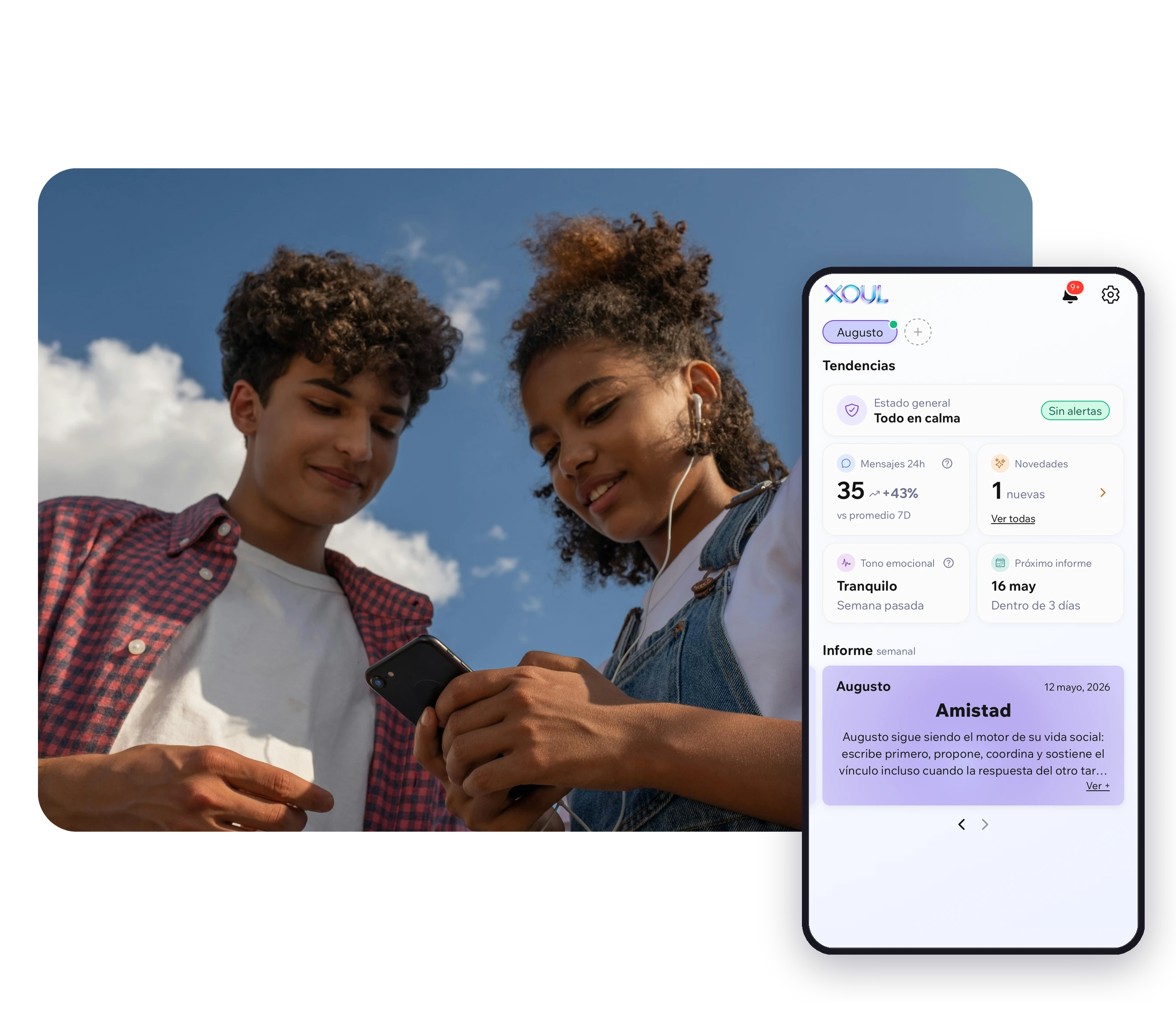
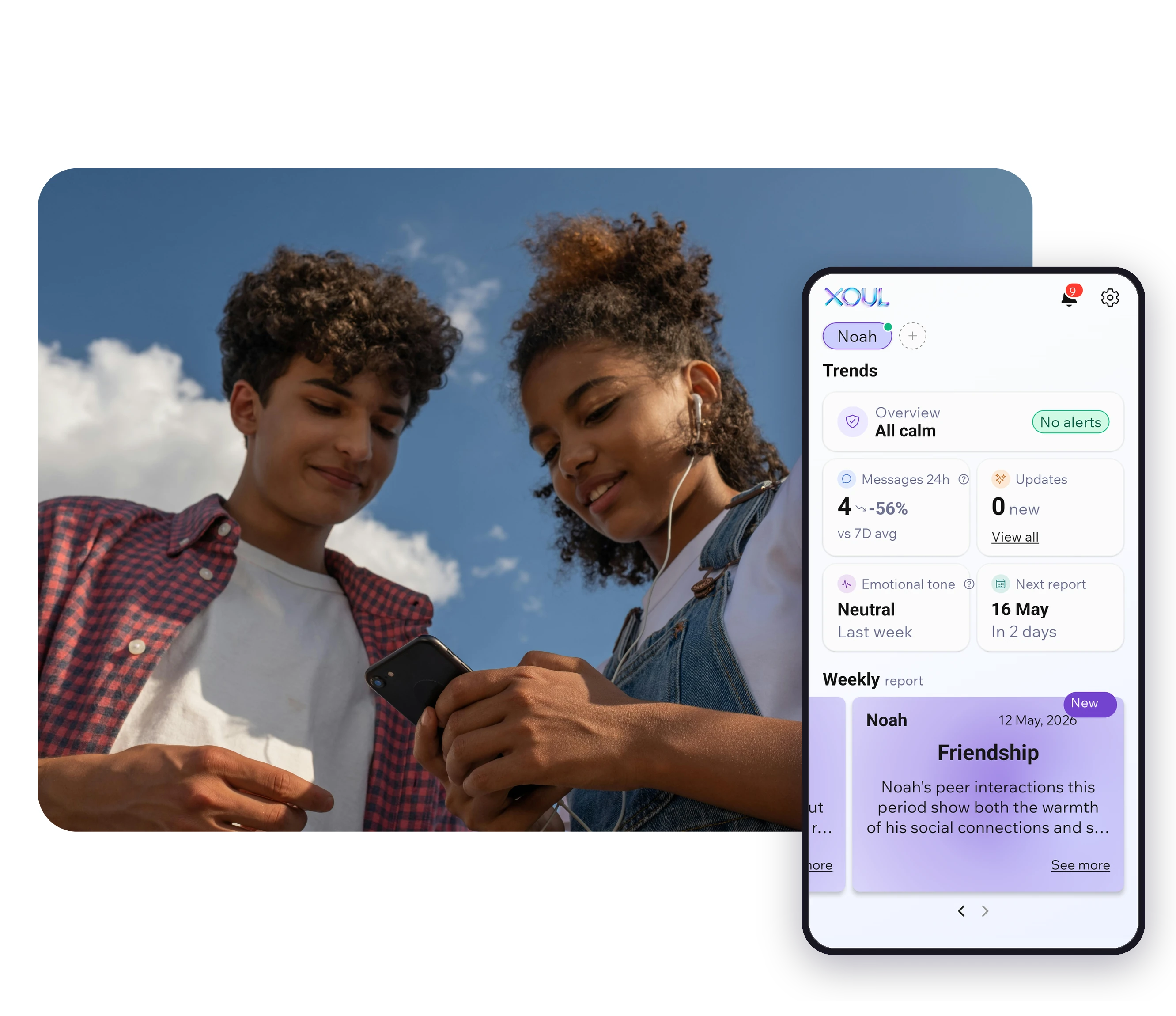
Should I read my child's phone to detect it?It's not the only way. Reading without an agreement erodes trust and often pushes the adolescent to use secondary accounts. There are tools like XOUL that detect risk patterns without needing to read the literal content.
Are AI deepfakes considered cyberbullying?Yes, and in many countries they can also be a crime. In Argentina, Spain, and several Mexican states, there are already cases with rulings. Save the evidence and file a report.
What if my child is the one doing the bullying?Open a conversation without judgment, but with clarity. Aggressors are often in situations of emotional vulnerability themselves. Early intervention, with the school and a professional if needed, prevents escalation.
Does XOUL help detect cyberbullying?Yes. XOUL analyzes risk patterns for cyberbullying and other forms of digital violence without exposing the private content of messages. When it detects something, it lets you know so you can open a conversation, not so you can intervene behind your child's back.
Cyberbullying is rarely solved with an app or a school meeting alone. It gets resolved when the adolescent feels there's an adult available, without judgment, with the capacity to listen and to act. That availability remains, even today, the intervention with the strongest evidence behind it.
At XOUL, we've built an app that respects your child's privacy while giving you useful information so you can be there when something happens.
XOUL gives you private reports with risks, emotions and important moments, always from a respectful approach.