On April 30, Mexico celebrates Children's Day, a tradition that was consolidated as a date of reflection on children's rights. In 2026, celebrating children also means asking ourselves how we are taking care of them in an environment that changed a lot: today, an important part of their lives is spent in digital environments.
Celebrating isn't just about giving. It's accompanying. And accompanying in the digital age requires a new perspective: neither monitoring every message nor letting everything happen. Respectful parenting, attentive to every stage, with negotiated agreements and trust as the axis.
This text is an invitation to use Children's Day for more than just a gift: to open—or renovate—the conversation about technology at home.
Before talking about rules, it is worth looking at the Mexican context with recent data. According to ENDUTIH (INEGI) and IFT studies:
These data are nothing to be alarmed about. They are for planning. Every age has its own challenges, and naming them helps to accompany them better.
At this stage, technology enters a boy's or girl's life mainly through an adult's cell phone or tablet, and through brief content (videos, games). It's a crucial moment: the habits that are formed now last for years.
What to talk about and agree on:
Symbolic gift for Children's Day: a “game corner without screen” at home, armed with them.
Many boys and girls in Mexico receive their first cell phone between the ages of 10 and 12. It is important to keep in mind that this is a family decision, not an obligatory age, and that this moment can be delayed as much as possible. The question isn't “At what age?” but “are you ready for what it involves?”
If you have decided to enable the first cell phone, it is advisable to talk and agree:
Symbolic gift for Children's Day: a structured conversation before delivering the first cell phone, with these agreements written and signed by all parties. It sounds solemn, but it works.
It is the stage of the apps and the first social networks, of comparisons, of the first virtual infatuations and of the first digital conflicts. Digital adolescence requires more listening than constant control.
What to talk about and agree on:
Symbolic gift for Children's Day: a Dinner without cell phones where the conversation is really for them, without a correction agenda.
In the later years of adolescence, the goal changes. It's no longer so much about setting rules, but about preparing them to make their own decisions. The relationship with technology will accompany them and accompany them for the rest of their lives; this is the time to teach them to inhabit it wisely.
What to talk about and agree on:
Symbolic gift for Children's Day: a Written letter where you tell them what you see about their growth. Nothing replaces a direct and honest word.
Regardless of age, there are three principles that underpin a respectful digital parenting:
Is it okay to give a cell phone as a gift on Children's Day?It may be okay if the family has already evaluated that the boy or girl is ready and if the cell phone is accompanied by Talked agreements and adult accompaniment. It's not right if it's an impulsive gift, due to social pressure, without prior conversation, “so that it stops annoying”.
What do I do if my son or daughter is already using social media even though he is not the minimum age?Rather than confiscate, open conversation. Ask how you use the network, what you like, what you're worried about. Review your privacy settings together. If necessary, agree on a plan to pause or redirect use. Confiscation without dialogue often pushes for the use of secret accounts.
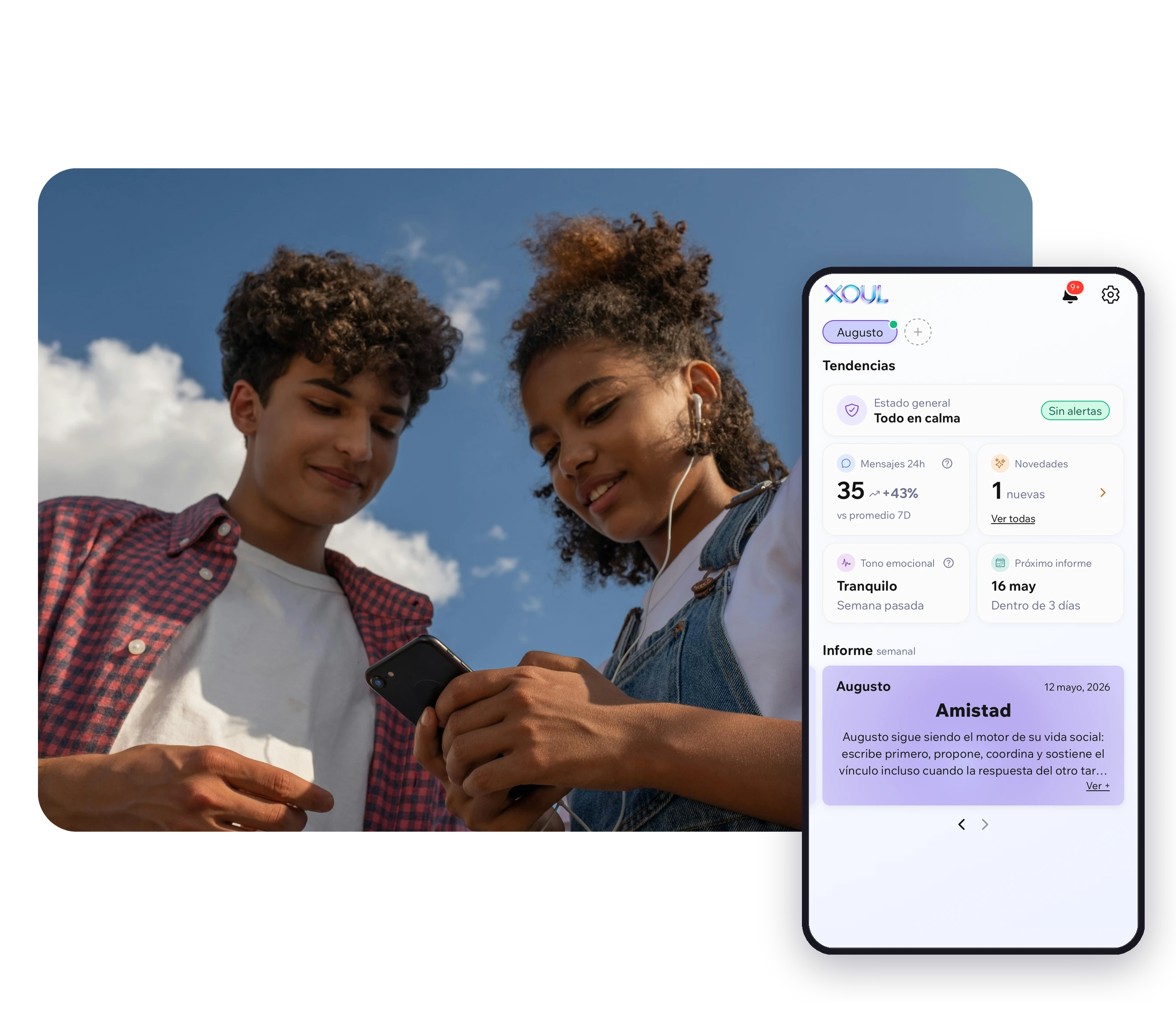
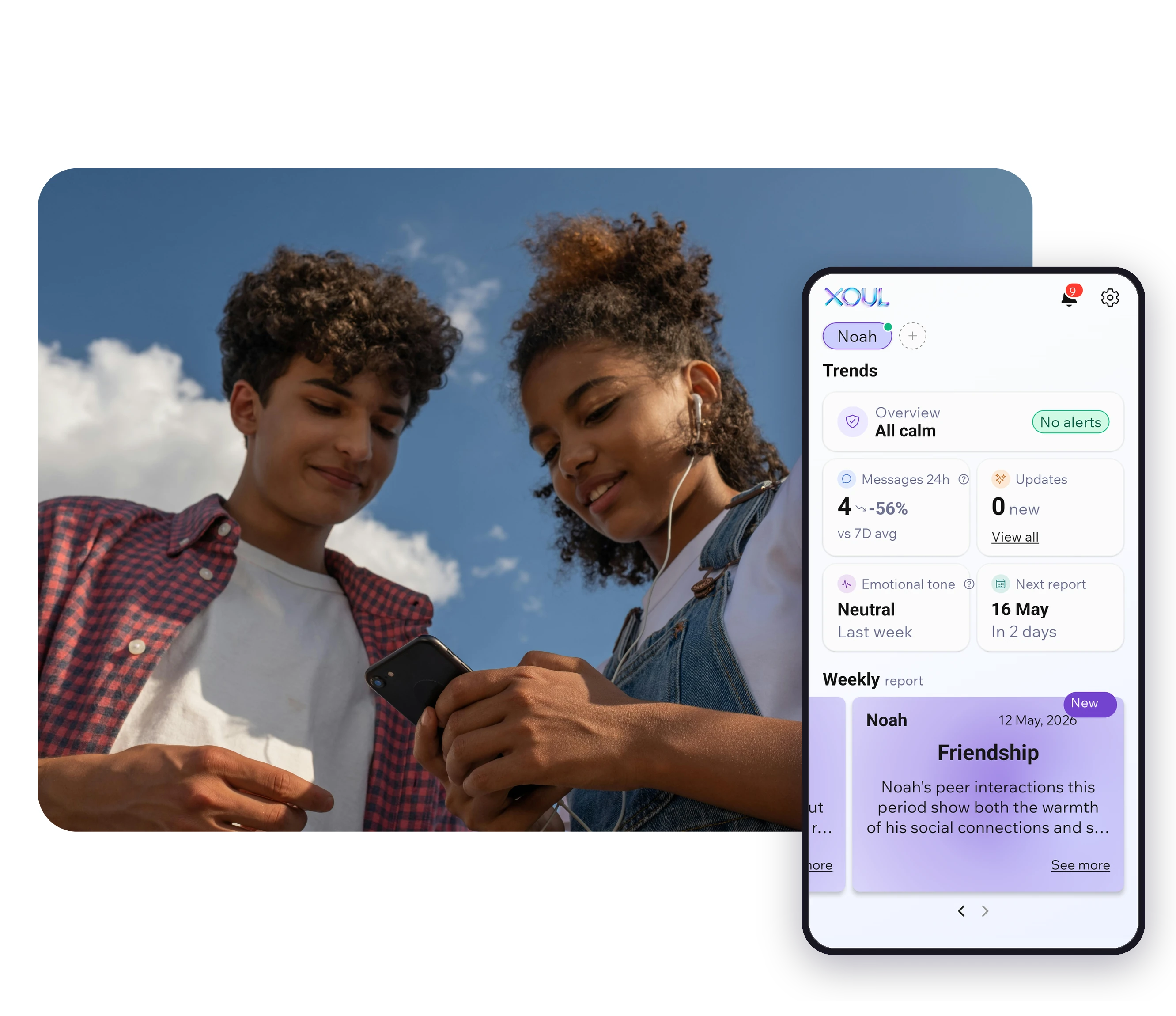
What monitoring apps are recommended in Mexico?XOUL accompanies you by providing useful information about emotional and security risks, while respecting the privacy of children.
How do I manage social pressure? Everyone at school has a cell phone.This is one of the real challenges. Talk to other families at school: often there are possible collective agreements (delaying the cell phone in the 5th or 6th grade between several families, for example). The decision is easier when you don't make it alone.
Celebrating Children's Day is also celebrating adults who are trying to accompany this digital childhood with patience and respect. There is no such thing as the perfect family or the infallible rule. There is, yes, the daily will to observe, listen and adjust.
XOUL was designed to accompany exactly that: that Mexican families can take care of their daughters and sons in their digital lives without becoming guards, offering them useful information to talk about.
XOUL gives you private reports with risks, emotions and important moments, always from a respectful approach.