As in many other fields and industries, the future of artificial intelligence and technology cannot be built without opening the doors to girls, teens, and women.
Yet the data still tells a different story. According to UNESCO, women make up less than 30% of those working in technology, and only 22% in AI-related roles. The gap doesn't begin in college: it starts much earlier, in the messages girls and teens receive about what is "for them." And today, with AI entering everyday life through chatbots, social media, and school apps, support from home becomes essential.
Various studies agree: by age 6 or 7, many girls already start to feel that "technology and science things" are not for them. Not because someone explicitly forbids it, but because the conversation around them assigns those interests to others.
The gaps then get reinforced in several layers:
That's why naming and identifying it is the first step to changing it.
Artificial intelligence has entered girls' and teens' lives quickly and with little conversation. They use chatbots for schoolwork, generate images with tools built into their social apps, talk to voice assistants, and sometimes even build "bonds" with virtual companions.
Specific challenges show up here for girls:
Change starts with how we talk. Avoid phrases like "better let your dad fix it" in front of a computer. Show curiosity when she tries a new tool. Ask her what she discovered when using AI for an assignment, without judging first.
The difference between "using" technology and "making" technology is huge. Suggesting small projects—generating a story with an AI, coding a site about a topic she's passionate about, editing a video—turns girls into producers and not just audience members.
Few girls know Joy Buolamwini (researcher on algorithmic bias), Fei-Fei Li (pioneer of computer vision), or the women in Argentina, Mexico, and Spain who are building AI today. A podcast, a documentary, or a TED talk can open up a world. It's a conversation, not a class.
When an AI gives her a response that reflects gender stereotypes, use it as a starting point. "Do you think that answer is right? What's missing?" Critical AI literacy isn't for later: it's for now.
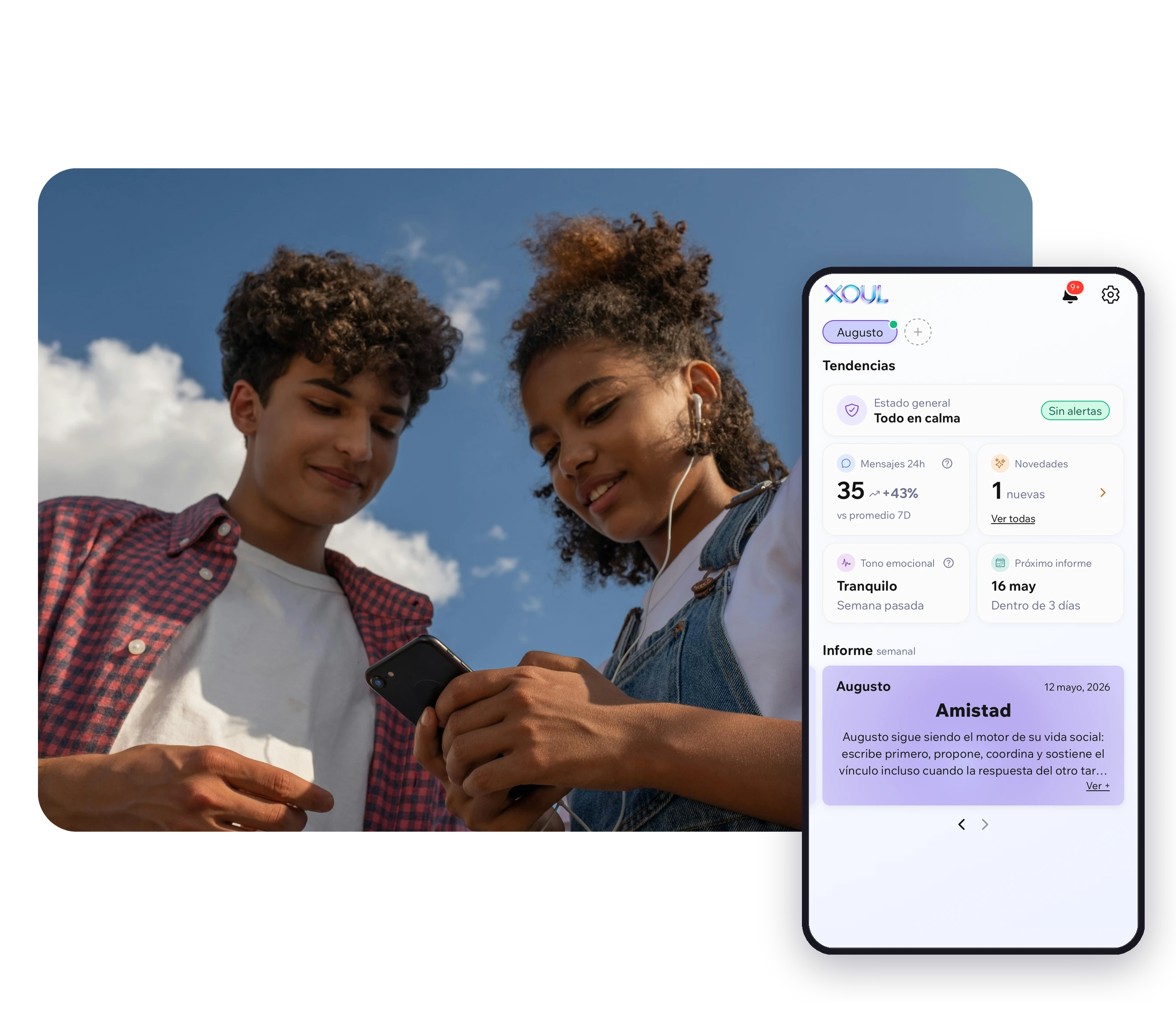
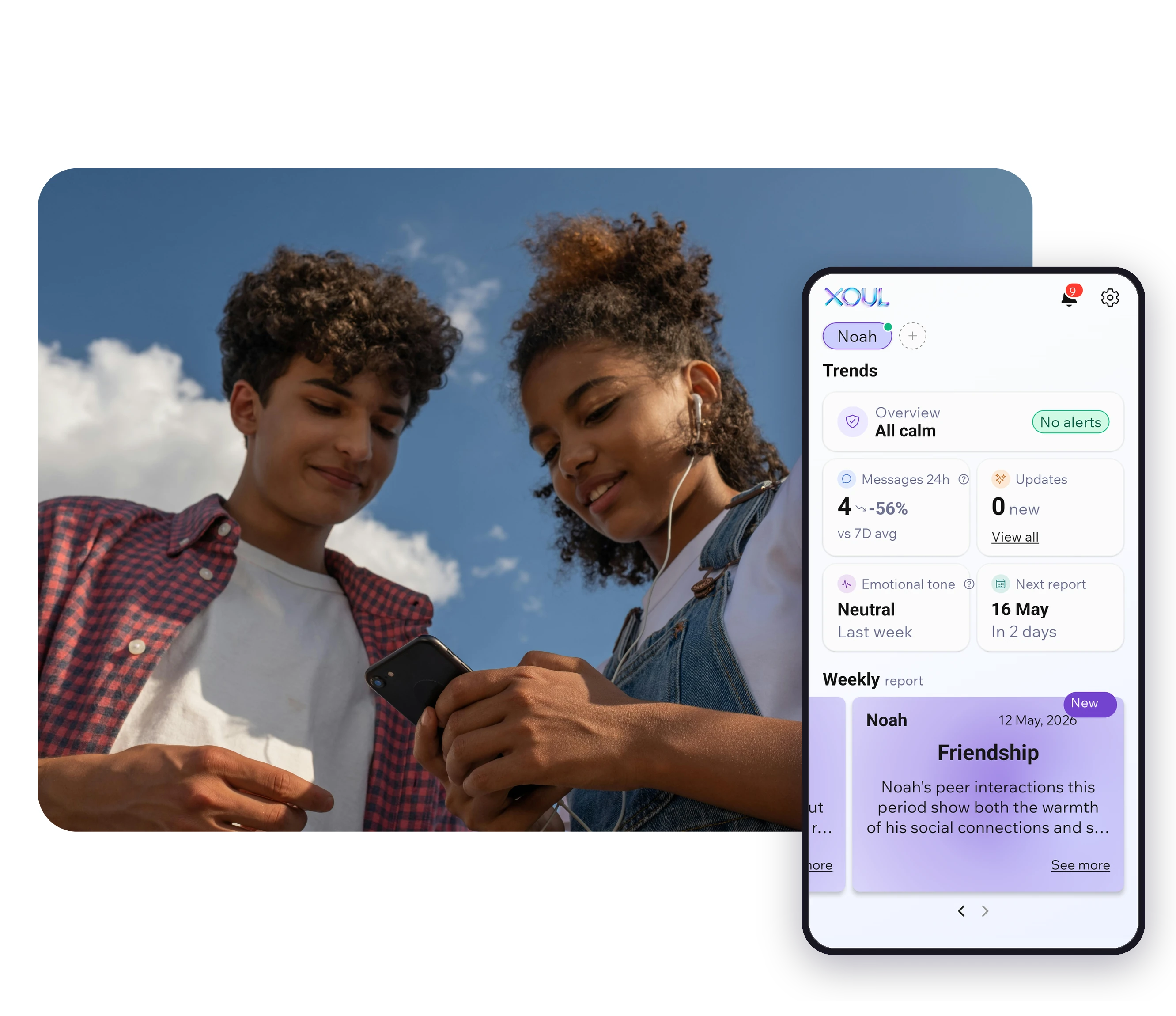
Adolescence has a key ingredient: the need for personal spaces. Accompanying a teen in her digital life doesn't mean watching everything she does, but being available when something makes her uncomfortable, confused, or scared. Parental accompaniment apps—like XOUL—can help detect emotional and safety risks without reading every message, protecting her privacy.
At what age can I start introducing AI to my daughter?
Before age 9, the focus should be on creative play (stories, AI drawings, basic robotics) with adult support. Between 10 and 13, she can start using chatbots with supervision and conversation about limits. From 14 on, there's room to experiment with her own projects. We recommend accompanying all of these stages with XOUL.
My daughter already uses ChatGPT for assignments. Should I be worried?
Not automatically. What matters is whether she uses it to think better or to avoid thinking. Walk through a chatbot response together and ask her what she would add or change. That turns a passive tool into a learning resource.
How do I protect my daughter from deepfakes or digital violence without isolating her?
Talk openly about what deepfakes are, how to detect them, and what to do if she sees them circulating about her or someone close to her. Know the legal options in your country (in Argentina and Mexico, there are specific frameworks). And make clear that, whatever happens, she can count on you without judgment.
Is it useful for my daughter to learn to code even if she doesn't choose a STEM career?
Yes. Coding, understanding how an AI works or how algorithms are trained, is today basic literacy, like reading and writing. It will be useful in any career she chooses.
Changing the story of girls in technology isn't the job of a single family, but it starts in every home. With a different conversation, with a shared role model, with a tool that opens up curiosity instead of shutting it down. And with adults who accompany with respect and trust.
XOUL gives you private reports with risks, emotions and important moments, always from a respectful approach.