When we think about gender-based violence in a relationship, we usually picture adult partnerships. However, this kind of violence can often be observed in relationships that begin much earlier, especially during adolescence.
Adolescence is a stage of discovery: of one's own body, identity, friendship, and love. It's the time when many young people have their first romantic relationships. In that process, they already bring with them ideas about what a partnership "should" look like and what it means to love someone, and that's what they bring into their relationships.
As we grow up, we internalize messages about what being in a relationship means. We learn it from the shows and movies we watch, the songs we listen to, and also from family conversations and the ones circulating on social media.
In many cases, problematic beliefs settle in subtly, presented as romantic gestures or signs of commitment. But little by little, many of them can lay the groundwork for our view of love in ways that are harmful and can lead a person to stay in relationships where violence dominates:
In adolescence, when young people are having their first romantic relationships, these ideas can carry special weight. It's a stage when they're starting to build their own models of love and connection, and a partner's perspective can strongly influence their self-esteem and identity. With less experience to recognize unhealthy limits, certain controlling behaviors can go unnoticed, become normalized, or even be valued as proof of love.
And although these dynamics can affect different young people, it's women and girls who experience them most often and, in many cases, with more serious consequences.
Today, relationships aren't built only face-to-face. They're also sustained through messages, stories, photos, shared locations, and online statuses. The digital environment is part of the relationship, and it can be one more stage where gender-based violence is perpetuated.
In practice, this can look like:
These practices are part of what's known as digital dating abuse. In many cases, they don't appear in isolation, but connected to other forms of control off the screen.
Gender-based violence within a relationship is rarely limited to a single episode. It often shows up through situations that repeat and can become increasingly difficult to manage.
Sometimes, these situations aren't immediately recognized as part of a bigger problem. In fact, the person experiencing gender-based violence is often caught in a cycle that tends to take the following shape: it usually begins with persistent jealousy, frequent complaints, or demands that create discomfort. Over time, clearer episodes of belittling, pressure, or aggression may appear, leaving more obvious distress. And finally, it's common to see a period marked by apologies from the aggressor, promises of change, or intense gestures of affection that bring relief and the feeling that everything is back to normal.
This cycle of violence is very common, and once inside it, it's often very hard for a person to step away.
Some actions that can help:
1. Talk about what a healthy relationship looks like.
Discuss respect, limits, autonomy, and mutual trust. Remember that love doesn't involve control, fear, or loss of freedom.
2. Question beliefs without dismissing them.
Invite reflection with open-ended questions: How does that make you feel? What if a friend were going through this? These kinds of questions allow for thinking without imposing.
3. Show availability without invading.
When an adolescent feels support instead of judgment, they're more likely to share what's worrying them.
4. Pay attention to changes in mood or behavior.
Isolation, distress after using the phone, fear of not replying to messages, or loss of interest in activities can be warning signs.
5. Seek help if needed.
If the distress persists or the situation intensifies, the accompaniment of a professional can be a valuable resource.
Supporting doesn't mean controlling, but being present, listening, and helping to build models of connection based on respect. Opening early conversations can make a significant difference in how young people understand love and limits, today and in the future.
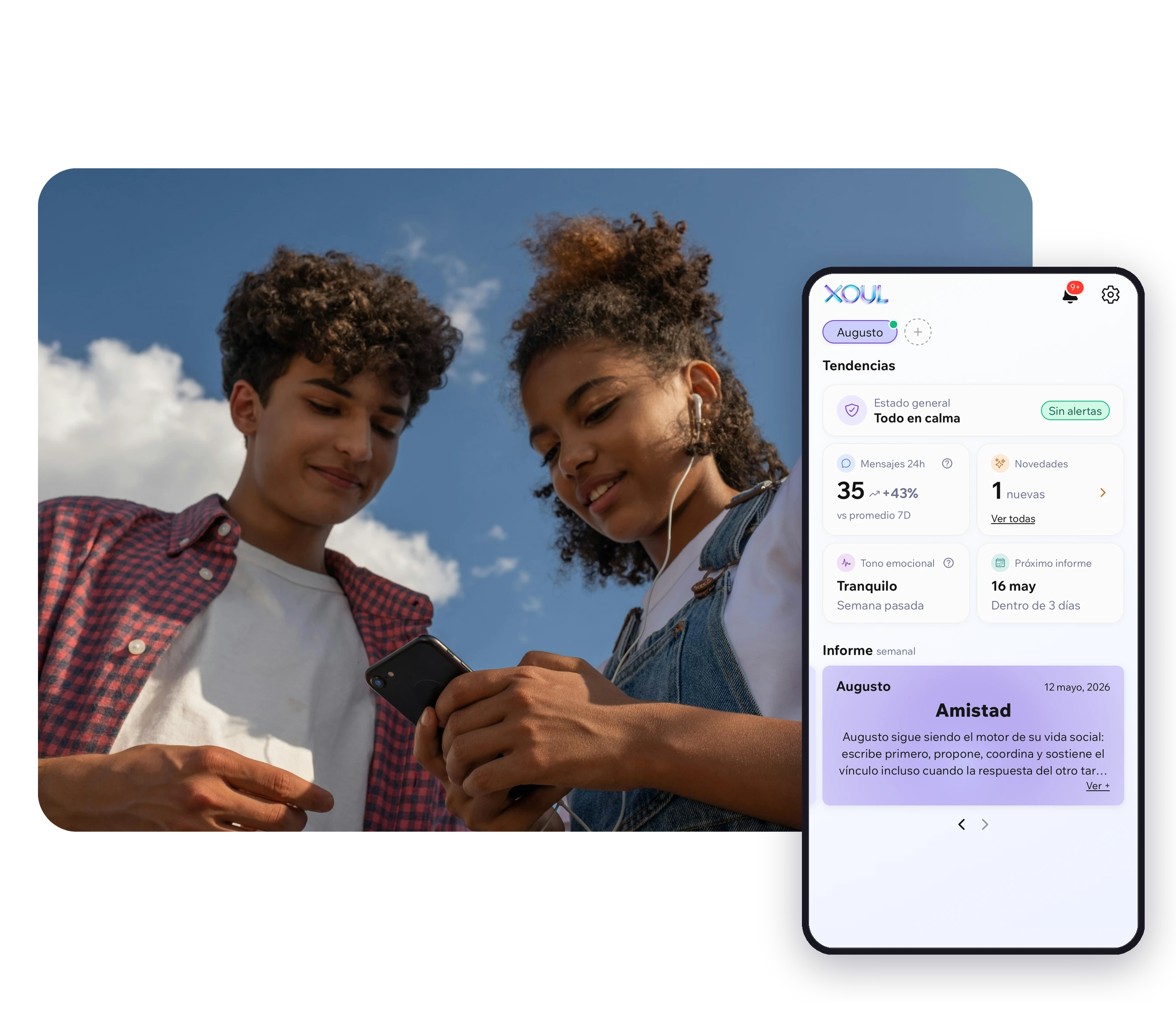
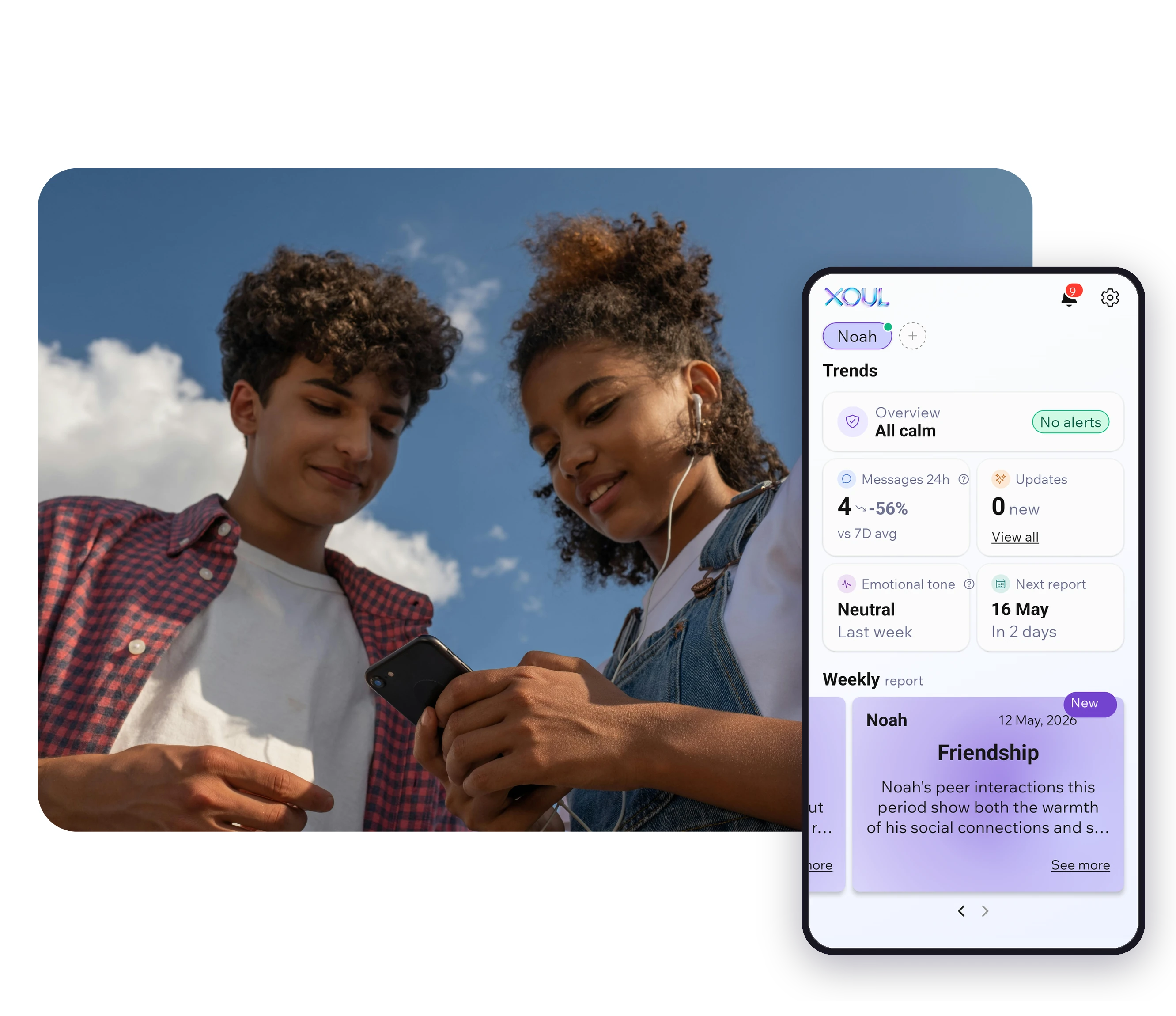
Having information can also make that accompaniment easier. Xoul aims to help you better understand what your children are experiencing in the digital world, giving you tools to open conversations through dialogue rather than surveillance.
Download the app here: https://xoul.onelink.me/uQjN/6xyteqm9
XOUL gives you private reports with risks, emotions and important moments, always from a respectful approach.