For many adults, the idea that a child or teen has a friendship with someone they've never met in person can feel strange or even concerning.
However, digital friendships can be a natural part of the social world for many young people and, in many cases, are simply another way to connect with others and feel part of a group.
These relationships often emerge in spaces like gaming platforms, social media, or chat platforms, where interaction happens frequently.
Understanding how these relationships work, what makes them valuable, and when they may become problematic gives us better tools to offer accompaniment with less judgment.
Why do young people make friends online?
Unlike school or the neighborhood, where relationships usually form through physical proximity, in the digital environment it's more common to connect through shared interests: the same game, the same hobbies, a similar way of seeing things.
Adolescence is also a stage in which the search for belonging and identity is central. Finding people with whom they feel understood, even through a screen, responds to a genuine and expected need at this point in their development.
Online communication also tends to encourage people to share personal aspects more quickly than in face-to-face relationships. This exchange (sharing what's happening to them, what they think or feel) is one of the central elements in building closeness in any relationship. When combined with frequent contact, the connection may feel close in a relatively short period of time, even without having met in person.
When to pay closer attention
Not all online friendships are a problem. Many are part of teen social life and can be positive.
However, there are some situations specific to digital relationships that are worth observing more carefully. Anonymity, for example, can make it easier for someone to not be who they say they are, and teens don't always have the tools to detect this.
Some signs to watch for:
These signs don't necessarily mean there's a problem, but they can be an opportunity to start a conversation.
How to talk about this as a family
Talking with your child about these friendships usually works better when it happens in a climate of trust and openness, without judgment.
Some ideas that may help:
Online friendships are a real part of teen social life. Supporting them with curiosity, rather than distrusting them by default, can make the difference between your child telling you what they're going through or keeping it to themselves.
★ XOUL: a tool to support digital well-being
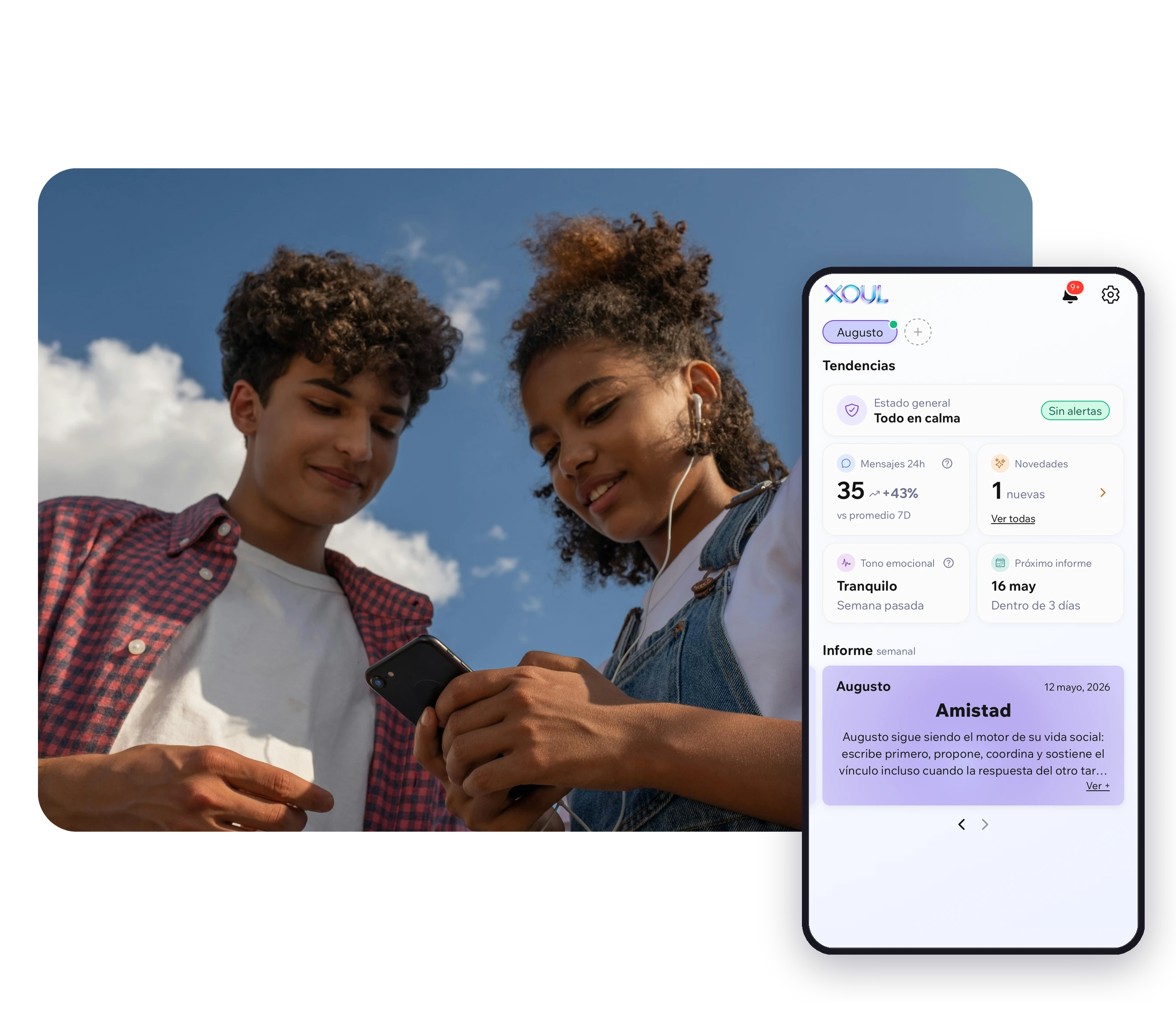
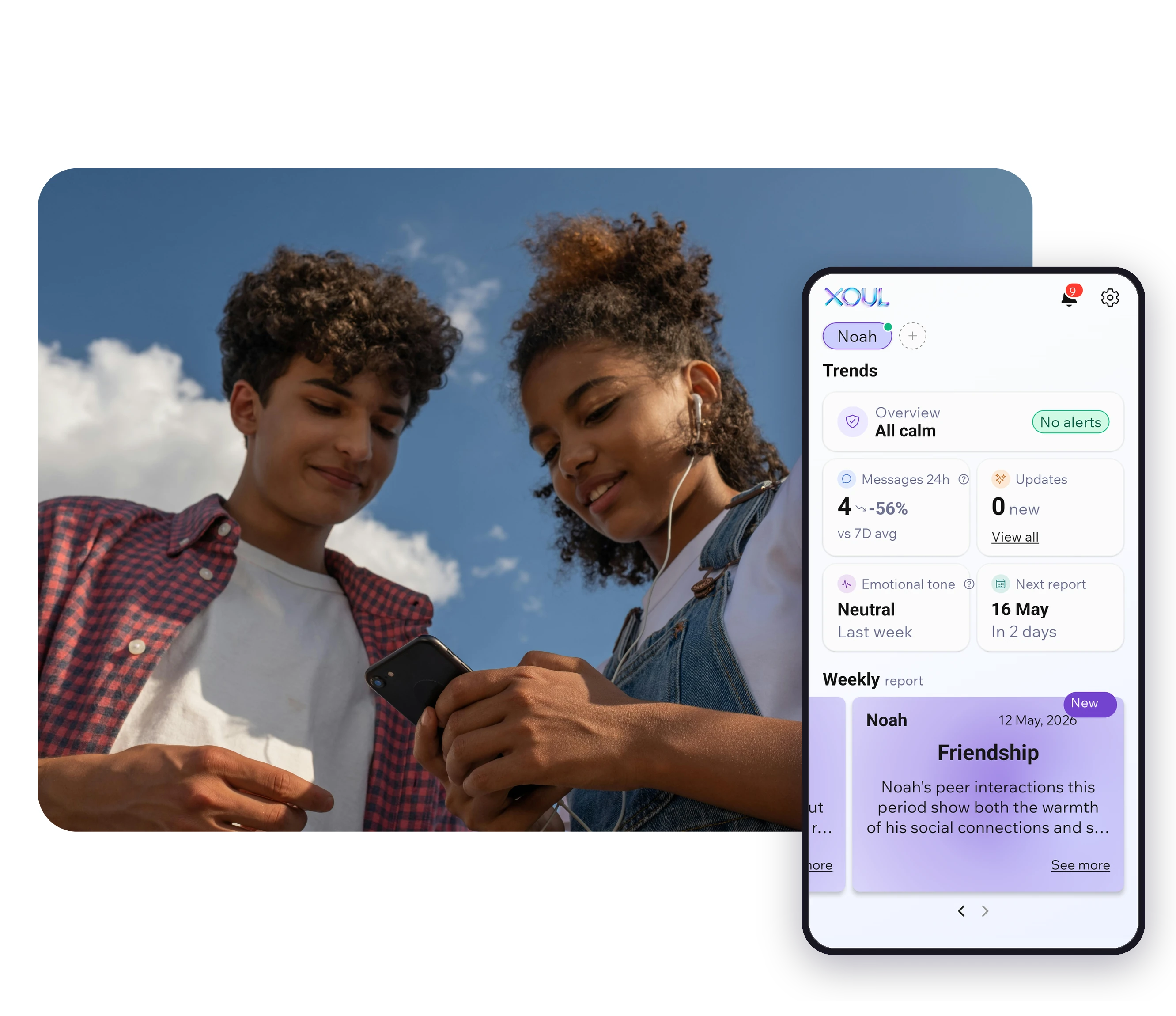
XOUL privately analyzes your child's digital behavior on WhatsApp. It can help you identify whether they're forming online connections and better understand how those interactions are unfolding. Based on that information, it offers cues and tools that make it easier to start conversations from an informed, respectful place, without accessing the content of their messages.
XOUL gives you private reports with risks, emotions and important moments, always from a respectful approach.