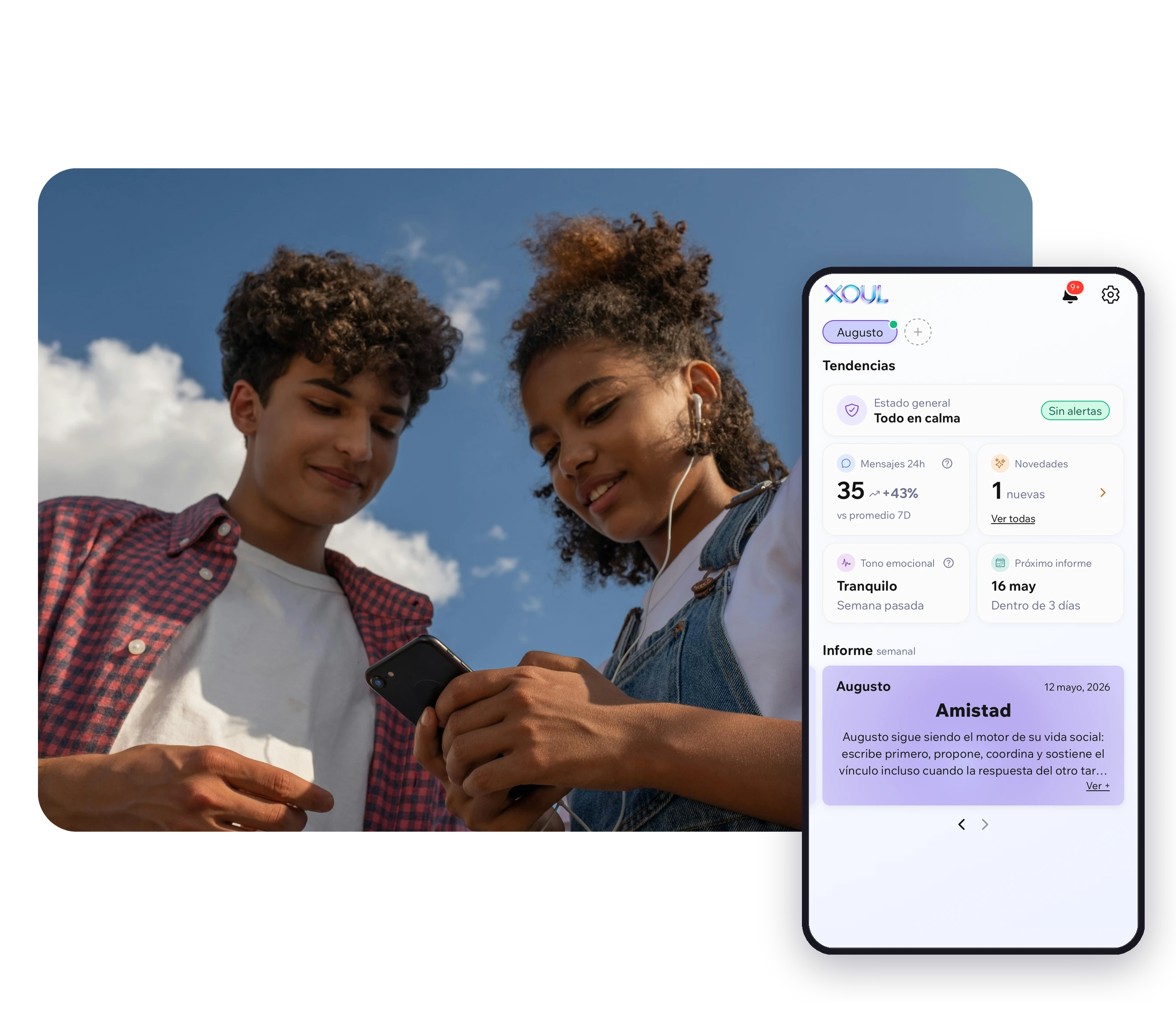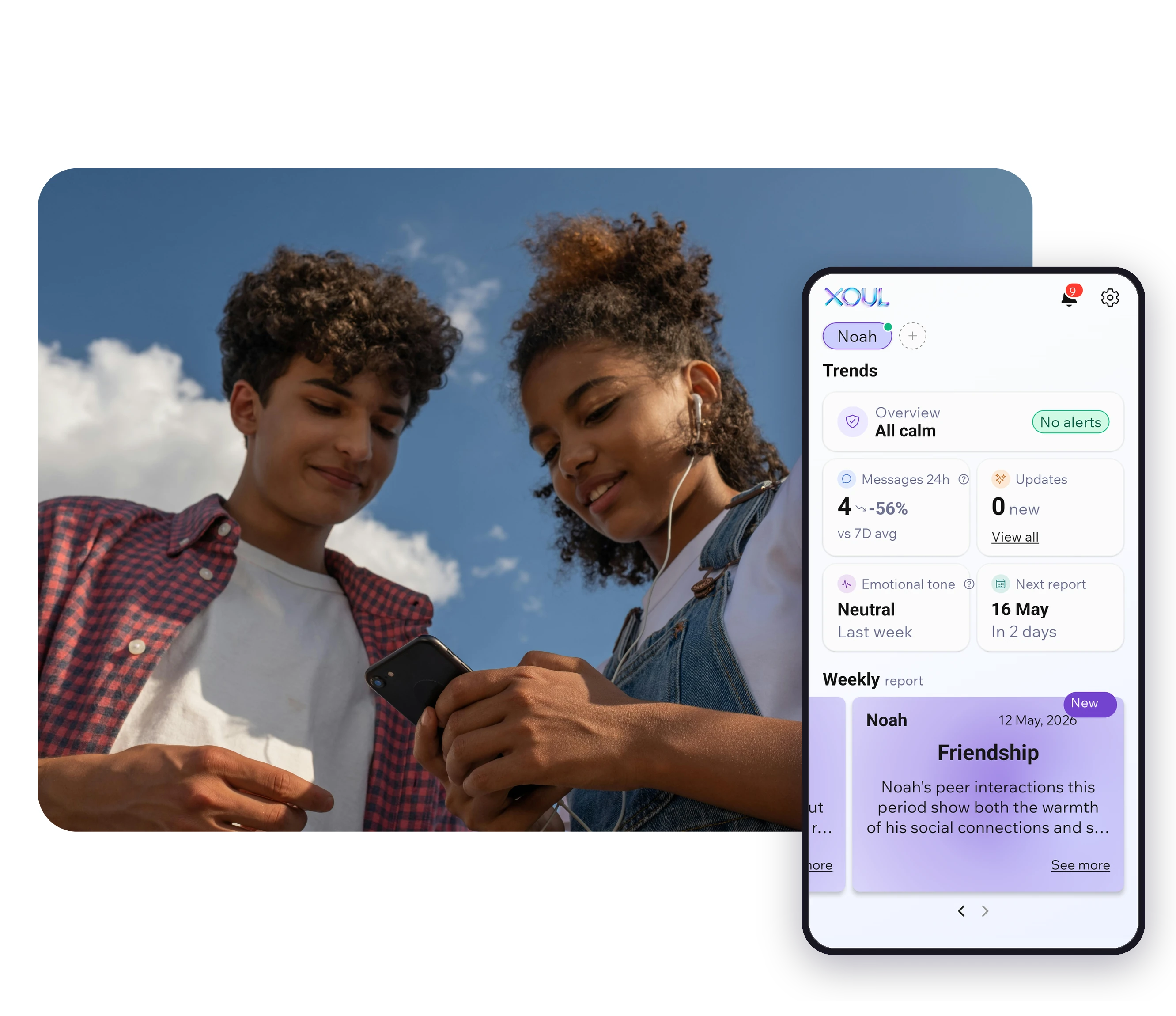
Adolescence is, by nature, a stage of seeking independence. Today, that search happens mainly in the digital world. For parents and caregivers, this creates a constant dilemma: we know that social media and teens can be a risky combination, but we also know that going through their phone is the quickest way to shut the door on communication.
Is it possible to offer parental guidance without invading privacy? The answer is yes, and the key lies in non-intrusive accompaniment technology.
Unlike younger children, teens need their own space. Digital privacy for children evolves; what used to be direct supervision now has to turn into guidance from a distance.
The risk isn't in their using social media, but in what's happening inside it:
This is where Xoul becomes the definitive solution for families with teens. Instead of demanding passwords or secretly going through message history, Xoul proposes a model of mutual respect:
For tools like Xoul to be effective, it's essential to work on digital education for parents. You don't need technology experience, but you do need to understand the rules of the game:
Supporting teens in their digital life doesn't have to be a battleground. The secret to good digital parenting at this stage is showing that you trust them, while being there to protect them. With Xoul, you get the peace of mind of knowing they're okay, without sacrificing the trust that has taken so much to build.
XOUL gives you private reports with risks, emotions and important moments, always from a respectful approach.