When your child receives their first phone, something usually shifts at home: new concerns appear that weren't there before, new expectations, different rhythms, fears, and small everyday tensions that aren't always easy to manage.
Conversations start getting interrupted by a notification, dinner can compete with a WhatsApp group, and movies are watched while everyone scrolls through their social feeds. Attention starts getting split between the physical world and what's happening online and, often, without being fully aware of it, our focus drifts away entirely.
It's also expected that parents and children don't see the digital world the same way. What can look like distraction to adults can feel like connection to younger people. These differences aren't a problem in themselves, but they call for conversation so they don't turn into disconnects.
At the same time, adolescence has always been a stage of family reorganization, as children start to seek more autonomy, more privacy, and more space of their own. That process used to unfold mostly outside the home: at school, with friends, in extracurricular activities. Today, much of that exploration also happens in digital environments. That shift makes the tension between autonomy and care more visible.
All of this invites us to reorganize family dynamics and look for new ways to stay close while still caring. It can also become an opportunity to revisit how we choose to be present at this stage: what kind of agreements we build, how we encourage autonomy, and how we talk when something worries us.
In that scenario, a very concrete question comes up: how do you stay close without invading?
We want to trust, but we also want to understand what's going on. We want to give space, while still caring. That tension is part of growth and of the reorganization that adolescence naturally brings.
Each family finds its own way of handling this challenge. That way is usually shaped by what feels possible in the moment, by family history, by the children's personalities, and by our own experiences.
Is there a "right" or "best" way? There probably isn't a single answer that works for every family, because each family dynamic is different. That said, some studies suggest that certain parenting practices can influence the family bond.
When adults take a very rigid stance—for example, restricting phone use unilaterally or turning to punishment as the first response—tension often rises. In those cases, kids tend to push back more, seek more privacy, hide information, or close off conversation. On the other hand, when limits are there but are accompanied by dialogue, there's usually less direct confrontation. This doesn't mean setting rules is negative, or that opening space for dialogue means allowing anything. It rather invites us to look at where those limits are coming from and what effects they're having on the relationship.
As we mentioned earlier, the way you talk with your child can play an important role in your bond. It's not about talking all the time or checking every detail, but about creating a space where they can share what's happening without anticipating a danger, a reproach, or a punishment. Often, what you know about your child's life doesn't depend so much on how much you supervise, but on how much they choose to share with you. And that openness is almost always connected to the atmosphere at home: when there is trust and active listening, it's much easier for openness to come up.
Creating a warm, positive atmosphere doesn't always depend on having long, deep conversations, but on how everyday interactions go. Sometimes it simply means pausing for a moment and thinking before giving an opinion. If your child mentions something they saw on social media that worries you, you can start by asking what they think about it before sharing your own view.
It also means showing interest in what your child enjoys, instead of always focusing on possible problems or risks. Asking what they like about an app, what they find fun in certain content, or how they feel when they take part in an online group lets you get to know their experience from the inside.
Finally, listening also has to do with timing and your own presence. If your child is telling you something, are you really available? Where is your phone in that moment? The way you use your devices also shapes the family atmosphere. The digital world is part of life for parents just as much as for kids. When screens constantly interrupt shared moments, the quality of those moments inevitably suffers.
Supporting this stage
There isn't a single strategy that works for every family, but we do know that an atmosphere of trust, dialogue, and consistent limits supports the bond between parents and young people.
Maybe the question isn't so much how much to step in, but how you want to be present at this stage. What space are you leaving for your child to share what's happening to them? How do you react when they share something that makes you uncomfortable? From what place do you yourself relate to technology? What place does your own phone take up in shared family moments?
A first phone doesn't just transform your child's life. It can also invite you to revisit your own relationship with the digital world and the way you build presence as a family.
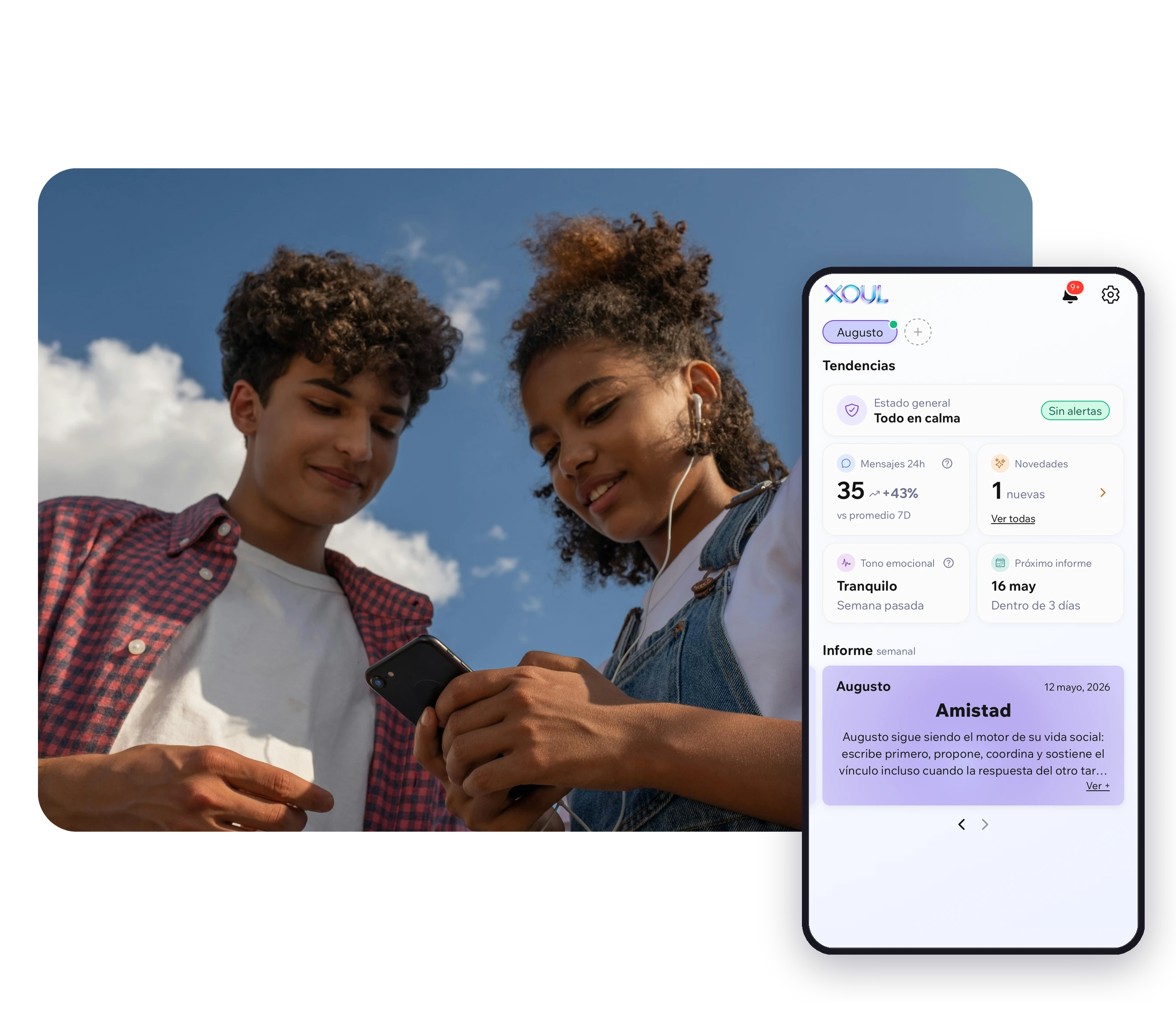
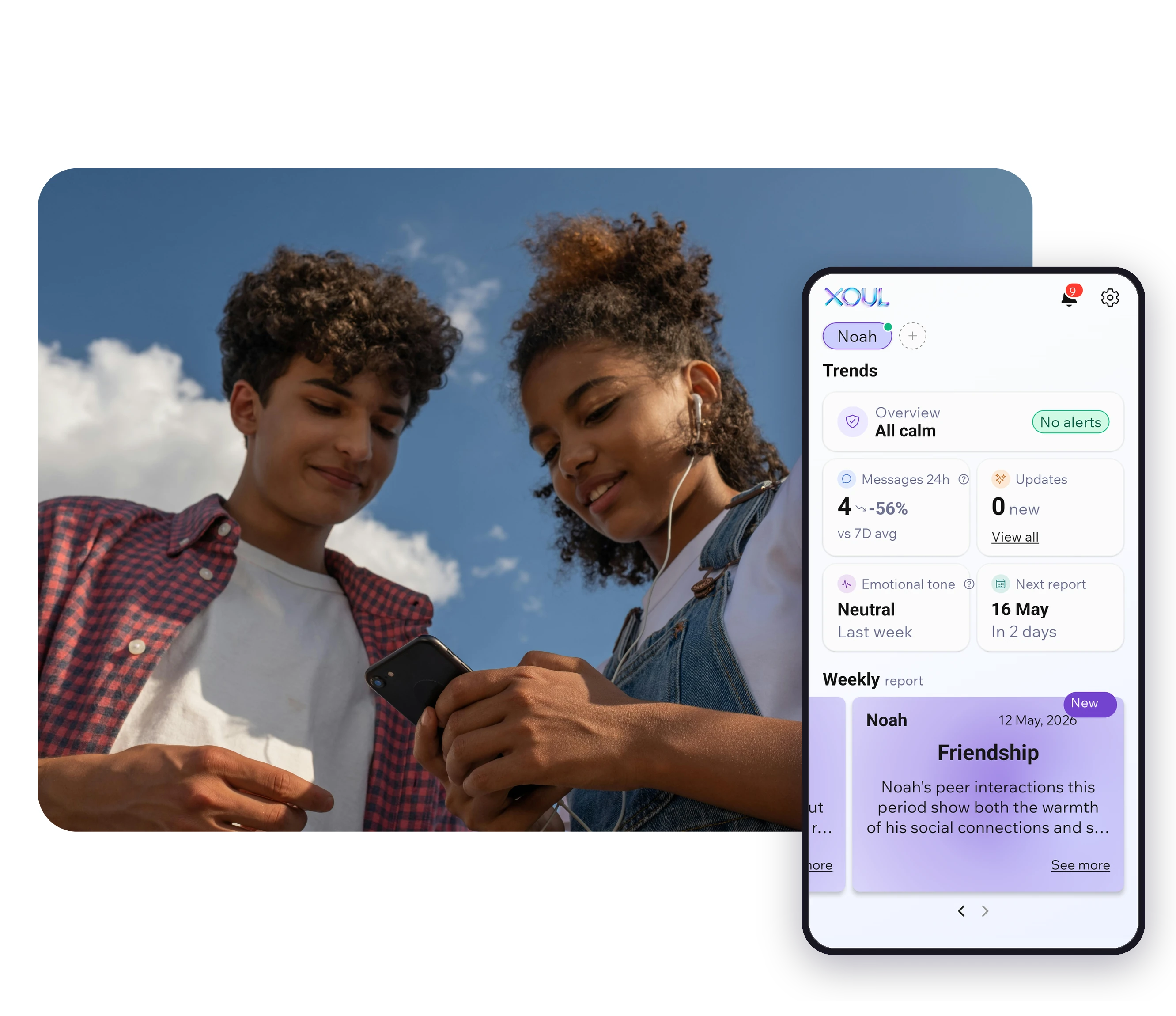
In this context, tools like XOUL can act as a support for that process. XOUL doesn't replace conversation or make decisions for the family; it helps detect signals that invite conversation, better understand certain changes, and open dialogue in time, respecting privacy and strengthening a more informed and close presence.
XOUL gives you private reports with risks, emotions and important moments, always from a respectful approach.