On March 27, an 18-year-old student attacked a school inspector with a knife at a school in Calama, Chile. Three days later, a 15-year-old entered the schoolyard of a school in San Cristobal, Argentina, and opened fire. Two people died. Dozens were injured. And in the days that followed, more than 60 schools across 14 regions of Chile suspended classes due to similar threats.
Faced with events like these, the most understandable reaction is shock. The second, more urgent reaction, should be the question: what can we do?
Because the answer, backed by years of research, is that much of this can be prevented. And today there is an app that detects warning signs and risks in time.
A phenomenon with a name that operates as a network
The investigations carried out after the attacks in Argentina and Chile point toward what security agencies and academic institutions have been documenting for years: behind these events are transnational digital communities that glorify school violence (True Crime Community), actively recruit adolescents, and operate on everyday platforms like Discord, Telegram, TikTok, and online video games.
In Argentina, the Attorney General's Office had identified 7 cases of extreme violence associated with this phenomenon before the San Cristobal shooting. The adolescent involved had begun planning the attack in December 2025, four months before carrying it out, in digital communities that encouraged and accompanied him through that process.
This isn't the problem of a particular country or a particularly violent generation. It's a systemic phenomenon, amplified by algorithms, that can reach any child or adolescent who finds in those spaces what they don't find in their close environment: belonging, identity, and recognition.
What science says about prevention
According to the National Threat Assessment Center of the U.S. Secret Service, 100% of school attackers exhibited observable behaviors before the attack. In 80% of cases, the person had been a victim of school bullying. And in 81% of cases, at least one person in their environment knew about the plan.
That last statistic is the most important: in the vast majority of cases, someone knew. A classmate, a teacher, a family member. And they didn't always have the tools or environment to do something with that information.
Radicalization isn't a sudden break. It's a gradual process, with observable stages: a sense of accumulated grievance, the search for communities that validate that distress, progressive exposure to content that glorifies violence, planning. A process that, at each of those stages, can be interrupted. And that changes everything.
The evidence also clearly identifies the factors that protect adolescents: strong family bonds, connection with meaningful adults in the school environment, critical thinking, timely access to mental health support, and environments where they feel safe to speak up. None of this is foreign to what educational institutions already do, or can begin to do with more tools.
The challenge of seeing warning signs in time
Dr. Francisca Salas, of Universidad Andres Bello, framed it precisely in an analysis published after the events in Chile: "the signs, in many cases, are there, but as a society we still face challenges in reading and integrating them."
Part of that challenge is structural. Concerning behaviors are sometimes confused with normal adolescent "rebellion." Digital signals occur in spaces adults don't see. And the fragmentation of responsibility between school, family, and the health system dilutes the capacity to respond.
The other part of the challenge is technological. A significant portion of adolescents' emotional and social lives now takes place in the digital world, in conversations and communities that the adults they look to generally don't know about and can't accompany them through.
That's why we built XOUL
At XOUL we believe that the institutions working with children and adolescents deserve tools that match the scale of this challenge.
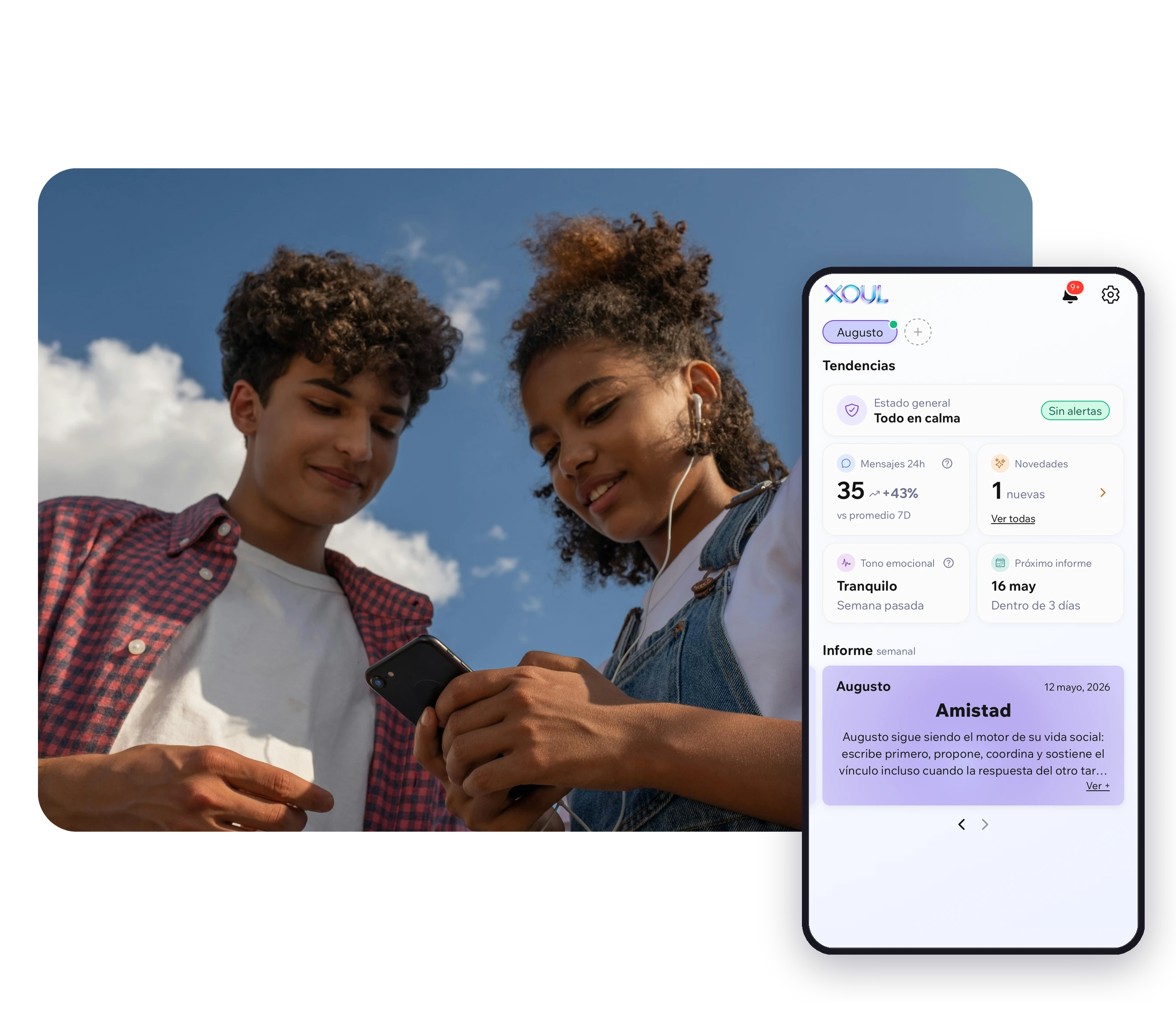
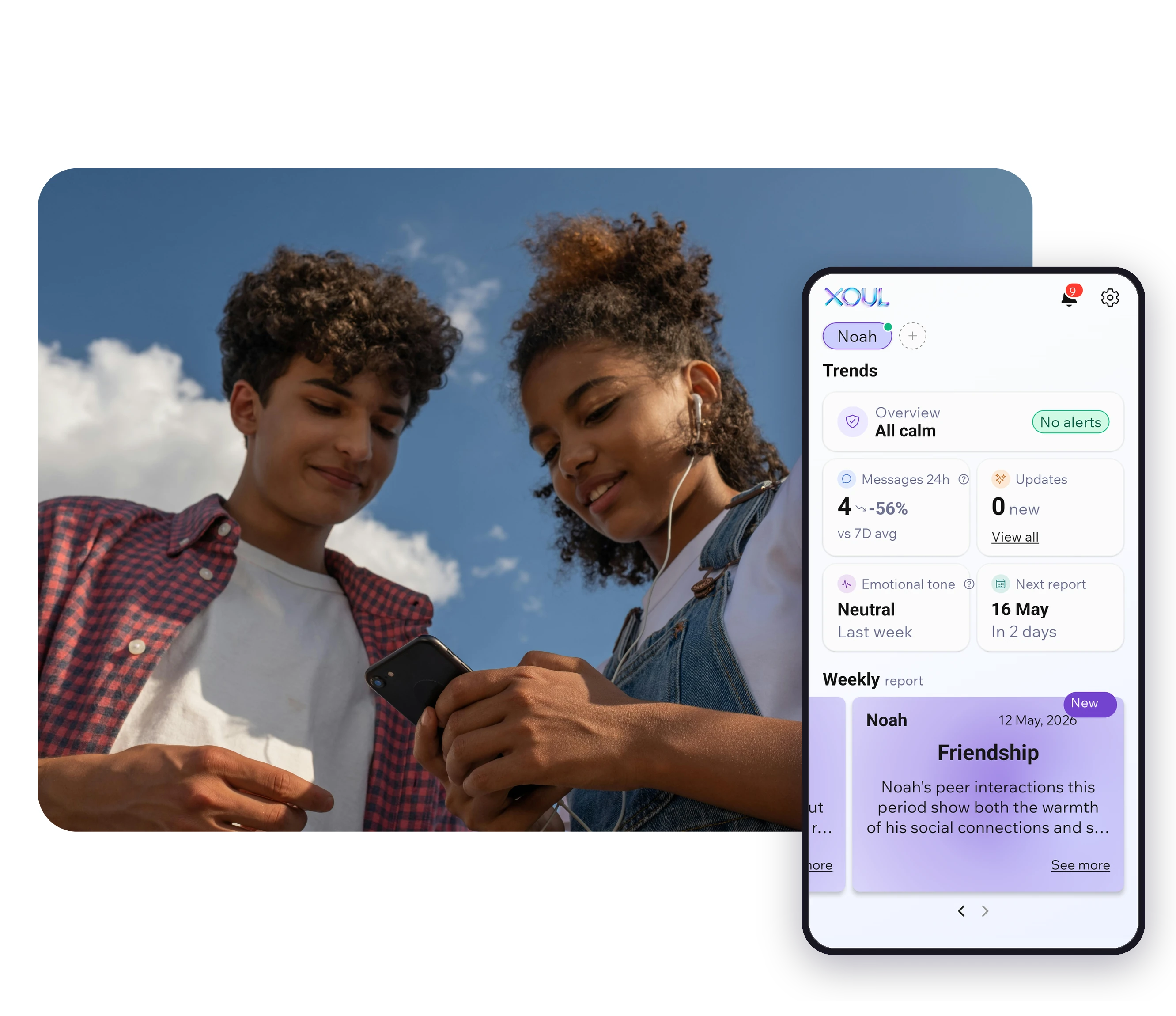
We've developed a technology that privately and respectfully analyzes the digital behavior of children and adolescents, detects emotional changes, warning signs, and risk situations, and makes it possible to alert the adults they rely on in time, without exposing conversations or invading privacy. All with oversight from mental health professionals.
We already work with families, and we've been able to detect and alert in time about situations where physical violence encounters, school bullying, and abuse were being planned.
Now we want to make this tool available to schools too, because we understand that prevention is a shared responsibility between families, educational institutions, and government agencies.
If you lead an educational institution, work in public policy for children or adolescents, or simply want to explore how XOUL can contribute to your community, we'd love to talk.
Because the question isn't whether this can happen again. The question is what we do, starting today, to better accompany our young people.
You can count on XOUL.
XOUL gives you private reports with risks, emotions and important moments, always from a respectful approach.