When a parent looks for ways to support their children's digital life, two paths quickly appear that are often confused: parental control and parental guidance. They seem the same on the surface—both aim to care—but they work with different logics and produce different effects on the relationship.
Knowing the difference isn't a technicality: it's what will determine whether your child learns to trust you enough to share what's happening online, or learns to hide it better.
In this guide, we explain what they are, their advantages and limits, and how to choose what best fits each stage of your family.
Parental control brings together all the tools and practices that monitor, block, or restrict the digital activity of children and teens. Its logic is one of gatekeeping: the adult decides what can happen and what can't, and technology acts as a barrier.
In practice, it includes:
Well-known tools in this category include Bark, Qustodio, Aura, Family Link (in its stricter functions), or the native controls in iOS and Android.
Where it works well. With younger children (6–10 years old) who don't yet have digital autonomy and need a curated environment. Also in specific risk situations: contact with strangers, exposure to clearly inappropriate content, problematic use that's already affecting sleep or school.
Where it starts to fail. When the child becomes a teen. Various studies consistently show that intensive monitoring during adolescence reduces the likelihood that kids will turn to their parents when a real problem comes up. The feeling of being watched tends to push them toward secondary accounts, deleting history, or migrating to apps their parents don't know about.
Parental guidance is a more recent approach that flips the logic: instead of monitoring every move, it seeks to build the child's or teen's own judgment so they can navigate safely, even when family isn't watching.
In practice, it includes:
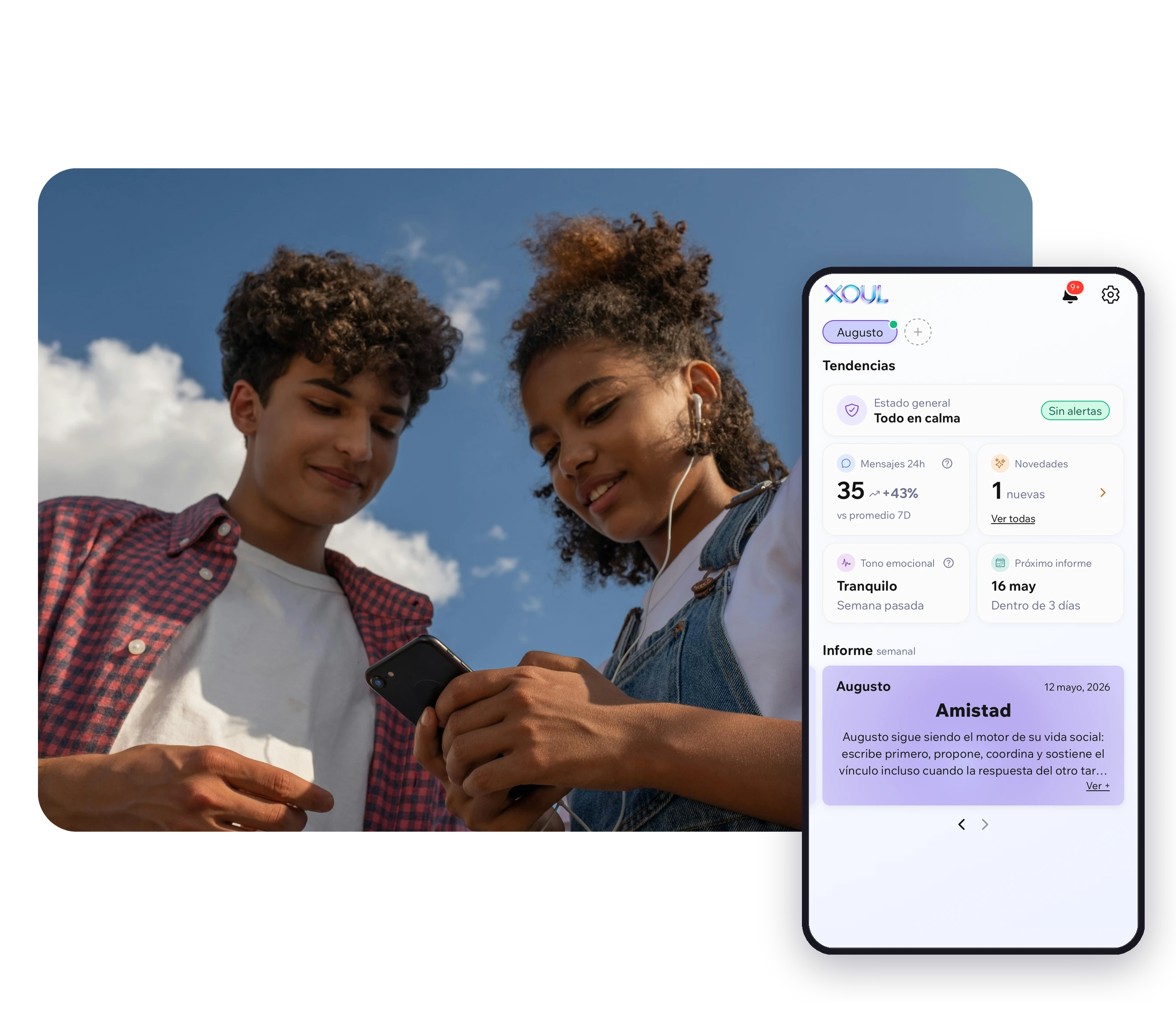
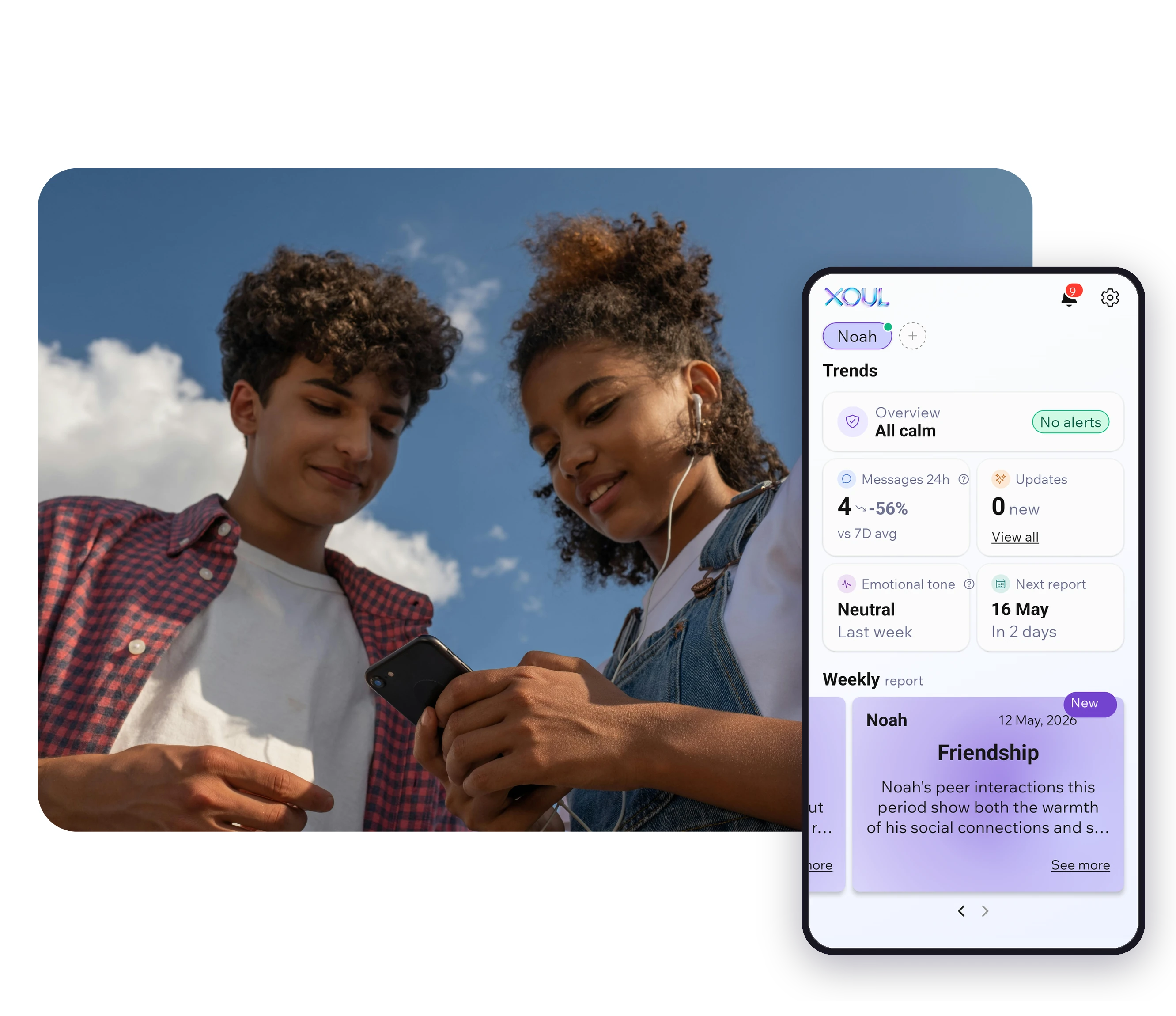
Apps like XOUL are built from this logic: instead of giving parents every message from their kids, they deliver useful information about emotional and safety risks, while protecting privacy.
Where it works well. With pre-teens and teens (12 years and up), where autonomy is a developmental need. Also in families that want to uphold trust and respect as core values.
Where it has limits. With very young children who don't yet have the cognitive development to make digital decisions on their own. And in acute crisis situations, where a firmer temporary restriction may be needed.
DimensionParental controlParental guidanceLogicMonitor and blockAccompany and build judgmentAdult's roleGuard / filterMentor / companionChild's roleObject of supervisionLearnerChild's privacyMinimal or noneRespectedWhat's monitoredFull content (chats, searches)Risk patterns, not contentEffect on trustTends to erode it over timeTends to strengthen itIdeal age6–10 years10 years and upCrisis scenariosImmediate responseNeeds to be combined with targeted measures
Many families come to this comparison expecting a binary answer. In reality, respectful digital parenting usually combines both approaches, with the proportion shifting by age:
If you've already decided your family needs an app to support you, these questions help you evaluate what kind it is:
Can I use parental control and parental guidance at the same time?Yes, and in fact it's the most common approach in families with children of different ages. What matters is that the predominant approach is consistent with each child's age.
Is parental guidance less "safe" than parental control?No. It's different. Faced with serious risks—grooming, exposure to violent content, active cyberbullying—a well-built parental guidance app alerts you just like a control app, without invading the child's privacy in everyday moments.
My son is 14 and I want to know who he's talking to. Is that wrong?Wanting to know isn't wrong. Reading every conversation without his consent does have costs: it erodes trust and can push him to hide things. An alternative is to agree on what will be looked at, how often, and why. The conversation is worth more than the screenshot.
What does XOUL recommend?XOUL was built as a parental guidance app: we don't show you your children's messages. We detect risk patterns (cyberbullying, grooming, signs of problematic use) and deliver useful information to open conversations. You still have control—without turning into surveillance.
Tools aren't neutral: each one carries a philosophy behind it. Choosing between control and guidance isn't choosing between protecting and not protecting—it's choosing how we protect and what kind of family bond we're building in the process.
At XOUL we believe the best long-term protection is trust. That's why we designed an app that accompanies without invading, that alerts without spying, and that respects the child's or teen's privacy while still caring for what matters.
XOUL gives you private reports with risks, emotions and important moments, always from a respectful approach.