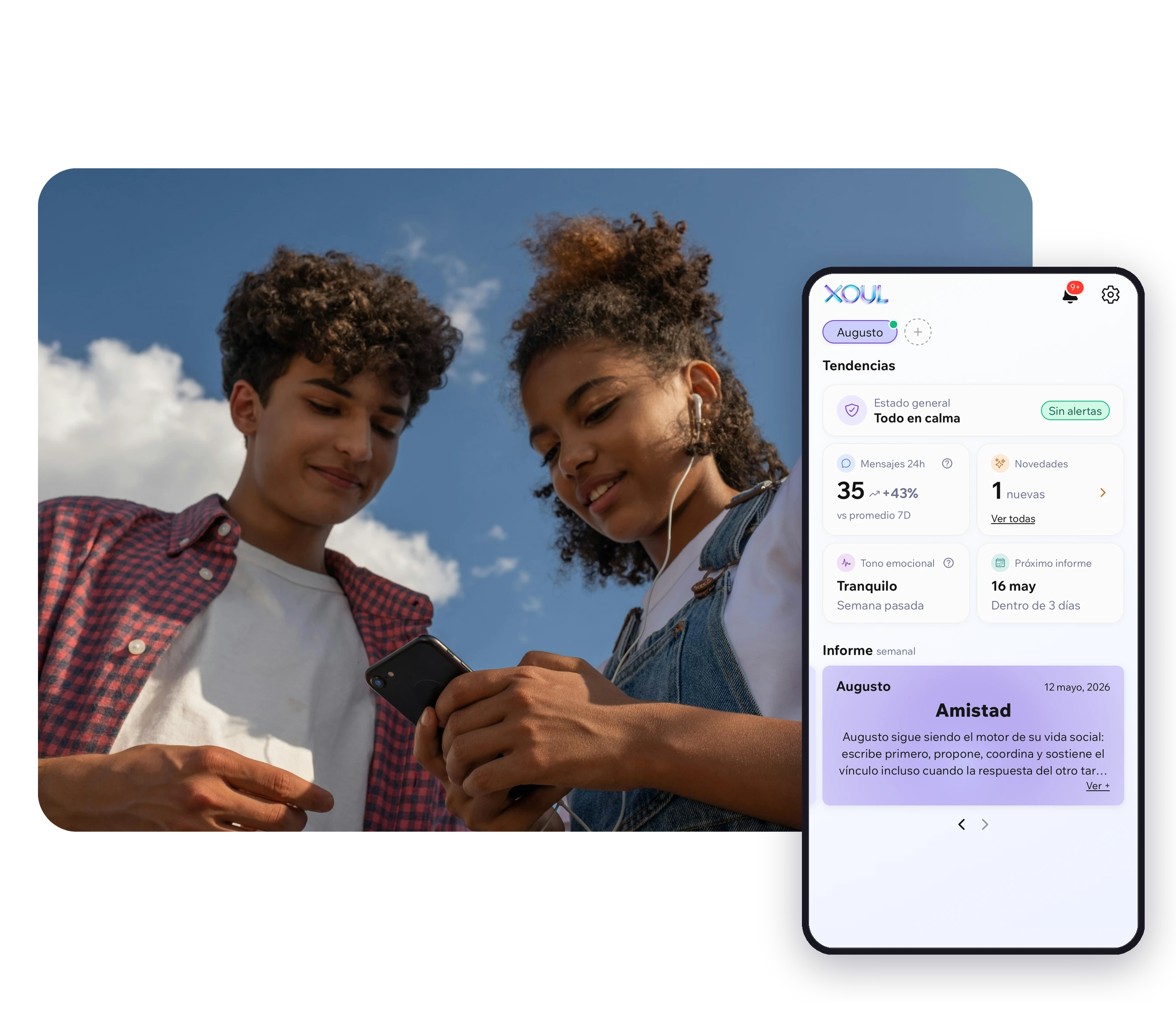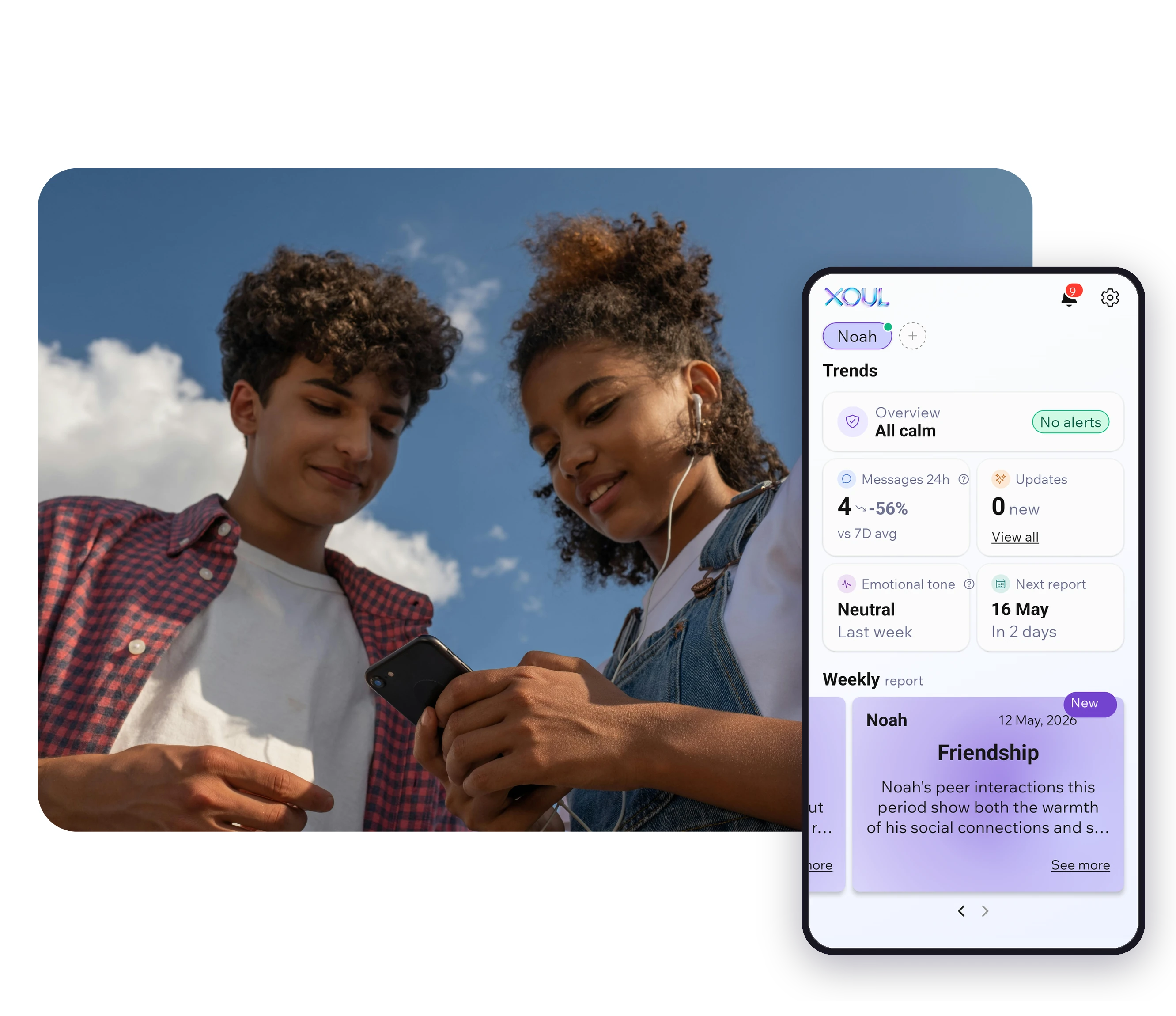
Giving your child their first cell phone usually comes with benefits, but also with worries. And that's okay: those questions are an opportunity to take interest in and better understand the digital world children and adolescents navigate today.
When we talk with mothers and fathers who use Xoul, concerns often come up like:
"What if they're being bothered online and I don't notice?" or "What if they're suffering in silence and don't want to tell me?"
Social media, WhatsApp groups, and video games offer spaces for learning and enjoyment, but they can also become scenarios for conflict. One of the most significant is cyberbullying, a form of harassment that can seriously impact the emotional well-being of those who experience it.
So the question is inevitable:
if your child is going through cyberbullying, how can it affect their mental health and what can you do to help from home?
Not every online conflict is cyberbullying. It's common for kids to argue, get angry, or say hurtful things and then work it out.
We're talking about cyberbullying when there is peer-to-peer harassment through digital channels, that repeats over time and causes sustained emotional harm.
Unlike in-person bullying, the digital component amplifies the impact:
For example, a photo shared with mocking comments in a group can be forwarded, saved, and reappear days later. This exposes the child or adolescent to reliving the same situation repeatedly.
Also, online and in-person bullying often overlap. What happens on social media may be directly tied to what happens at school, intensifying the emotional impact even further.
During adolescence, the way peers view a young person carries enormous weight in identity formation. Feeling accepted strengthens self-esteem; feeling humiliated or excluded can generate deep emotions like shame, sadness, and insecurity.
A range of research shows that cyberbullying is associated with:
This doesn't mean every child or adolescent will develop a mental health issue, but it does highlight the importance of spotting it early and actively supporting them.
Adult support —from family and school— can make a real difference. When an adult listens without minimizing, helps preserve evidence, and activates support networks, the child stops feeling alone in facing the situation.
When a child or adolescent is experiencing cyberbullying, emotional and behavioral changes often appear. Some frequent signs are:
Catching these signs early makes it possible to step in before the distress deepens.
XOUL gives you private reports with risks, emotions and important moments, always from a respectful approach.