In the age of hyperconnection, screen time in childhood isn't only measured in minutes or hours, but in the emotional impact it leaves behind. As parents, we worry that device use may affect our children's development, but there's a quieter risk than simple eye strain: digital anxiety.
How can you tell if your child's online behavior is affecting their emotional well-being without constantly looking over their shoulder?
Not all hours in front of a screen are the same. An hour of school research isn't the same as an hour of tense interactions in chat groups. Children's mental health and technology are closely tied because the digital world is where children today validate their identity.
When device use stops being recreational and starts to generate dependency or irritability, we're looking at warning signs of anxiety. The problem is that, as families, we tend to focus only on the "clock" when what matters most is the "feeling."
Detecting warning signs in messaging apps like WhatsApp is almost impossible for a parent without breaking trust... unless you have a smart ally.
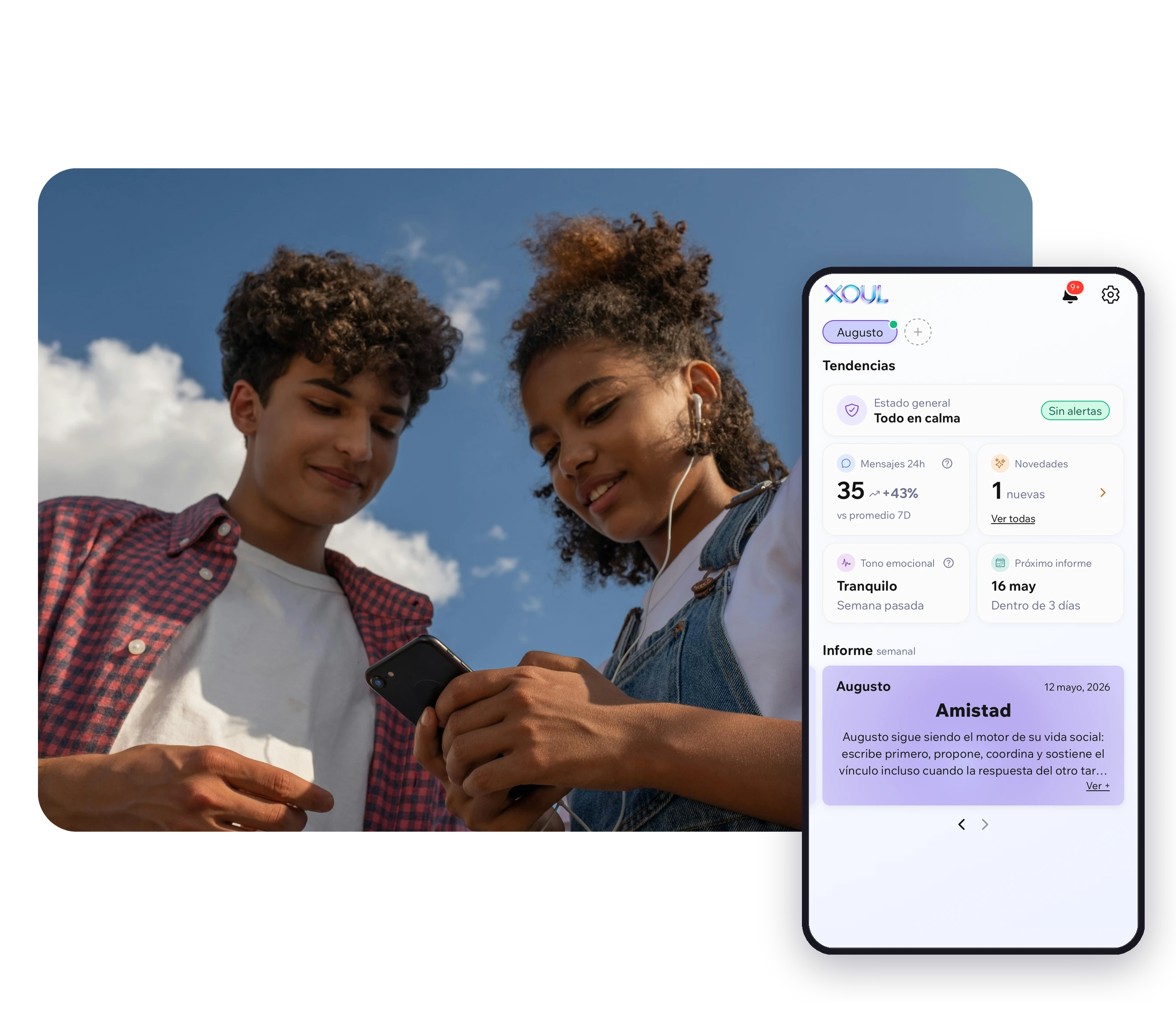
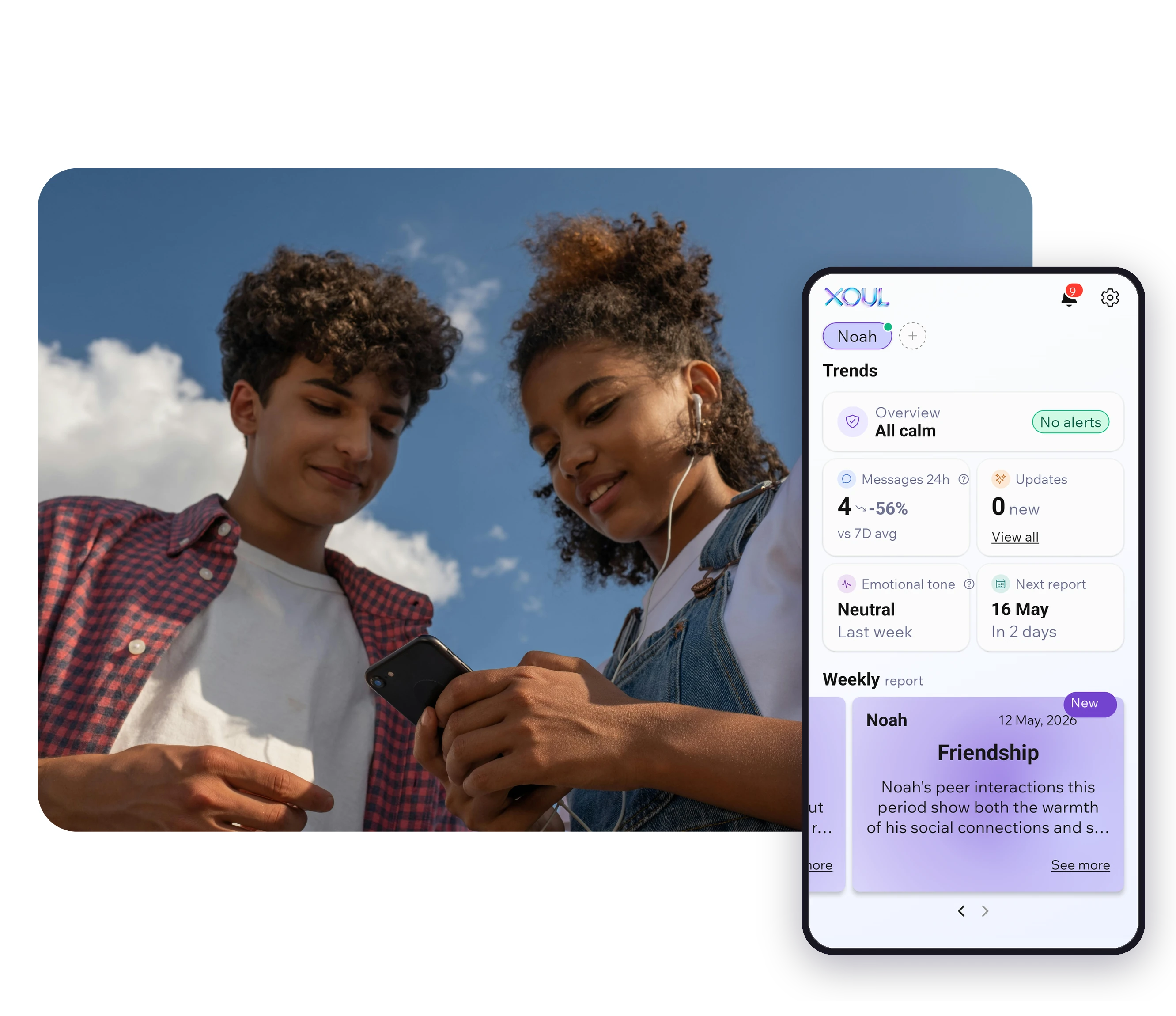
This is where Xoul makes a difference in modern parenting. Instead of fighting over the phone, Xoul offers you an ethical window into your child's well-being:
To complement smart monitoring tools like Xoul, we suggest:
Protecting children's mental health in a digital world doesn't require extreme bans, just smart, respectful observation. With the support of Xoul, you can stop guessing how your child feels and start supporting them with real data about their well-being, always keeping their privacy intact.
XOUL gives you private reports with risks, emotions and important moments, always from a respectful approach.